The screenshot is everywhere this week.
A gauge.
A needle buried in the red.
A single number — ten, thirteen, nine, whatever the live widget says by the time you read this.
Under it, the same caption, posted by a thousand accounts that have never shared a position size in their lives:
Be greedy when others are fearful.
And then the headline:
Every time before, this marked a bottom.
You feel it working on you.
Not greed exactly. Something better dressed.
The feeling of being early. The feeling of being disciplined while everyone else panics. The feeling of standing calmly in a burning theater and calling it conviction.
Here is the thing nobody attaches to the screenshot:
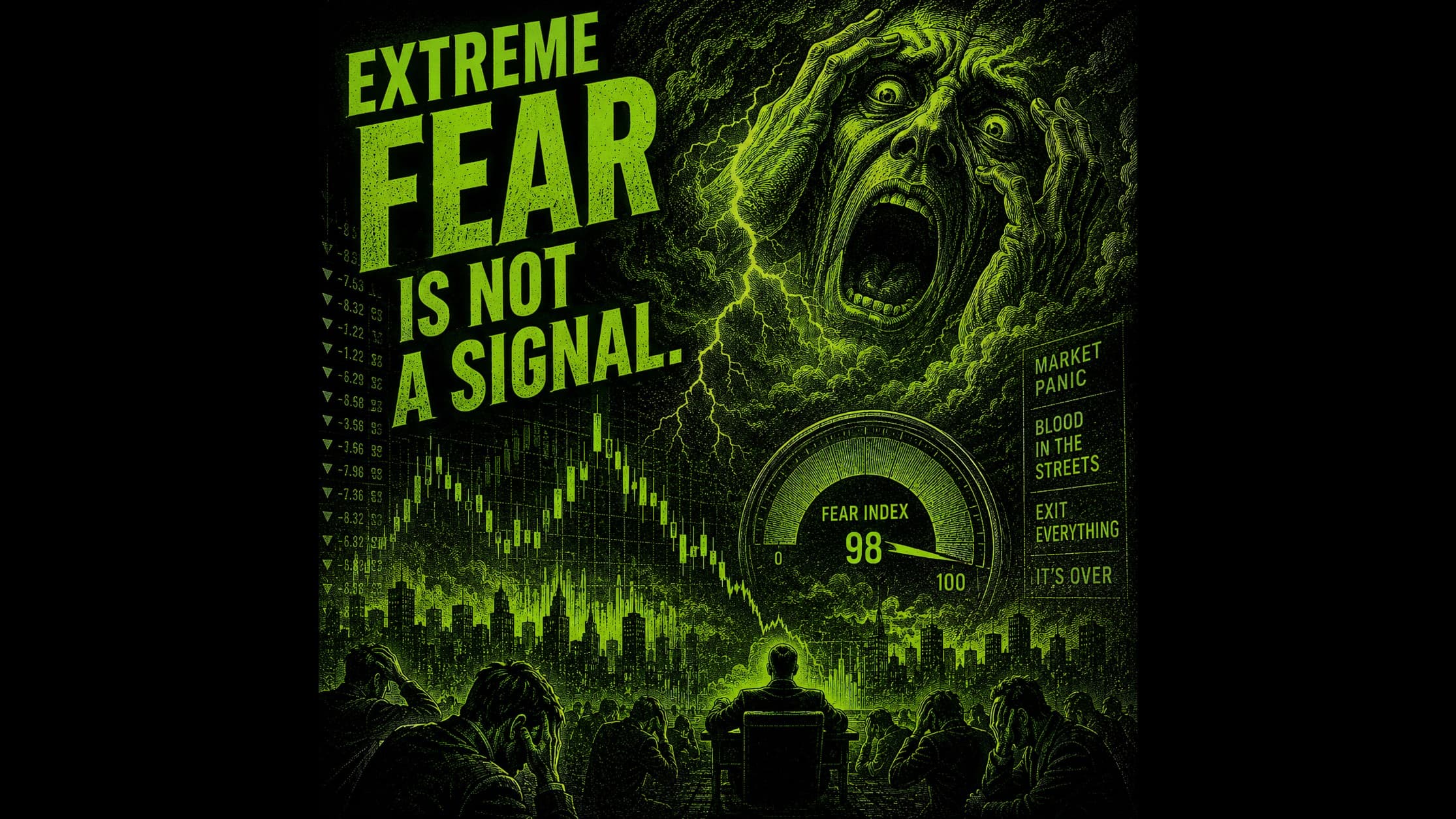
Extreme fear is not a signal. It is a condition.The difference is the whole trade. A condition says:
The market is scared.
A signal says:
Here is the rule.
Here is the test.
Here is the drawdown.
Here is the falsifier.
Here is the size.
The screenshot gives you the first one. Your account requires the second.
Save this before you average down tonight. Send it to the friend who just posted the gauge with the Buffett quote and no stop.
the fear gauge's recent extreme-fear zone — single digits to low teens, depending on the day and the screenshot.
Crypto Fear & Greed Index ↗Strategy's small late-May bitcoin sale — its first disclosed disposal since 2022 — that cracked a much larger narrative.
CoinDesk, on the filing ↗the record 13-session U.S. spot bitcoin ETF outflow streak through early June, before a token inflow ended it.
ETF flow coverage ↗The 60-second version
The crypto Fear & Greed Index is useful — but not the way your feed uses it.
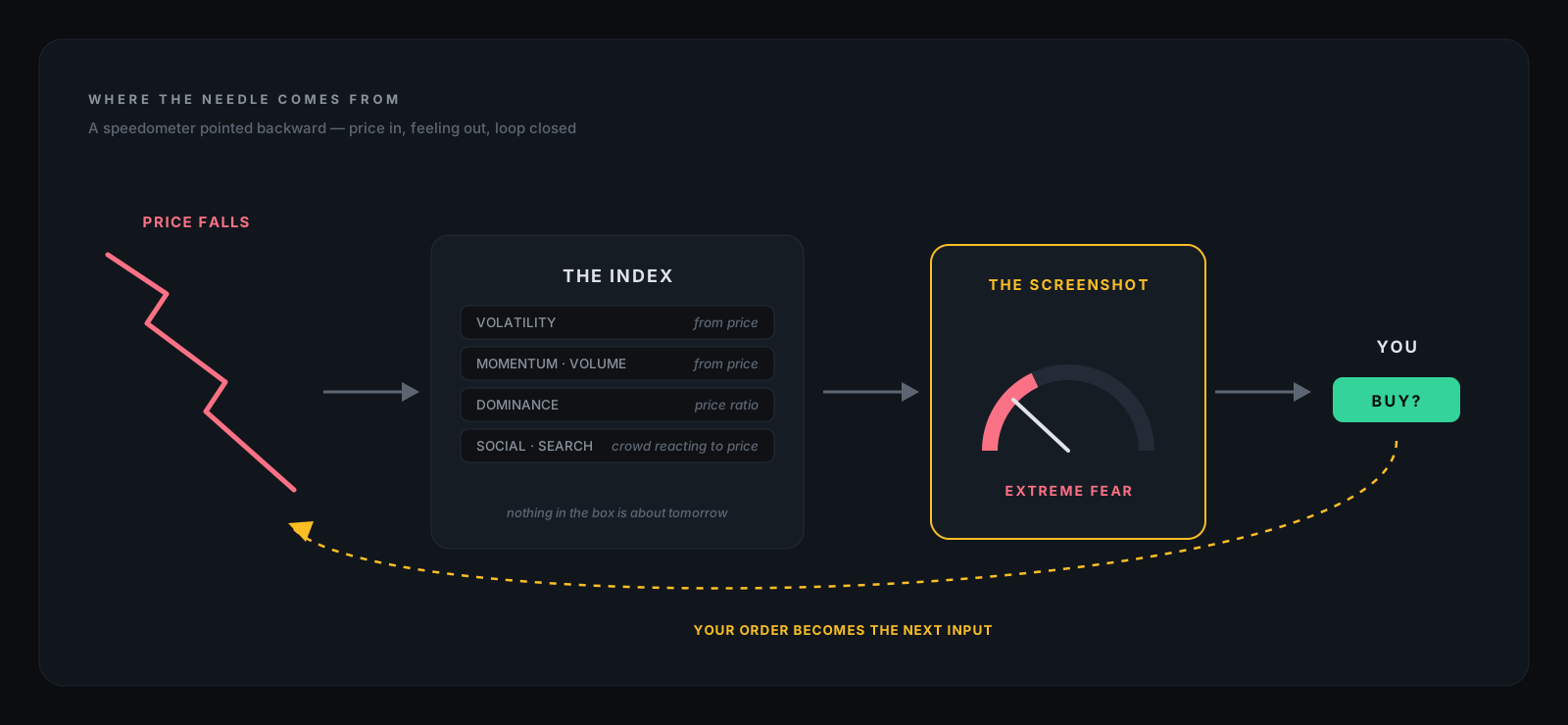
The index is mostly built from things that already happened:
volatility
momentum
volume
dominance
social activity
search trends
So when Bitcoin falls hard and the index prints extreme fear, it has not discovered the future. It has summarized the past. That can be useful context. It is not an entry by itself.
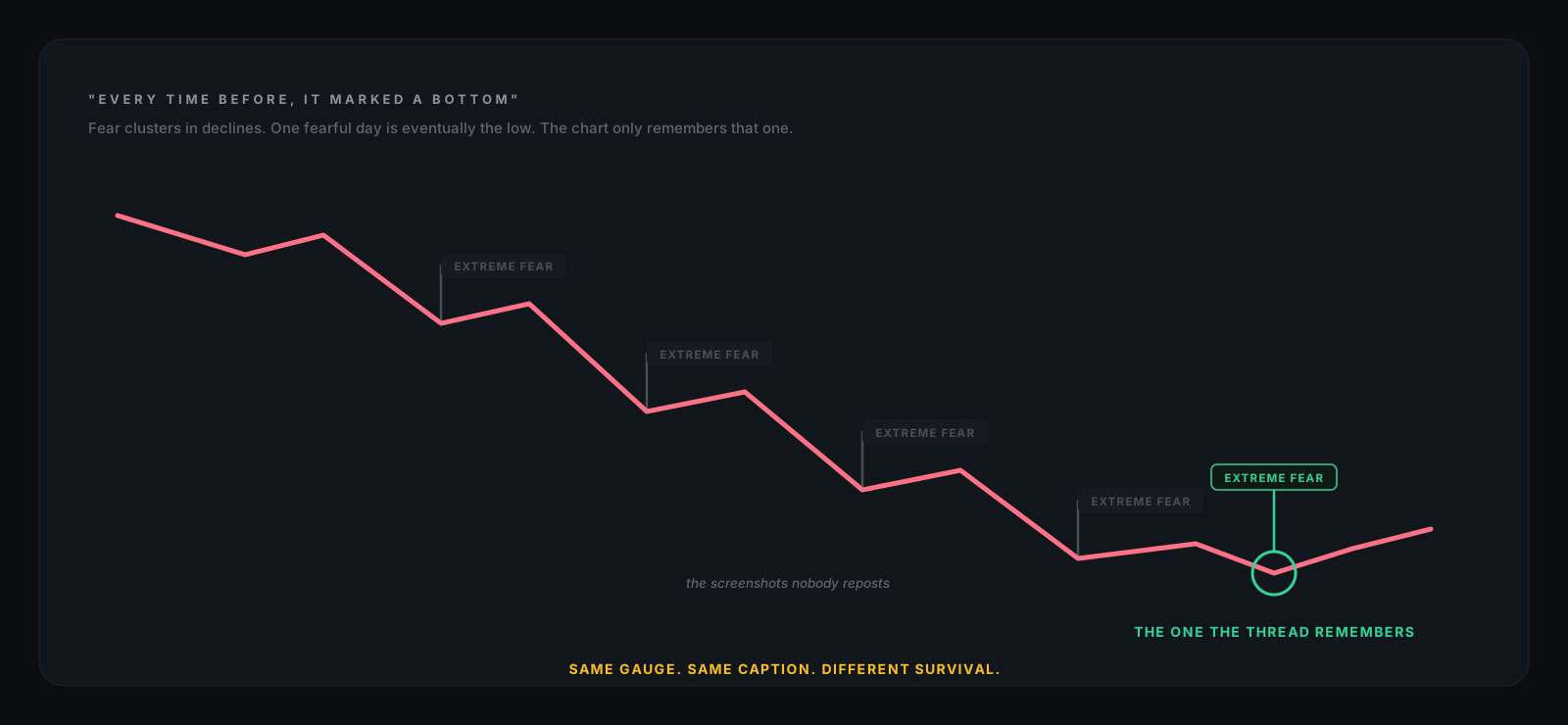
The trap is the phrase "every time before, it marked a bottom." That phrase remembers the final extreme-fear reading before the bounce — and forgets the earlier extreme-fear readings on the way down. A condition that appears near the bottom and all the way down to it is not a signal. It is scenery.
Maybe this is the bottom. Maybe it is not. The index cannot know. Neither can we.
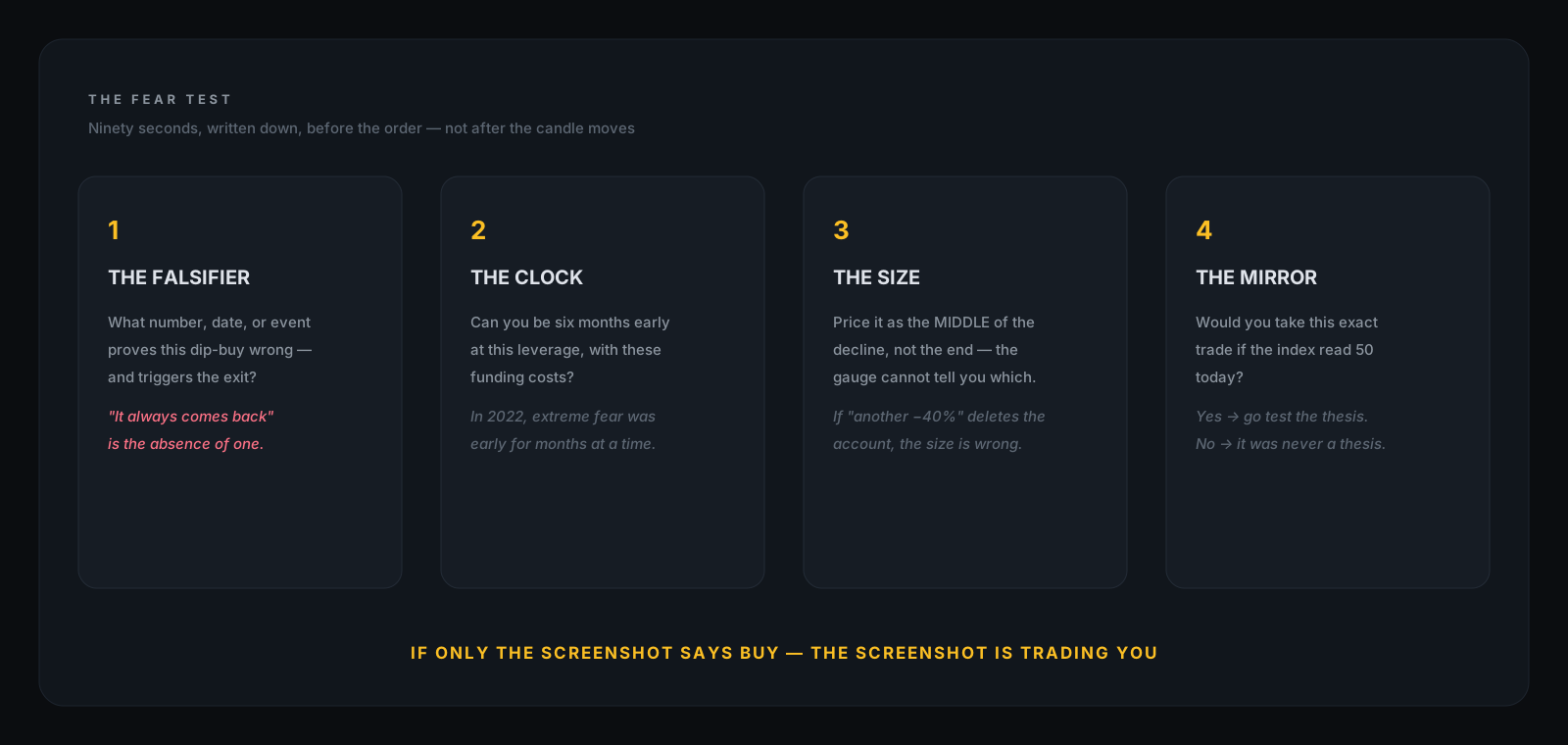
So before you buy because the gauge is red, write four things:
the falsifier
the clock
the size
the mirror
That is the Fear Test. If you cannot write those, you are not being contrarian. You are trading a screenshot.
| What the screenshot says | What it actually means |
|---|---|
| "Extreme fear." | Price fell hard and the crowd is reacting. |
| "Everyone is scared." | Maybe. But scared people can still be right. |
| "Every time before, it bottomed." | The chart may be remembering only the screenshot that worked. |
| "Buffett says buy fear." | Buffett's balance sheet is not your margin account. |
| "This is a contrarian signal." | Not until it has a rule, a test, a falsifier, and a size. |
I — What the needle is actually made of
Start with the part almost nobody checks: what does the Fear & Greed Index measure?
The standard crypto version blends volatility, market momentum and volume, social-media activity, Bitcoin dominance, and search trends. Read that list slowly. Volatility comes from price. Momentum comes from price. Volume is the fuel of price. Dominance is a ratio of prices. Social and search are the crowd reacting to price.
The index is not a mystical emotional thermometer lowered into the soul of the market. It is price action and crowd reaction, compressed into a number with a nice face.
When Bitcoin falls hard and the needle prints extreme fear, the index has not discovered a secret about tomorrow. It has confirmed something about yesterday:
price fell fast
volatility rose
the crowd reacted
That is useful. But useful does not mean predictive.
A fear index is a speedometer pointed backward. It tells you how fast the car was moving when it hit the wall. It does not tell you whether the car is about to reverse, stop, or hit another wall.
II — "Every time before, it marked a bottom"
This is the sentence doing the damage. It sounds like data. It is often survivorship in a suit.
Yes — extreme-fear readings showed up near the major crypto lows. 2018. 2020. 2022. Those screenshots line up beautifully after the fact, because the screenshots that line up are the ones people repost.
Here is the missing half: extreme fear also appears before the bottom. Sometimes long before. In 2022, the index stayed in extreme fear through long stretches while Bitcoin kept falling. Every one of those days had the same gauge, the same caption, the same feeling of being early. A trader buying the first "historic fear" print still had to survive the rest of the decline.
That is the part the viral chart crops out.
Fear clusters in declines. Eventually, one of those fearful days becomes the low. That does not mean the first fearful day was a signal. It means fear was present during the process of bottoming. Those are not the same sentence.
"Extreme fear marked the bottom" and "extreme fear marked many non-bottoms on the way down" can both be true. The gauge cannot tell you which screenshot you are living inside.
III — The week the never-sell story sold
If you want to understand the current fear, look at the strangest event of the month.
Strategy, the company most associated with "never sell bitcoin," sold 32 BTC in late May — about $2.5 million — its first disclosed net bitcoin disposal since 2022. The proceeds were reported as funding preferred-stock dividends. The company still held more than 843,000 BTC afterward. The sale was less than one one-hundredth of one percent of the stack — a rounding error's rounding error.
And yet the market cared. Not because 32 BTC changes Bitcoin's supply. It does not. The market cared because the sale cracked a story:
the diamond hands never sell
That is the market you are buying fear in right now. One where narrative is load-bearing.
When a market is supported by story, fear is not automatically irrational. Sometimes fear means the crowd is wrong. Sometimes fear means the crowd is finally updating. The hard part is knowing which — and a gauge cannot do that for you.
ETF flows told the same story in a less dramatic way. Through early June, U.S. spot bitcoin ETFs endured a record 13-session outflow streak totaling roughly $4.4 billion before a tiny inflow ended the run. That is not just retail panic. That is capital leaving through the institutional door.
Again: maybe it is capitulation. Maybe it is the flush before a bottom. Maybe it is not. But "everyone is fearful" is not enough. You still need a trade.
IV — Buffett's quote has a balance sheet attached
Now the caption.
Be greedy when others are fearful.
It is a great sentence. It is also one of the most misused sentences in retail trading — not wrong, just incomplete when removed from the balance sheet that made it possible.
Buffett can be greedy in fear because he often buys with:
permanent capital
no margin call
business cash flows
a multi-decade horizon
the ability to be early
Now translate the same sentence to a retail crypto account:
leveraged CFD
overnight funding
liquidation price
spot stack that is too large
grid bot averaging down
emotional need to be right this month
That is not the same trade. On Buffett's balance sheet, early can become right. On a leveraged balance sheet, early and wrong are identical until margin says otherwise.
The quote is not wrong. It is non-transferable. "Be greedy when others are fearful" is balance-sheet advice, and it ships without the balance sheet.
The market does not care that your quote was legendary. It only cares whether your size can survive the path.
V — Fear is a condition. A signal has paperwork.
None of this means sentiment is useless. Sentiment can be valuable. Extreme fear can be part of a real strategy.
But then it needs paperwork. A signal has:
a definition
a tested rule
a sample
a losing history
an expectancy after costs
a falsifier
a sizing rule
a clock
For example:
Buy spot BTC when the Fear & Greed Index is below 10,
only after price closes above X,
with no leverage,
with Y% max position size,
and exit if Z happens.
Maybe that works. Maybe it does not. The edge would not be the screenshot. The edge would be the test.
A tested fear-threshold system may be legitimate — for the person who built it, with 2022's long bleed inside the sample and the months of being early priced into the sizing. But a trader who sees the gauge, feels brave, quotes Buffett, and clicks buy has not found a system. They have found a costume for the urge.
Greed wore "genius" in the gold melt-up. Urgency wore "starter position" on listing day. Fear wears "contrarian." And fear is the most flattering costume of the three. It makes the trade feel noble.
VI — The Fear Test
Before you buy any dip because the gauge is red, answer four questions. Written down. Before the order. Not after the candle moves. Not after the group chat gets loud. Before.
1. The falsifier
What number, date, or event proves this dip-buy wrong? What triggers exit?
Bad answer:
It always comes back.
That is not a falsifier. That is the absence of one. A good answer names the level, the date, or the event — if BTC closes below X for Y days, I exit or reduce. You can choose the rule. But it must exist before pain arrives.
2. The clock
Can you be six months early? At this leverage. With these funding costs. With this emotional bandwidth. With this account size.
In 2022, extreme fear was early for months at a time. A contrarian trade that cannot survive being early is not contrarian. It is impatience with a better vocabulary.
3. The size
Size the trade as if today is the middle of the decline, not the end — because the index cannot tell you which it is. Ask:
If price falls another 40% from here,
what happens to my account?
If the answer is "I blow up," the trade is wrong even if the thesis is eventually right.
4. The mirror
Would you take the same trade if the index read 50 today?
If yes — you may have a thesis. Go test it. If no — the screenshot is doing the work. And if the screenshot is doing the work, you are not trading the market. You are trading a screenshot of it.
VII — What if this really is the bottom?
It might be. This is important enough to say plainly.
Maybe the gauge printed near the low. Maybe the ETF outflow streak was capitulation. Maybe the Strategy-sale panic was the emotional flush. Maybe this is exactly the moment future threads will circle in green.
Fine. That still does not make the screenshot a signal.
A good trade can be entered for a bad reason — that is one of trading's meanest lessons. If you buy because the gauge is red and the market bounces, you may make money. You may also learn the wrong lesson. The lesson you will learn is extreme fear means buy. The correct lesson might have been this specific setup, at this size, with this falsifier, after this washout, had positive expectancy.
Those are different lessons. One makes you better. The other makes you bigger at the next trap.
The point of this article is not do not buy fear. The point is:
do not let fear do the thinking for you
The market may reward the trade. It will still grade the process later.
VIII — Where this meets a gold robot
Our product trades gold, not crypto. But the lesson is the same one we keep paying for ourselves.
A system is allowed to buy fear. Some good systems do — mechanically, at sizes chosen before fear arrived, with rules written before the screenshot existed. What a system is not allowed to do is change its behavior because a gauge turned red and a quote got popular.
That is precisely the discipline inspectable code gives you. You can read the rule. You can see whether it consults emotion. You can see what it does in drawdown, and whether sizing was chosen before the fear arrived. None of that makes it safe — MTR can lose; any system can lose. But "the rule was written before the emotion" is the whole point of having a system.
We do not know if this is crypto's bottom. Neither does the index. That symmetry is the reason rules exist: nobody knows, so the rules must be written first.
Disclosure
Nothing here is a prediction about Bitcoin, in either direction — this page's whole argument is that the gauge cannot make that call, and neither can we. Market figures are public-record snapshots as of publication and can change quickly; the Strategy sale details are as reported from its public filing; ETF-flow figures describe a specific early-June outflow streak, not a live guarantee about future flows. Historical patterns describe the past, not your result. We sell MT5 software whose logic you can inspect; we publish what it does, never what you will make. MTR can lose. Any system can lose.
The close
Some week soon — maybe this one — the market will turn. The gauge will have printed extreme fear near the low. The screenshot will circulate for the next five years as proof that fear was a buy signal.
Nobody will repost the gauges from the way down.
You cannot know, tonight, which screenshot you are living inside. That information does not exist yet — not in the index, not in the quote, not in the thread.
What you can know tonight:
your falsifier
your clock
your size
your mirror
Four answers, written before the order. That is what being early looks like when it is real.
Everything else is a feeling with a famous caption.