It happens to every trader, and it always feels personal.
You're long.
Price drifts down, tags your stop by two pips, then turns and runs exactly where you wanted it to go — without you.
You screenshot the wick, circle it in red, and post it: "stop hunt." Half of fintwit nods.
The market, apparently, found your tiny position, reached into the chart, took your money personally, and then carried on without you.
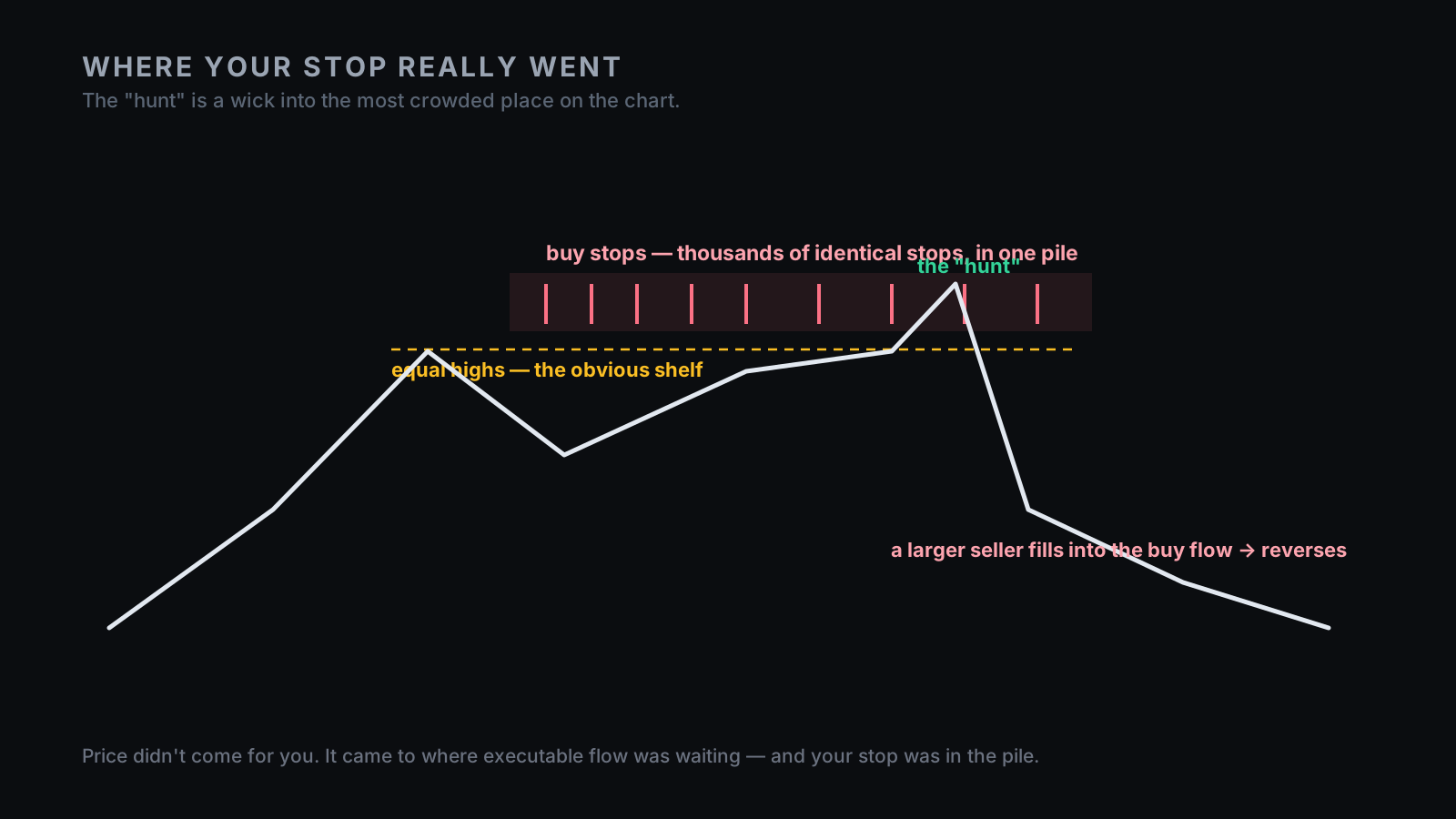
That story feels good because it gives the loss a villain. Here is the uncomfortable upgrade: nobody was hunting you — you were standing where the orders were, and so was everyone else. Not personally, not individually, not because your half-lot was important enough to move a market. Your stop sat in the most crowded place on the chart, along with thousands of identical stops, and that crowd is what mattered.
That distinction isn't a technicality. It's the gap between a trader who blames an invisible enemy and a trader who understands liquidity well enough to stop donating stops to obvious shelves. The first one posts the wick. The second one asks a better question: why was my stop in the most obvious place to be wrong? This piece is about turning the most viral cope in retail trading — the stop hunt, the order block, the liquidity sweep, the whole Smart Money Concepts vocabulary — into something you can actually test. Not worship. Not narrate after the candle. Test.
Before we start, two requests:
- Save this before your next "I got stop-hunted" screenshot.
- Send it to the trader who explains every candle with an order block.
Not because Smart Money Concepts are worthless. Because most of what gets taught as SMC is a story told after the move — and a story you can't be wrong about is a story you can't trade.
Skip this if you already trade liquidity, not conspiracy
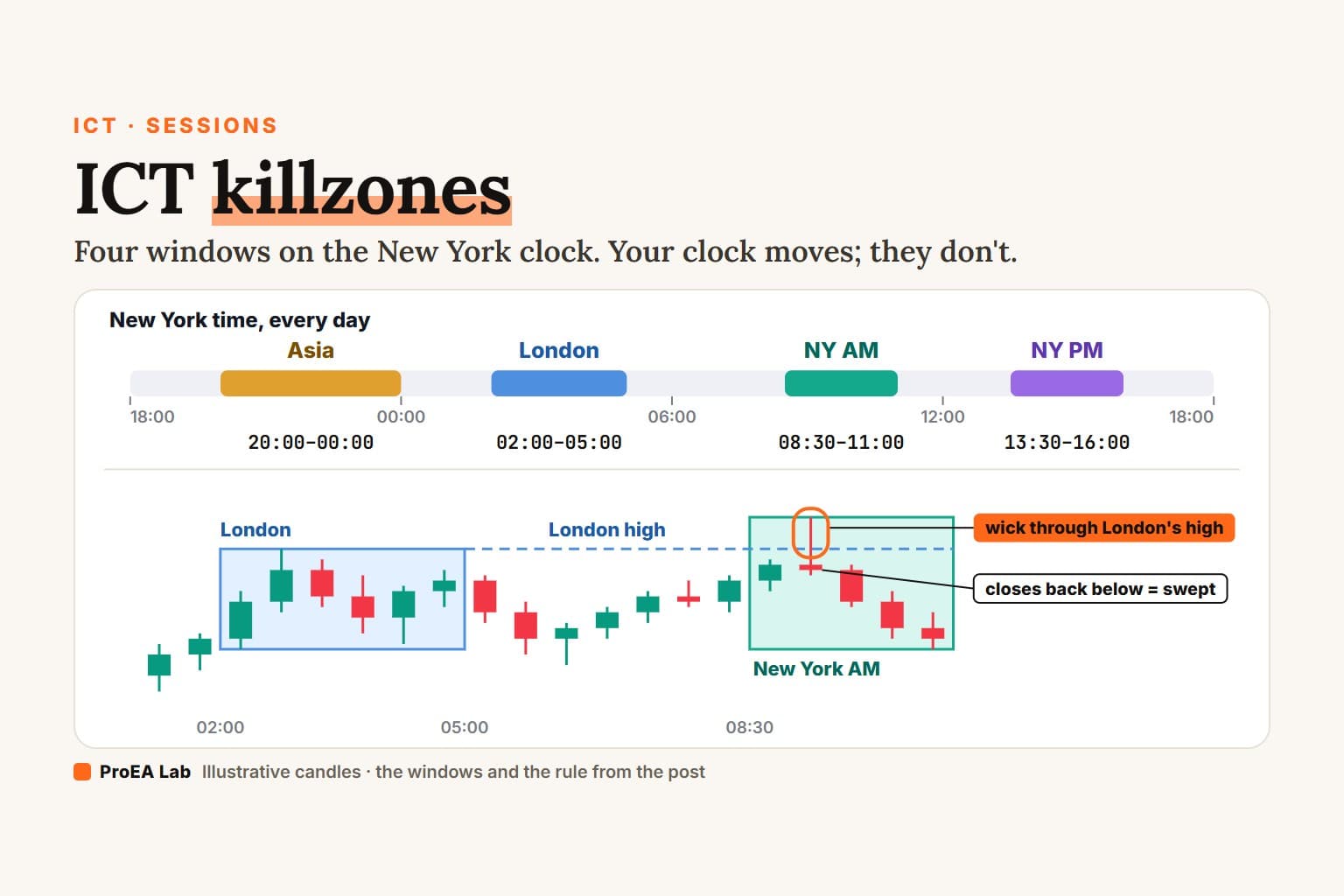
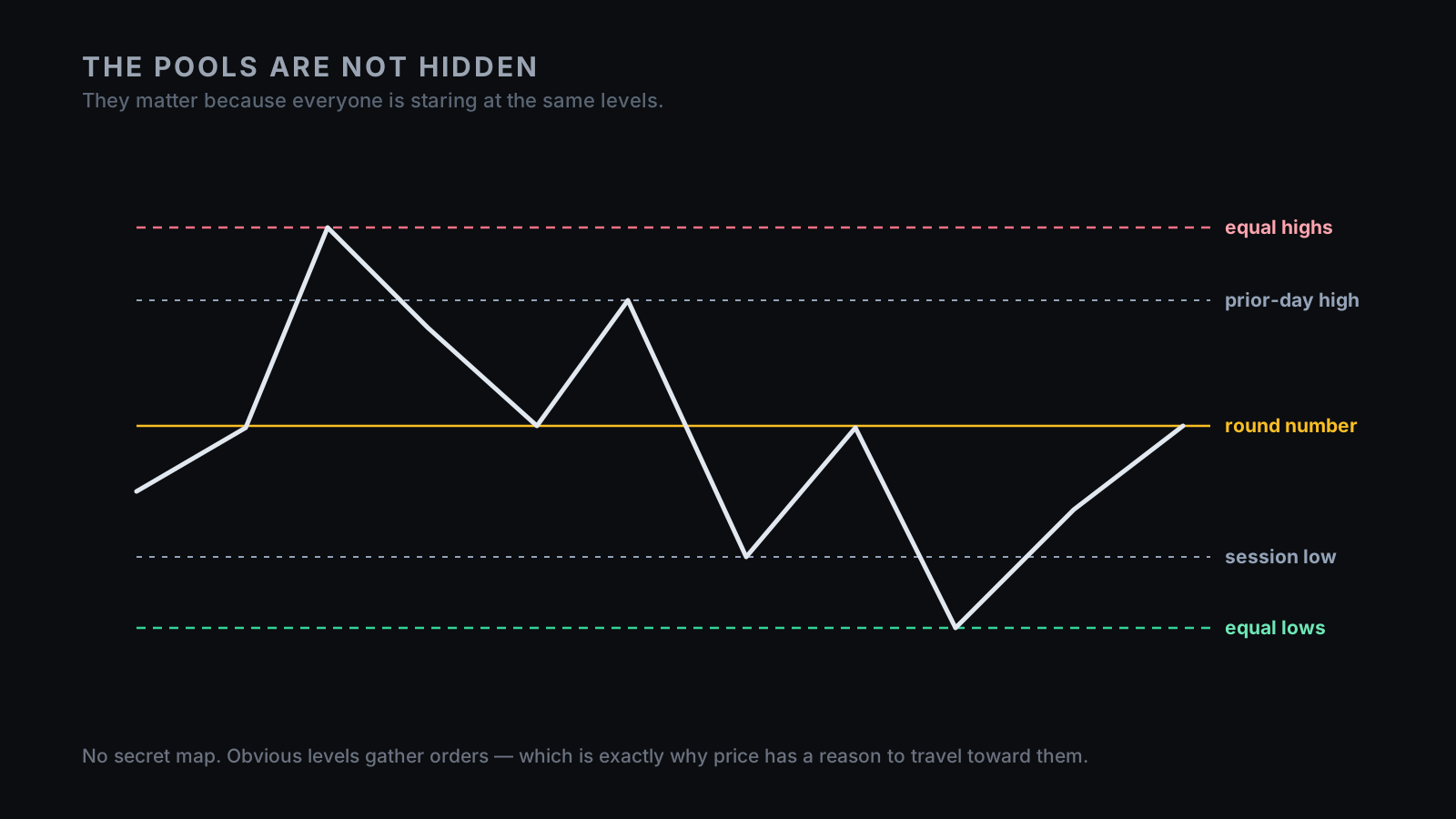
Stops cluster at obvious places: just beyond swing highs and lows, above equal highs, below equal lows, around round numbers, near the prior day's extremes, near session highs and lows. Those clusters matter — not because the market knows your name, but because clustered orders create executable flow. A stop is not magic; it's usually a conditional order that becomes marketable flow the moment it triggers. Above a high sit buy stops from trapped shorts and breakout buyers — trigger them and you get a burst of buy-side pressure that a larger seller can sell into. Below a low sit sell stops — trigger them and you get sell-side pressure a larger buyer can buy into. That isn't a conspiracy. It's mechanics.
One of those obvious places has its own name in SMC: the low of the first pullback after a break, the inducement. The same mechanics apply; no intent required.
| The revenge story | The mechanism |
|---|---|
| "They hunted my stop." | Your stop sat in an obvious cluster with thousands of others. |
| "Smart money targeted me." | Your individual ticket is irrelevant; the pool is what matters. |
| "The order block is magic." | A level drawn after it works isn't evidence. |
| "SMC is my strategy." | SMC is vocabulary; the edge is in a tested rule. |
| "The backtest is perfect." | The zones may have been drawn with future information. |
| "It swept liquidity, so I'm right." | A story that can't be wrong can't be traded. |
The concepts aren't the problem. The problem is treating a description of the past as a prediction of the future.
I — You are not the target
Start with the freeing part: you are not important enough to be hunted personally, and that's good news. Institutional FX and CFD flow is too large, fragmented, and aggregated for your individual stop to be some villain's target. The venue, broker, market maker, or liquidity provider isn't sitting there saying "find this one retail trader" — they don't need to. Your order is one grain in a much larger pile. The pile matters; you don't.
That reframing is the entire point. The conspiratorial version says "they came for me." The useful version says "I placed my stop where many people would place the same stop, and that pool became attractive flow." One frame hands you a villain; the other hands you a process — and only one can improve your trading. The market doesn't move to spite you; it moves through available liquidity, imbalance, and the constant negotiation between aggressive flow and resting orders. Your stop wasn't special. Its location was. Once you accept that, the question stops being "why did they hunt me?" and becomes "why did I choose the most obvious place to be wrong?" — and that is where learning starts.
II — But the mechanism is real
The pure skeptics make the opposite mistake: they hear "smart money," dismiss the whole thing, and miss that the language — abused as it is — points at something real. Obvious levels attract orders. A prior high attracts breakout buyers and the buy stops of trapped shorts; a prior low attracts breakdown sellers and the sell stops of trapped longs; round numbers and session extremes attract attention and trigger-based systems; equal highs and lows become visible shelves. Visible shelves gather orders precisely because everyone can see them. There's no secret — the pool is obvious because it's obvious.
So price can have a reason to travel toward those areas, because they offer the one thing a participant transacting size constantly needs: opposing flow. A large buyer doesn't want a dead zone; they want sellers — and triggered stops, breakout orders, and resting liquidity can supply them. So yes, liquidity sweeps happen, false breaks happen, wicks into obvious pools reverse. But notice the honest version of the claim. Not "smart money hunted me," but: obvious liquidity pools can shape price behavior — and I can test whether a specific way of trading that behavior has an edge after costs. Less sexy. Also capable of being true.
III — SMC is a vocabulary, not a strategy
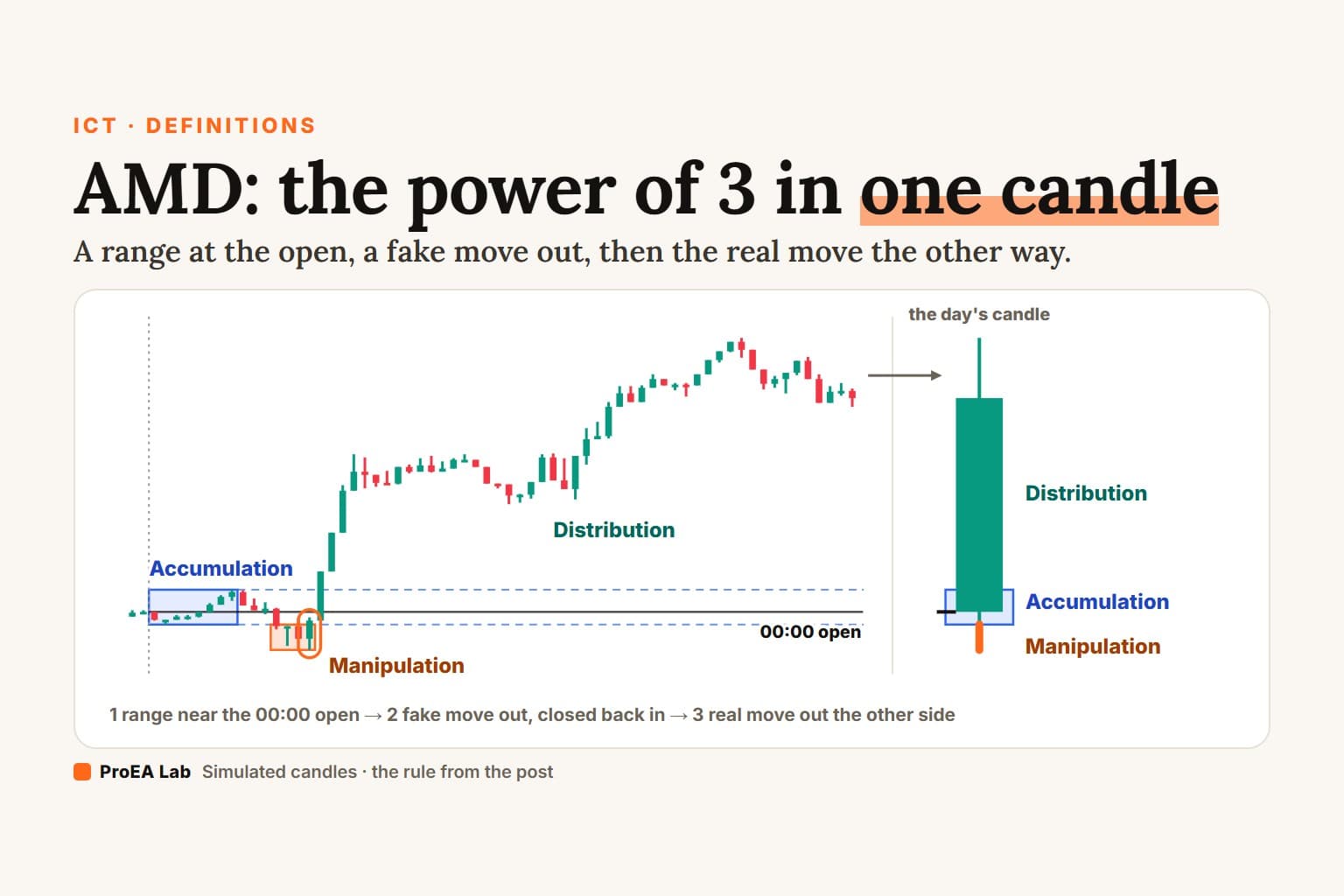
Order block. Fair value gap. Liquidity sweep. Break of structure. Change of character. Premium and discount. AMD (power of 3). These are useful words — a compact language for describing how price moves, where orders might cluster, and how a move rotates from one area of interest to another. That vocabulary has value. But a vocabulary is not a strategy.
"Buy the order block" isn't a rule. Which order block? Defined how, created on what bar, confirmed when, invalidated where, entered at what price, stopped where, targeted where, filtered by what regime, measured over how many trades, net of what spread and slippage? If you can't answer those, you don't have a strategy — you have a caption you can paste onto any chart after the fact. SMC is a language; the edge was never in the words — it's in the one rule you made precise enough to test. This is the trap: the vocabulary makes the chart feel understandable, and feeling like you understand the move is not the same as having an edge. One is narrative fluency; the other is statistical survival. Don't confuse them.
IV — The hindsight trap
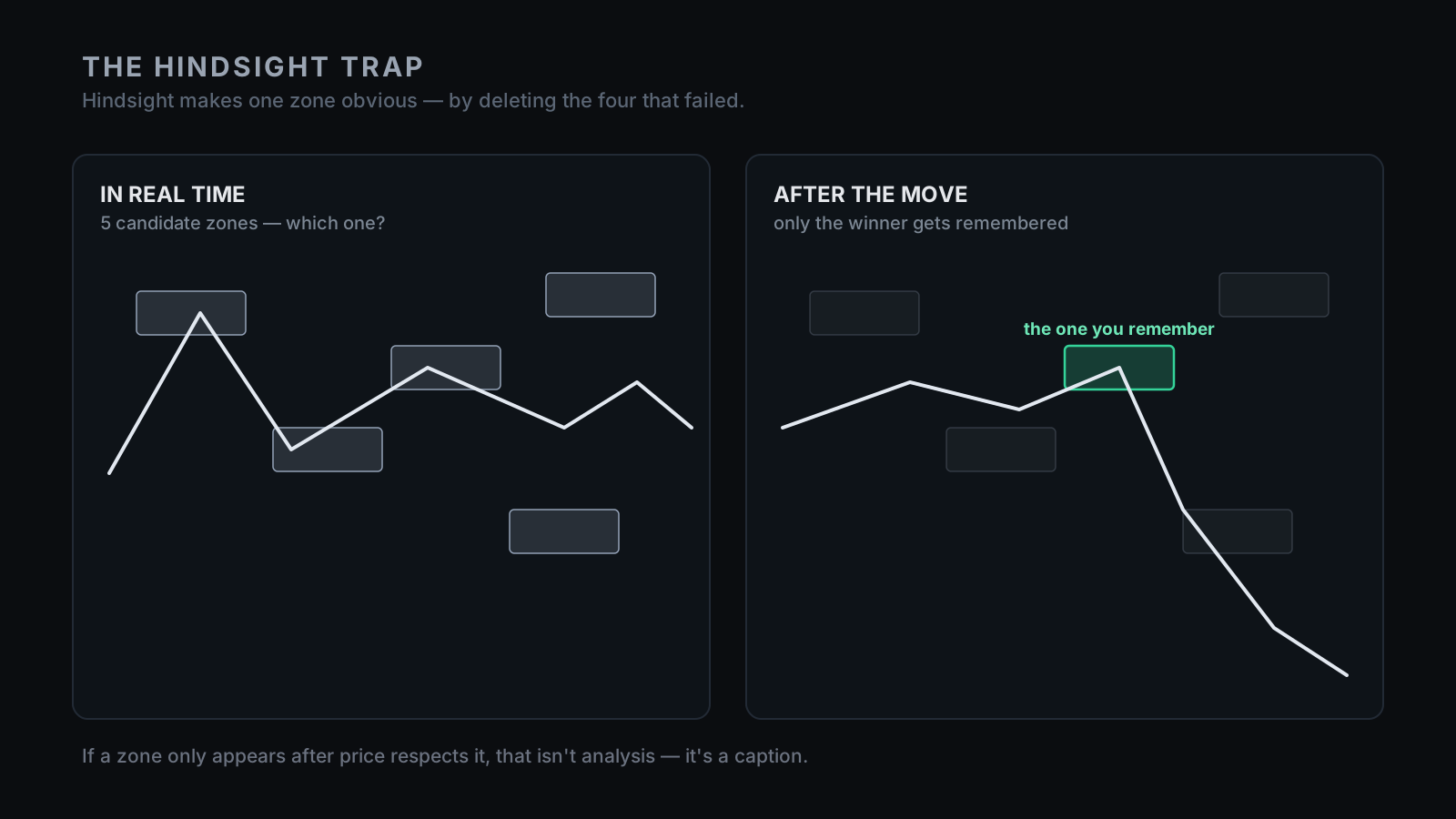
Open any chart after a sharp move and you can almost always find something that "explains" it — an order block, a fair value gap, a sweep, a change of character. The chart is dense enough that some prior zone will line up. That doesn't mean the zone predicted the move. More often, the move caused you to select the zone — your order block didn't cause anything. In real time there were five candidate zones; after the move, one looks obvious and the other four vanish from the lesson.
That's survivorship bias with candles: the zones that worked get screenshotted and taught, the identical ones price blew through get forgotten. Then confirmation bias finishes the job — if price bounces, the order block was valid; if it breaks, "liquidity needed taking first"; if it's ignored, "that wasn't a real order block." A concept that can explain every outcome explains none of them. The test is brutal and simple: could this setup have been identified before the move, with only the information available then, by a rule another trader could apply to draw the same zone — and could that rule be wrong? If not, it isn't analysis. It's a caption. (We've since built that question out into a full grading discipline — five measurable properties that separate a tradable zone from a caption — and given the fair value gap the same treatment.)
V — Repainting is the tell
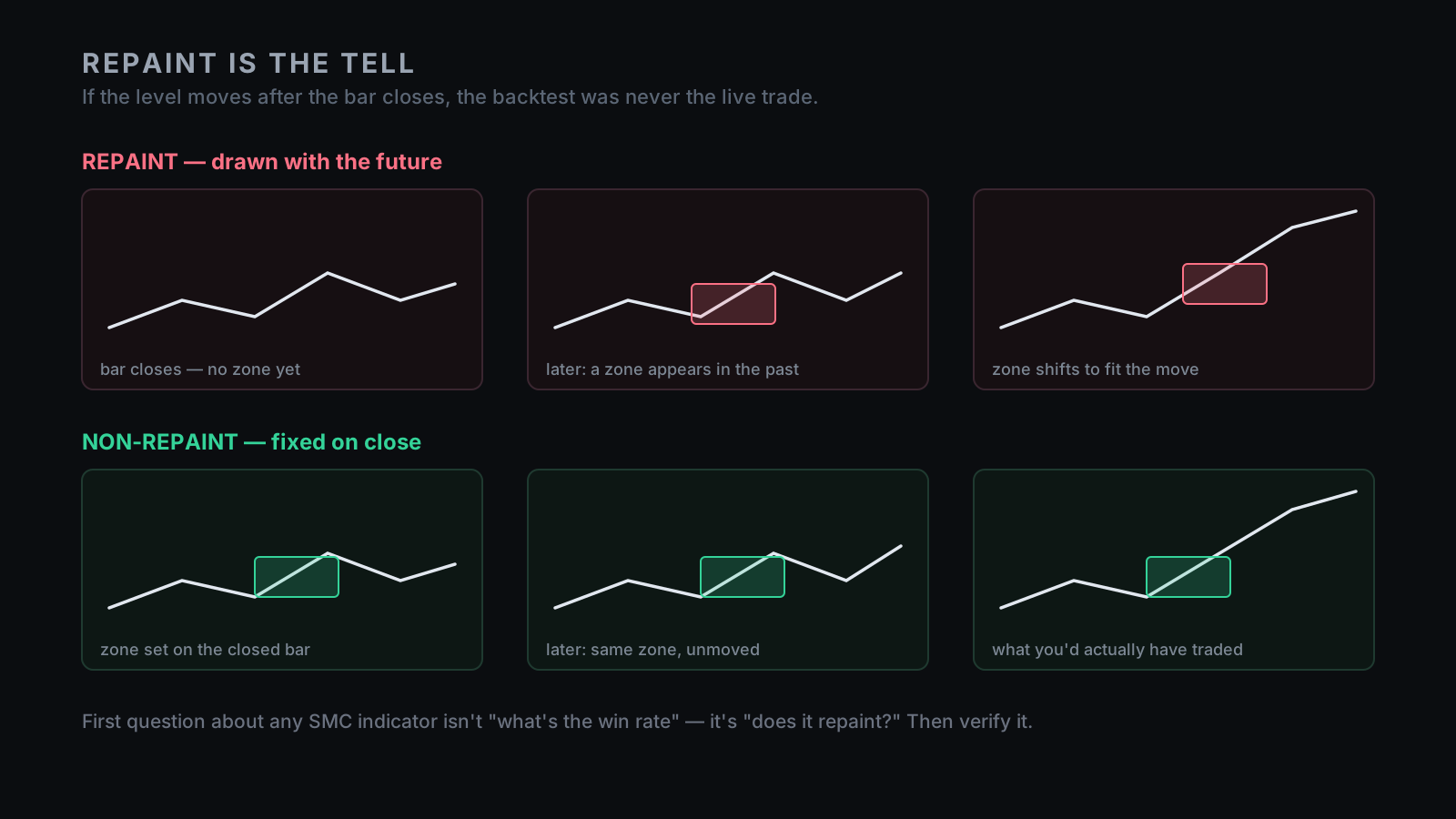
This is the section that saves the most money, so slow down. Many SMC indicators repaint — they redraw zones, structure, labels, or signals as new bars arrive. The zone on your chart today may not be the zone you'd have seen live, because the indicator had future information and you didn't. Backtest a repainting tool and it looks miraculous — of course it does; the past was redrawn after the outcome was known. Trade it live, where the future isn't available, and the magic evaporates.
An indicator that redraws the past isn't a strategy. It's a memoir. Non-repainting is the line between a chart that teaches you and one that lies to you: a non-repaint rule commits to a zone after a defined condition on closed data, and never moves it later to look smarter — because a live trader only ever gets the version of the chart that existed at the time. So the first question about any SMC indicator — yours, a guru's, one you bought — isn't "what's the win rate," it's "does it repaint?" Then verify it: replay bar by bar, check whether the zone shifts after the close, whether labels only appear once later candles confirm them, whether a signal leans on a pivot that was unknowable at the time. If it repaints, its backtest isn't evidence — it's theater.
VI — Falsifiability is the whole game
Here's the test that ends most arguments, borrowed from science and ruthlessly applicable here: a claim you can't state precisely enough to be proven wrong can't be shown to be right either. "Smart money swept liquidity before the real move" isn't enough — it fits almost any chart after the fact. A testable rule sounds completely different: when price trades above the prior session high by more than X, then closes back below within N bars, enter short at this exact trigger, stop at this exact invalidation, target this exact condition, only in this session, only under this volatility filter, measured over this sample, net of this cost model.
Now you have something. It can win, it can lose, it can be tested, it can be killed — and that is the point. A claim that can't die can't earn trust; if your rule can't be wrong, it can only be lucky. Most weak SMC education lives permanently outside falsifiability, telling stories that are always right after the candle — and trading can't use that. Trading needs rules that can be wrong before the candle. If you can't write the rule, you can't test the edge; if you can't test the edge, you aren't trading smart money — you're trading belief. Belief is free. Drawdown isn't.
VII — The sweep pays the worst spread on the chart
Now suppose the liquidity-sweep tendency is real, you've made it precise, and it has gross edge. You still have to pay for the fill — and this is where many SMC strategies quietly die, because you've designed an entry that triggers at the single worst moment for execution. A sweep is a fast, violent move into an obvious pool: spread widens, slippage spikes, stops trigger, breakout traders chase, liquidity thins for an instant. The fill you modelled at the level is not the fill you get in the wick — everything in Spread Is a Tax You Can't See, concentrated into the exact instant your rule fires.
A sweep entry is one of the most expensive fills on the chart — by design. So a sweep strategy can be right in concept and still negative after costs: the signal is real, the gross edge exists, and the net edge dies in the execution. That's why every SMC rule has to be tested net of cost at the trigger — with realistic spread, slippage, and missed-fill behaviour — not on clean mid-price candles, and especially not when the entry lives inside the wick. Measure it under polite execution and you've measured the story, not the rule. The market is rarely polite at the liquidity pool.
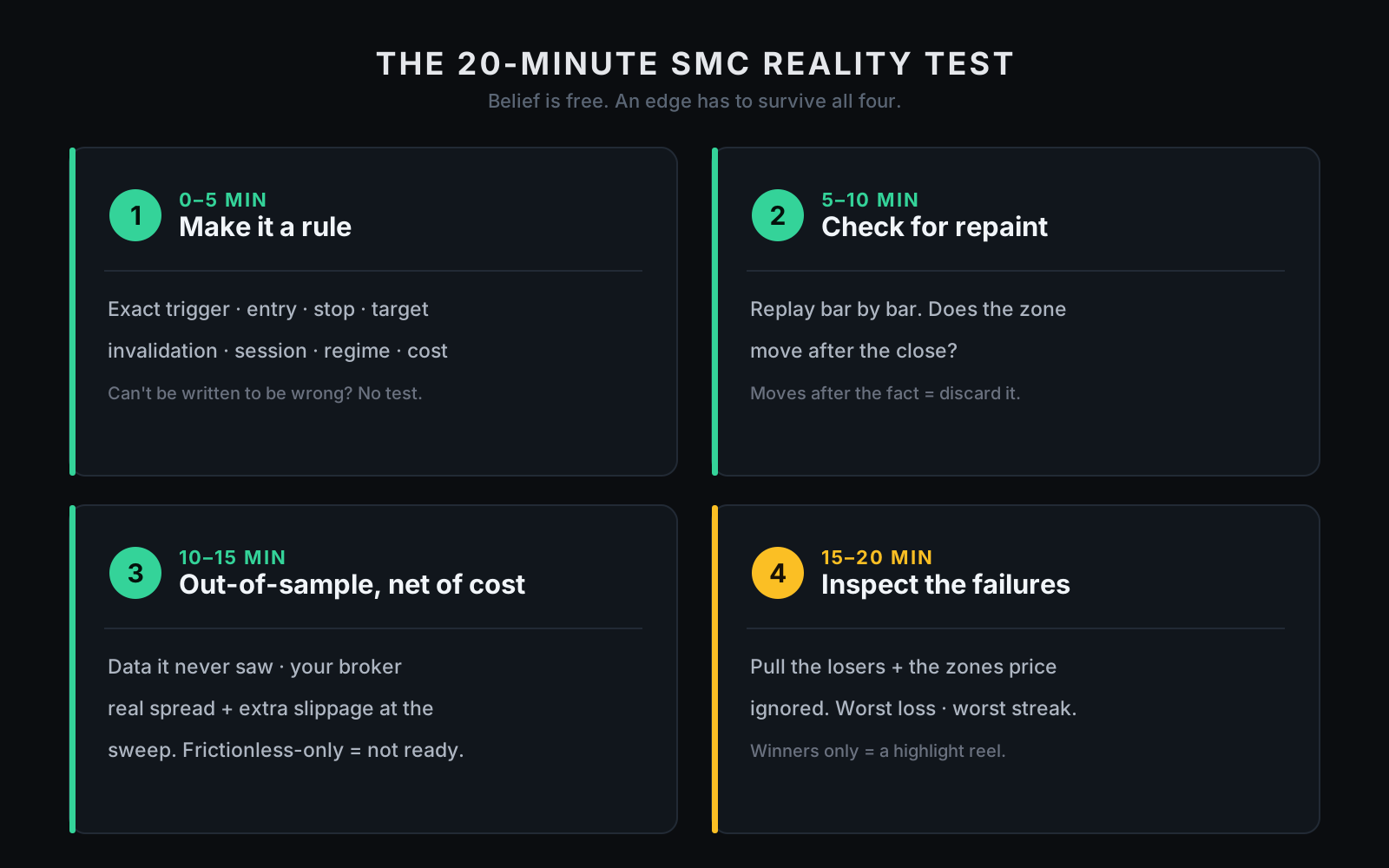
VIII — The 20-minute SMC reality test
Run this on any smart-money idea before you believe it — yours, a guru's, a paid indicator, a thread, a YouTube strategy. Especially the one that looks obvious.
Minutes 0–5 · Make it a rule, not a story. Write the setup precisely enough that it could be wrong: exact trigger, entry, stop, target, invalidation, instrument, session, regime filter, cost model. If you can't write it precisely enough to be falsified, stop — there's nothing to test yet, only something to believe.
Minutes 5–10 · Check for repaint. Replay the chart bar by bar. Does the zone stay fixed after the close? Does structure change later? Do labels appear only after future candles confirm them? Does anything use information that wasn't available at the time? If anything moves after the fact, discard the backtest — a repainting signal isn't evidence.
Minutes 10–15 · Test out-of-sample, net of cost. Run the rule on data it was never tuned on, on your broker and symbol, with realistic spread and slippage — and add extra slippage around the sweep trigger. A liquidity edge that only survives on frictionless candles isn't ready.
Minutes 15–20 · Inspect the failures. Don't only study the textbook winners — pull the losers, the missed moves, the zones price ignored. How many candidate zones failed? What's the worst loss and the worst streak? Does it survive cost? Does it work before the move or only after? An idea that only shows you its winners hasn't shown you an edge — it's shown you a highlight reel.
Where this meets ProEA
Now the honest part, because it cuts against the lazy "SMC is fake" take: we're not here to bury Smart Money Concepts — we're here to bury unfalsifiable SMC. There's a difference. Liquidity concepts can be useful, order-flow vocabulary can be useful, sweep behaviour can be useful — but only once it becomes code, rules, data, and cost.
So the standard for any SMC-style tool we ship is simple, and it's the whole article in a checklist: a zone must be defined in code, based on information available at the time; it must not repaint after the bar closes; it must be testable out-of-sample; it must be measured net of cost; it must show its failures, not only its winners; and it must be source you can inspect. That's the only version of SMC worth taking seriously — not the version you have to believe, the version you can try to kill.
It's the same philosophy behind MTR: full MT5 source, a published 28-month backtest grid, and a cost simulation with explicit assumptions — logic you can interrogate instead of a screenshot you have to trust. And to be precise about what that does and doesn't mean: code and a grid are inspectability, not a promise. They don't guarantee the future, they don't guarantee your broker matches our test, and they don't turn liquidity tendencies into laws. They give you a falsifiable thing to interrogate instead of a narrative to join — which is the entire point of this article, applied to ourselves.
Disclosure: the one question that ends the argument
We sell source and evidence you can inspect — not outcomes, not secret bank maps, not a promise that "smart money" has been decoded forever. No tool, concept, or backtest can promise future results. Past performance is not future performance; every backtest is broker-specific and sample-specific; liquidity tendencies are tendencies, not laws; every live fill pays real cost.
So the next time someone — a guru, a thread, a course, us — sells you smart-money anything, ask the question that ends the argument: can you state the rule precisely enough to be proven wrong, and has it survived out-of-sample, net of cost, without repainting? If the answer is a story, the answer is no.
Your first 20 minutes
Don't take our word for it. Take the source.
Minutes 0–5 · Read how a zone is defined, not drawn. Open the source and find where a level or zone is created in code — what condition creates it, what bar confirms it, what data is allowed, what invalidates it. A rule a computer applies identically every time is a different thing from a shape a human draws after the move.
Minutes 5–10 · Confirm it can't see the future. Trace the data: does anything use later bars, does a pivot require future confirmation, does a label appear only after price reacts, does the zone move after the close? Non-repaint isn't a marketing word — it's something you can verify in the logic.
Minutes 10–15 · Backtest on your costs. Use your broker's real spread and realistic slippage, with extra slippage on the violent sweep entries, and check whether the rule survives after execution cost. Evidence you reproduce beats evidence you were shown.
Minutes 15–20 · Decide on what you measured. A rule you can falsify, a zone that doesn't repaint, a test that survives out-of-sample, a net result after cost, a failure profile you can sit through → then a small forward test. Not because it had a great story about the banks. Because you tested it and it held.
One last thing
If this stopped you from posting one more "stop hunt" screenshot — or buying one more course that explains every candle and predicts none — it did its job. Send it to the trader narrating order blocks in your replies.
Nobody is hunting you personally. The market doesn't know you exist — and that isn't depressing, it's freeing. Stop blaming the hunt. Start testing the rule.