
You have a strategy, and you have a problem: you keep breaking it.
You move the stop "just to give it room." You take the revenge trade.
You cut the winner early and let the loser breathe until it becomes an event.
You size up after a loss because this one will fix the last one.
And the diagnosis arrives from every book, course, coach, and YouTube thumbnail in the same voice: you lack discipline, trading is 90% psychology, fix your mindset.
So you try. You buy the book, start the journal, write the rules on a sticky note, meditate before the London open, and promise yourself this time is different. For two weeks, it is. Then you break the rules again — and because the industry already handed you the diagnosis, you reach the same conclusion: I'm the problem. I'm not disciplined enough. I need another mindset course.
Here's the uncomfortable upgrade: you were never broken. Most of what traders call a discipline problem is a system problem wearing a discipline costume. This is not "psychology doesn't matter" — it matters enormously; a trader can absolutely destroy a winning system through fear, greed, revenge, and overconfidence. But psychology sits downstream of something more basic: does the strategy have an edge, are the rules precise, is the size survivable, is the failure mode defined? A good mindset can only help you execute what you already have. If what you have is negative expectancy, discipline just gets you to zero more efficiently. You can't meditate your way to an edge you don't have.
Before we start, two requests:
- Save this before you buy another trading-psychology course.
- Send it to the trader who's been told for the hundredth time that they "just need more discipline."
Not because mindset is worthless — it's real, and we'll defend it. But because "fix your psychology" is often the most expensive misdiagnosis in trading, and the cure you actually need is usually cheaper, more boring, and permanent: fix the system.
Skip this if you already know you can't out-discipline a losing system
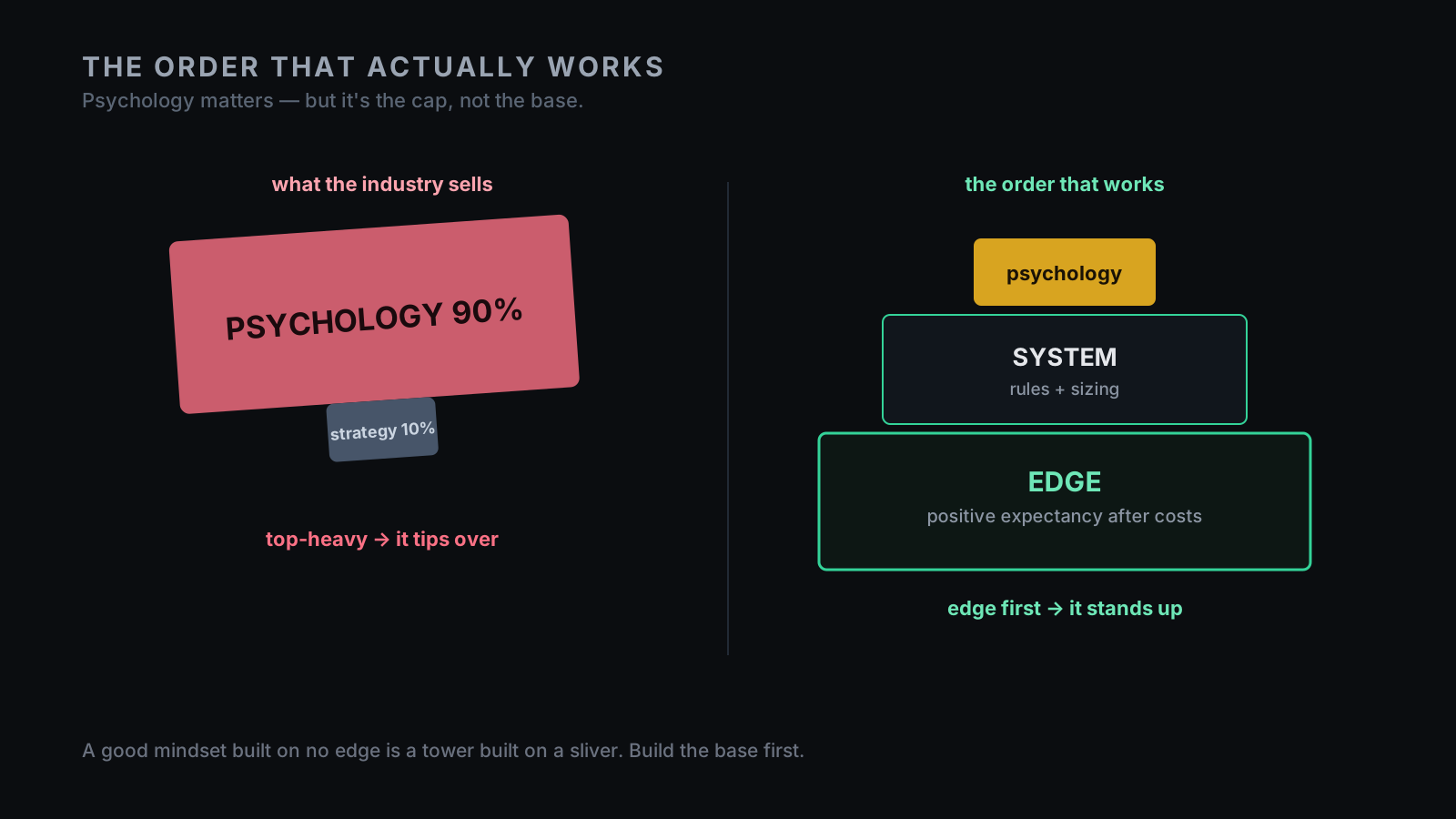
The famous line "trading is 90% psychology" is not a measured statistic — it's a slogan, a useful warning maybe, and a terrible foundation definitely. The honest order is simpler: edge first, system second, psychology third. A real edge is non-negotiable; a system makes the edge executable; psychology is the residual that can let the system work or sabotage it. Psychology is real — it's just not the base.
| What the coach says | What is often happening |
|---|---|
| "You lack discipline." | Your system has no defined rule for that moment. |
| "Fix your mindset." | Your expectancy may be negative. |
| "Trading is 90% mental." | A slogan is being treated like a statistic. |
| "You're too emotional." | You may be risking too much to be calm. |
| "Be more patient." | Your rules don't define when patience ends. |
| "Journal your feelings." | You may need to measure expectancy first. |
You don't need more heroic willpower. You need a system that doesn't require heroic willpower to follow.
I — "90% psychology" is a slogan, not a statistic
The ratio is everywhere — 80%, 90%, sometimes 95% — the number drifts but the message holds: your mind is the problem. It sounds true because every trader has felt it: you knew the rule and broke it, watched yourself sabotage a good trade, moved the stop, chased, panicked. The experience is real. But the ratio is not evidence — it's not a measurement or a law, it's a slogan that survived because it's emotionally believable and commercially perfect. If the problem is your mind, the solution can be endless: another book, another course, another coach, another identity project.
That doesn't make psychology work useless — it means the diagnosis should come after the system audit, not before it. The useful question isn't "what percentage of trading is mental?" It's "what is my mind reacting to?" — a missing rule, a strategy with no edge, a position size that threatens me, a backtest that ignored live costs, a drawdown I never agreed to survive. Most "psychology problems" get far less mysterious once you inspect the system creating them. A slogan that can't be measured shouldn't be the load-bearing wall of how you fix your trading.
II — Psychology can fail a winning system — it can't save a losing one
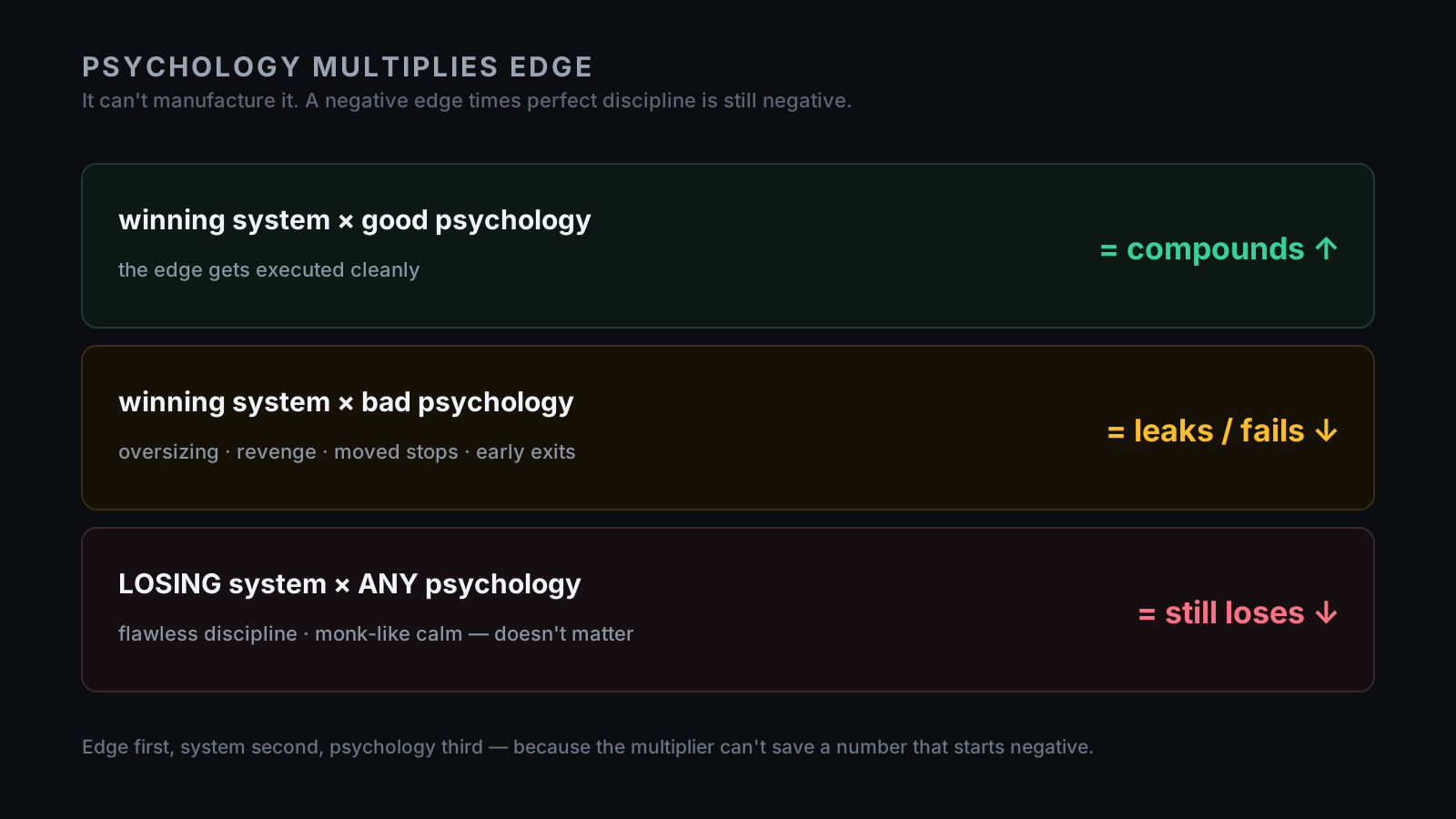
This is the asymmetry that changes everything, because psychology and edge aren't equal ingredients — they do different jobs. Edge answers is this bet positive after costs? Psychology answers can I execute the bet correctly? Those aren't interchangeable. A good mindset cannot turn a negative-edge strategy into a positive-edge one: if your system loses after spread, slippage, commission, and realistic execution, discipline won't save it — it'll just execute the loss cleanly, calmly, on schedule. Meanwhile a bad mindset can absolutely destroy a positive-edge system through oversizing, revenge, moved stops, or shutting it down at the bottom of a normal drawdown.
So psychology matters — but it works like a multiplier. Winning system × good execution = compounds; winning system × bad execution = leaks or fails; losing system × any mindset = still loses. That's the order of operations, and it only runs one way: edge first, system second, psychology third. Spend a year fixing your mindset on top of a strategy with no edge and you haven't become disciplined — you've polished the execution of a losing plan. Perfect discipline applied to the wrong system is still the wrong system.
III — Your discipline problem is usually a system problem
Take the moments you call indiscipline and look closely; they almost always collapse into two cases, and neither is a character flaw. Case one: no edge. If the strategy doesn't have positive expectancy, your inability to follow it may not be weakness — it may be your instincts resisting a system that hasn't earned trust. You feel hesitation and call it fear; maybe it is, but maybe it's information — part of you knows the setup is vague, the backtest was flattering, the costs were ignored. Sometimes your gut is right about a system that's wrong — and you shouldn't use willpower to force yourself into a bad strategy; you should test the strategy.
Case two: no rule. This one is even more common. You think you have a plan, but the hardest moments are undefined — "trade the trend," "buy support," "let winners run," "manage the position" are slogans with candles attached, not rules. When price approaches the stop, the system never actually said what to do; when a trade moves halfway to target, it never defined whether to trail, scale, hold, or exit. So you decide live, under pressure, with money on the line — and when it goes badly you call it emotional. But emotion didn't create the missing rule; the system handed you a judgement call it should have answered in advance, and discretion under fire is exactly where humans break. A good system doesn't ask the trader to invent rules at the worst possible moment.
IV — You can't be calm risking too much
There's a physical layer under trading psychology, and it's called size. You cannot will yourself calm while risking an amount that genuinely threatens you: if one trade can ruin your week, your month, your account, or your self-image, your body will produce fear, tunnel vision, and impulsive exits — not because you're weak, but because your nervous system noticed a real threat that you created with position size. At a survivable size, the whole emotional picture changes: one loss hurts but doesn't threaten you, five losses are uncomfortable but not identity-ending, ten losses are a drawdown, not an emergency. The rule gets easier to follow — not because you became enlightened, but because the system stopped threatening you.
Calm isn't a personality trait you build in a journal. It's often a position size you choose in a spreadsheet. This is why so many "disciplined" traders aren't more spiritual than everyone else — they're sized sanely, not asking their psychology to carry a risk their account can't handle. So before you diagnose yourself as emotional, check the number that creates the emotion: how much are you risking? If the size is wrong, fear isn't the bug — it's the warning light, and it's pointing at the Win Rate Is a Vanity Metric risk-of-ruin math, not at your character.
V — Discipline is a property of the system
Durable traders don't run on daily heroism — they design environments that require less of it, and this is the part most mindset advice misses. A disciplined trader isn't someone who wakes up with infinite willpower; they're someone whose process removes as many live temptations as possible. Position size is computed before entry. Entries are defined before the open. Stops are placed before fear arrives. Daily loss limits are enforced before revenge starts. Risk caps are set before confidence gets loud. The disciplined action becomes the default, and the undisciplined one takes effort.
That's the whole game. Discipline you have to summon every day will eventually fail; discipline built into the system once has a far better chance — a rule in code doesn't get tired, a sizing formula doesn't get brave after three wins, a daily-loss halt doesn't negotiate with your ego, a mechanical exit doesn't "give it just a little room." The goal was never to become a trader with superhuman self-control; it's to need less self-control because the system already made the decision. Systematizing your trading moves discipline out of mood and into design.
VI — The demo-to-live gap is the proof
Every trader knows the confession: "I'm profitable on demo, but I lose on live." Most people file it under pure psychology. It's partly psychology — but not only, because two different things switch on when you go live.
One: execution becomes real. Live accounts pay real spread, take slippage, suffer rejects, and don't fill like clean simulations in fast markets. A strategy that looked positive on demo can be negative live before your emotions enter the room — that's the whole Spread Is a Tax You Can't See problem, and it isn't psychology, it's execution. Two: money becomes real. Demo losses are information; live losses are pain. The same setup that felt easy in simulation now threatens capital you care about, and the fear arrives in proportion to your size — that isn't random weakness, it's biology responding to stakes.
So put them together and the conclusion flips. The demo-to-live gap isn't proof you're broken — it's proof your test was incomplete. Demo removed the costs, removed the stakes, removed some execution reality; live added them back, and everyone called the difference "psychology." The fix isn't more grit on the live account — it's to make the demo honest (model the costs, simulate slippage, trade the size you'll really use) and the system mechanical, so that when live begins there's far less new information for your psychology to panic over.
VII — What the mindset industry sells instead
Now the commercial part — not aimed at any one coach, and not a claim that psychology work is bad; plenty of it is excellent, and some traders genuinely need help with fear, tilt, and impulse. But the incentive of the mindset industry often points in a convenient direction: the symptom becomes the product. Your feelings recur, so the product recurs — another call, another course, another journal, another reset. "Fix your system" doesn't recur the way "fix your feelings" does, so the symptom gets sold monthly and the cause rarely gets sold at all. A precise rule either exists or it doesn't; an expectancy test either passes or it doesn't; a sizing model either fits your risk or it doesn't. System design resolves things — mindset content can keep interpreting them forever.
The right place for psychology work is after the system is sound: a real edge, precise rules, sane size, realistic costs, a defined drawdown, mechanical execution. Then psychology genuinely matters, and the work becomes specific and honest — don't override the system, don't abandon it inside a normal drawdown, don't over-leverage it, don't shut it off at the bottom, don't turn a system into an identity. That residue is real and worth coaching. But it's the cap on the pyramid, not the base — and selling the cap as the base is how a trader spends a year and a fortune fixing a mind that was only ever reacting correctly to a broken system.
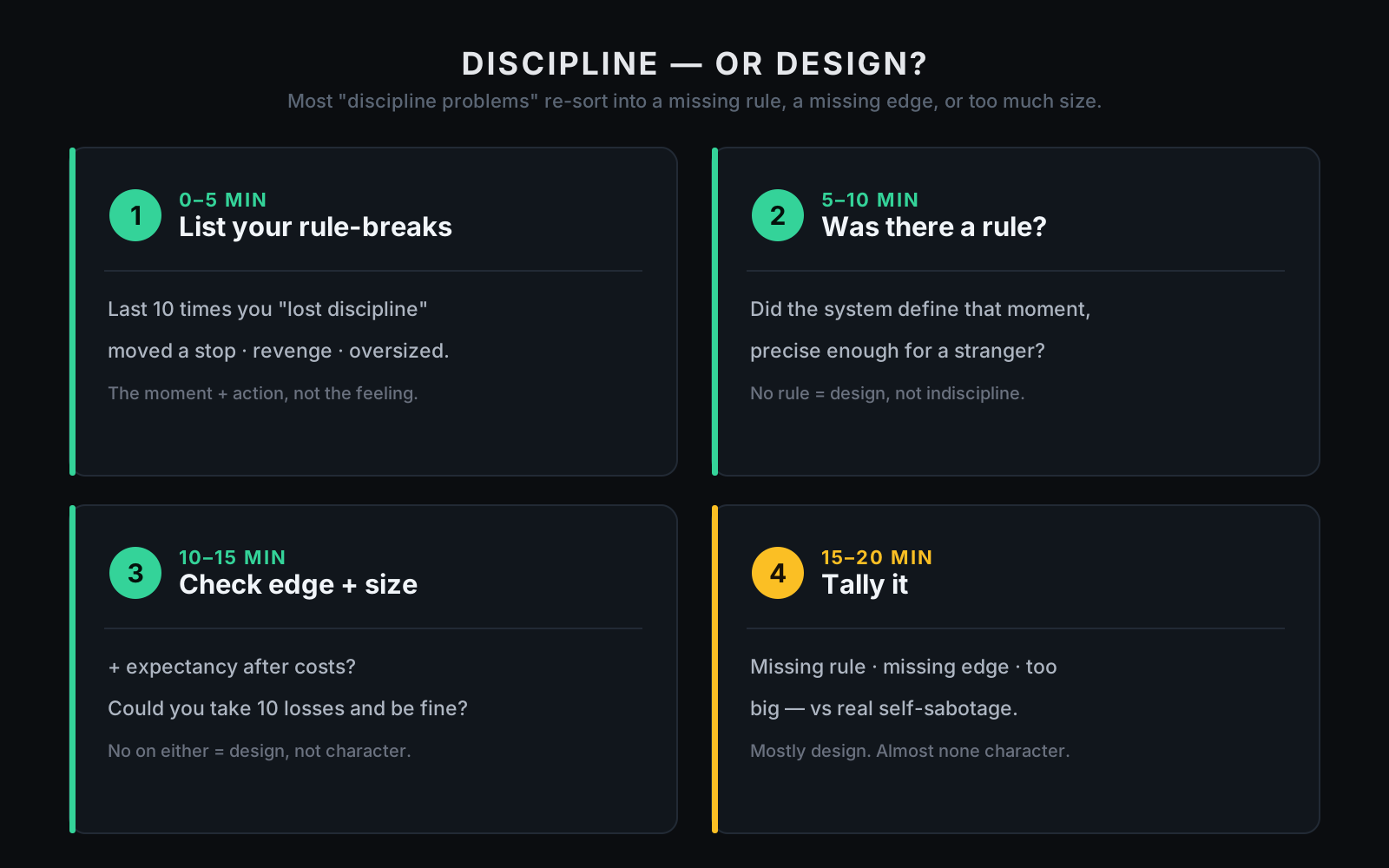
VIII — The 20-minute discipline-or-design audit
Before you buy another mindset product, run this on your own "discipline problems." It re-sorts almost all of them.
Minutes 0–5 · List your rule-breaks. Write the last ten times you "lost discipline" — moved a stop, revenge-traded, oversized, skipped a valid setup, took an invalid one, cut a winner, added to a loser, shut a system down. Be specific about the moment and action, not the feeling.
Minutes 5–10 · For each, ask: was there a rule? Did your system define what to do in that exact moment, precisely enough that a stranger could execute it identically, written before the trade? If not, mark it design — that wasn't indiscipline, it was a missing rule you were handed under fire.
Minutes 10–15 · Check the edge and the size. Does the strategy have positive expectancy after costs (not on frictionless demo)? Was the risk-per-trade survivable — could you take ten losses and be fine? A "no" on edge means your gut was right to resist; a "no" on size means the fear was manufactured. Both are design, not character.
Minutes 15–20 · Tally it. Count how many of the ten resolve to a missing rule, a missing edge, or too much size — versus genuine self-sabotage on a sound, sane system. For most traders the tally is brutal: nearly all of it was design, almost none of it was character. That's good news — design can be fixed, and the few problems that are genuinely psychological are now small, clear, and actually worth working on. You just stopped trying to heal the wrong wound.
Where this meets ProEA
Now the honest part, caveat included. We don't sell a mindset, a calm, or a journal — we sell a mechanical system you can inspect, and a rules-based EA does one specific thing mindset advice can't: it moves the decision out of the live emotional moment and into the design. Entries, exits, sizing, stops, and risk limits are rules; the system executes whether you feel confident, scared, tired, or tilted, because it isn't asking you. That removes a large slice of the surface where psychology does its damage — no discretionary entry to second-guess, no stop to "give a little room," no revenge size after a loss, because the decision was made before the emotion arrived. When the decision lives in the system, most of the "psychology" turns out to have been an open question your strategy refused to answer.
And the caveat, stated plainly, because it's what keeps this honest: mechanization does not remove psychology, make you a robot, or guarantee profit — it changes where psychology lives. You still have to not override the system, not over-leverage it, and sit through drawdowns you understand without pulling the plug at the bottom — and a mechanical system with no edge just loses your money with great discipline. So MTR isn't a cure for your mind; it's full MT5 source whose rules and risk you can read, so the discipline lives in the design instead of your daily willpower, and the residue that's left is small enough to actually master. Source and a grid are inspectability, not a promise — the edge still has to be real and the market can still turn. What it is not is one more undefined plan to white-knuckle.
Disclosure: the one question before you buy another mindset course
We sell source and evidence you can inspect — not outcomes, not calm, not a mindset, not a guarantee. No system or course can promise future results; trading carries real risk of loss; past performance is not future performance; a mechanical system can lose money, ours included, and owning one does not make you profitable.
So before you spend another dollar fixing your head, ask the question the mindset upsell tends to avoid: "Does my system have positive expectancy after costs, with rules precise enough to execute mechanically, at a size I can survive?" If the answer is no, you don't have a discipline problem — you have a design problem, and no course about your feelings will fix a missing edge.
Your first 20 minutes
Don't take our word for it. Take the source — and notice how little of it asks anything of your willpower.
Minutes 0–5 · Read who makes the decisions. Open MTR's source and find where the choices get made — entries, exits, stops, sizing, risk limits, the places it refuses to trade — all defined in code, in advance. Notice how much of "discipline" is simply not being asked to decide live.
Minutes 5–10 · Find the edge claim and the costs. Look at the published 28-month evidence with its explicit cost assumptions. The question isn't "does it feel good," it's "is there positive expectancy after costs, and what does it need to survive?" Edge first; mindset never first.
Minutes 10–15 · Set a size you can sleep at. Choose a risk-per-trade where a losing streak is survivable — not pleasant, survivable; ten losses shouldn't turn you into a different person. This single number does more for your "psychology" than any motivational quote, because it removes the threat the fear was responding to.
Minutes 15–20 · Decide on design, not willpower. A real edge after cost, rules that execute without you, a size that can't seriously hurt you, a drawdown you understand → a small forward test you don't have to white-knuckle. Not because you finally found discipline. Because you stopped needing so much of it.
One last thing
If this stopped you from buying one more course to fix a mind that was reacting correctly to a broken system, it did its job. Send it to the trader who's been told, again, that they just need more discipline.
You were never undisciplined. You were under-systematized. And you can't meditate your way to an edge you don't have.