What is walk-forward testing?
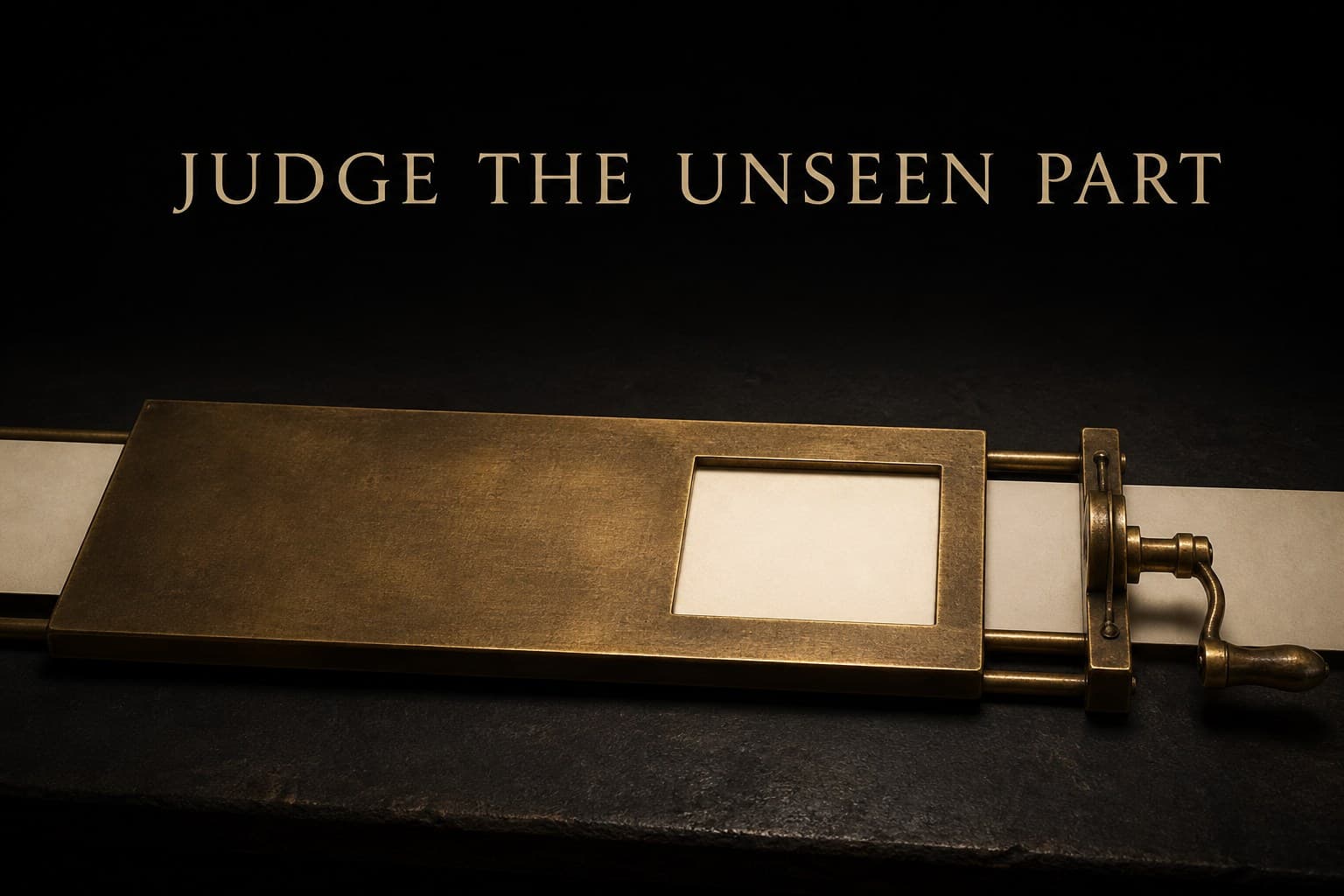
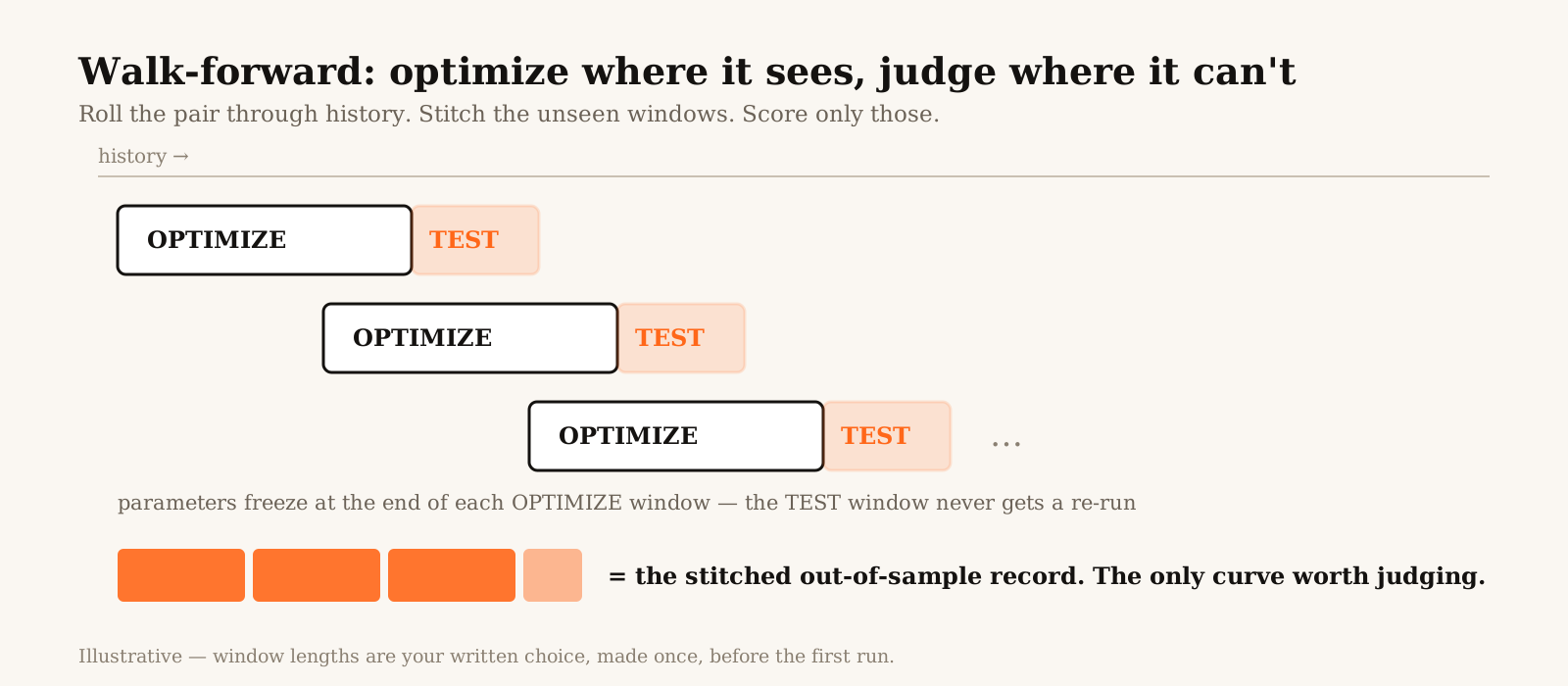
Walk-forward testing splits history into rolling pairs of windows: optimize the parameters on one window (in-sample), freeze them, run them on the next window the optimizer never touched (out-of-sample), then roll both windows forward and repeat. At the end you stitch the out-of-sample segments together and judge the strategy on that stitched track record only.
The in-sample windows are where the strategy studies. The out-of-sample windows are the exam. A single full-history optimization grades the strategy on the questions it studied — walk-forward is the version where somebody finally hides the answer key.
Why a single backtest flatters you
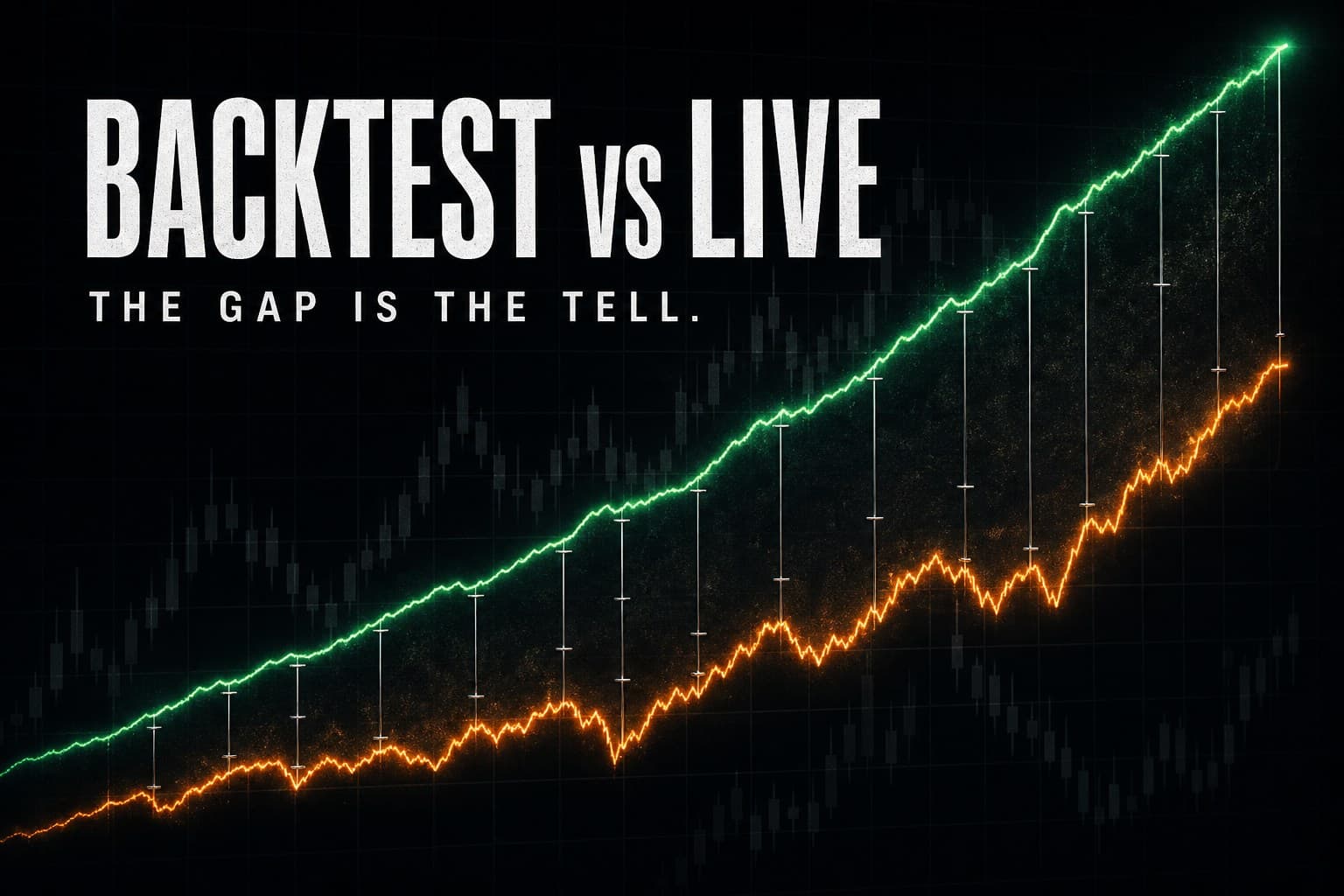
Every parameter you tune is a search through the past, and a big enough search always finds a flattering costume. The equity curve from an optimization isn't a forecast; it's a receipt for the search effort. Even honest builders fall into it, because the feedback loop rewards it: tweak, re-run, better curve, repeat — we've measured where that road ends.
Walk-forward separates parameter selection from evaluation. Performance on unseen periods can reveal overfitting, but a short or favorable out-of-sample period may still miss it. Passing is evidence to examine, not proof of a durable edge.
How do you run one? (any platform)
The protocol is platform-agnostic — a spreadsheet and any tester will do (MT5 users: the Strategy Tester mechanics are in the backtest guide):
- Split. Pick an in-sample length and an out-of-sample length — a common shape is several months of IS to one or two of OOS, but write your choice down before running anything.
- Optimize on IS, then freeze. Whatever parameters win the in-sample window are locked. No peeking, no "one small adjustment" after seeing what comes next — one adjustment after peeking converts the whole segment back into in-sample.
- Run frozen on OOS. Record the result, good or bad. Bad segments are data, not accidents to re-run.
- Roll and repeat. Use non-overlapping OOS segments so no period is counted twice. Specify how open positions and account capital cross each boundary before testing; closing and reopening positions incurs costs.
- Review the stitched OOS record. Record net returns, equity drawdown, trade count and costs by segment as well as overall. Keep a final untouched holdout if you intend to choose between different walk-forward designs.
A dated walk-forward example
This is a hypothetical test schedule, not a ProEA performance result. Suppose you choose a rolling 12-month optimization window, a 3-month test window and a 3-month step before running any tests:
| Run | Optimize parameters on | Freeze and evaluate on |
|---|---|---|
| 1 | January–December 2024 | January–March 2025 |
| 2 | April 2024–March 2025 | April–June 2025 |
| 3 | July 2024–June 2025 | July–September 2025 |
The scored sequence is January–September 2025. The earlier optimization windows overlap, which is expected; the scored windows do not. March 2025 can become training data for run 2 because it is now in the past, but it must not influence the parameters used to score run 1. Reserve October–December 2025 as a final holdout if that is part of the prewritten design.
Keep a log containing each date range, parameter search bounds, selection metric, selected settings, symbol specification, tester/data version, costs, position-boundary policy and all results. An independent monthly test that merely resets the deposit is not automatically walk-forward optimization: the earlier training and frozen later evaluation must exist.
How should you calculate walk-forward efficiency?
Walk-forward efficiency compares OOS performance with IS performance, but the definition must identify the metric and time basis. TradeStation's WFO documentation compares annualized rates. Do not divide a 3-month total return by a 12-month total return and treat that as a like-for-like efficiency score. If using annualized net return, annualize both consistently with the same capital and cost conventions, then divide the OOS rate by a positive IS rate.
A zero or near-zero denominator makes the ratio undefined or unstable. Two negative returns can produce a positive ratio even though both periods lost money; that is not successful validation. Short-period annualization can also magnify noise. Publish the underlying returns and durations, and state how you combine runs rather than casually averaging their ratios. No single efficiency cutoff replaces the OOS drawdowns, sample size and failure periods.
Is MT5 forward testing the same as live forward testing?
No. MT5's built-in Forward setting reserves the latest portion of a selected historical period. MetaQuotes documents fractions or a custom split date in its Strategy Tester guide. That is a historical holdout; repeating the process across rolling date ranges creates a walk-forward schedule. Running on a demo or live account after the strategy is frozen tests subsequent market data and execution conditions.
What walk-forward still can't prove
Honesty about the method's limits, because a good protocol oversold becomes another costume:
You can overfit the walk-forward itself. Window lengths, the metric you optimize, which parameters you expose — those are choices, and re-running the whole walk-forward until the stitched curve looks nice is the same disease one level up. Choose the setup once, in writing, before the first run.
Regimes break. A strategy can pass every roll through five calm years and meet a different market in month one of trading. Stress the stitched record against sequence risk and named ugly periods, not just averages.
Costs and execution change results. Include realistic spread, commission, swap and slippage. Data differences, fill assumptions and changing market conditions also contribute to the gap between backtest and live.
Where we sit
This discipline is exactly what our Evolution Lab automates: it drives a real TradingView through year sweeps with self-calibrating IS/OOS windows and judges every candidate at kill-gates. And a PASS doesn't end the skepticism — it routes the survivor into deeper validation, a hardening gauntlet of bootstrap, walk-forward, stress against named crises, and a random-entry coin-flip control. The lab's own ceiling is the honest one: a PASS is a hypothesis, because the future is out-of-sample. Nothing in this article, or in anything we sell, changes that.
You can run the whole protocol by hand this week. The lab just refuses to let you skip a step when the curve starts looking pretty.
Optimize where the strategy can see. Judge where it can't. Any test that breaks that sentence is the strategy grading its own homework.