A prop firm isn't only selling you access to capital.
It's selling you a fee and a rulebook — and the rulebook decides the game before your first trade.
You pay the fee. The dashboard shows a big balance — $50k, $100k, sometimes more — and it feels like the only thing between you and a payout is the market.
It isn't. On a prop challenge you're barely trading price at all. You're trading the rulebook — and you can be right about direction and still fail. You can be up on the account and still breach. You can protect your strategy perfectly and still lose the challenge because your sizing, your timing, or your daily-loss buffer didn't fit the box someone else drew.
That's the part most traders learn after paying. This guide is built to be read before. Not because every prop firm is bad, or funded trading is fake — but because a prop challenge is an evaluation product with terms, constraints, and failure paths. Price the terms, or you're not buying a trading opportunity; you're buying a lottery ticket with homework attached.
Two requests before we start:
- Save this before you buy your next challenge.
- Send it to the trader about to pay for their third reset.
Not to scare them — to get them to read the rulebook like the contract it is.
Skip this if you already read prop rules like a contract
A prop challenge isn't simply a test of whether you can trade. It's a test of whether your trading fits inside a rulebox someone else designed — a box with an upside target and several downside barriers, where you must reach the target before touching any barrier. That's the whole game.
| What it feels like | What it really is |
|---|---|
| "I'm buying a funded account" | An evaluation with rules and a profit split |
| "The balance is capital I trade freely" | A scorecard inside a controlled box |
| "If I trade well, I pass" | You must trade well and never breach a rule |
| "Max loss means I can lose that much" | It means you must stay well away from that limit |
| "Drawdown is simple" | It may be static, trailing, balance- or equity-based |
| "A good strategy should pass" | A good strategy can still fail if sized for the wrong box |
None of this means the model is unfair. It means it's conditional — and most traders pay before they understand the conditions. That's the mistake.
I — What you're actually buying
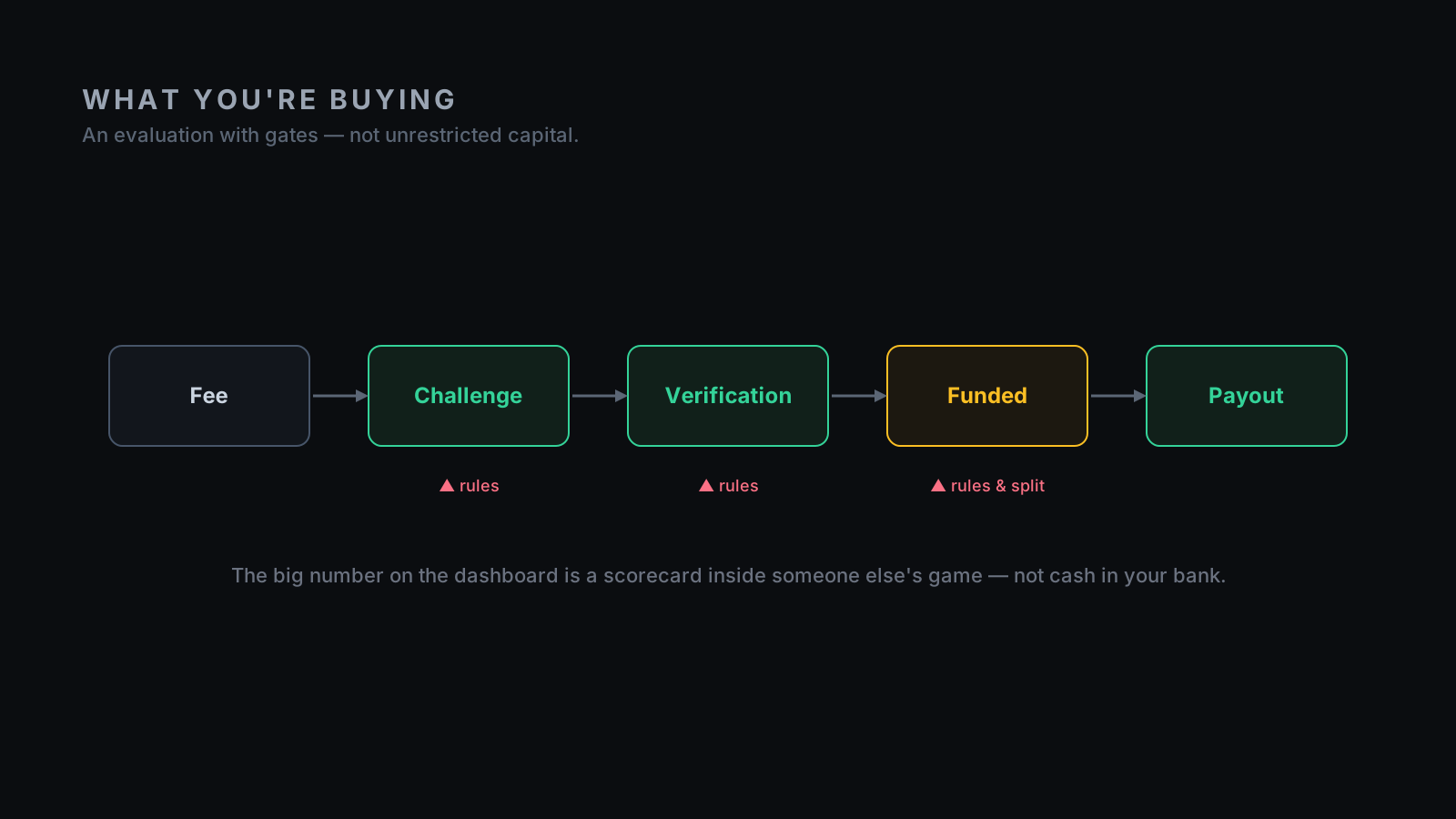
You're not buying capital. You're buying a chance to be evaluated, priced as a fee, with the option of a funded (often simulated-funded) account and a payout split if you pass and keep performing. The structure is almost always Challenge → Verification → Funded → payout rules → ongoing risk rules. The large number on the dashboard isn't cash in your bank; it's a trading limit inside someone else's game.
That reframes the first question. It isn't "how much account size can I buy?" It's "can my strategy survive this firm's exact rules long enough to reach the target?" If you can't answer that before paying, you don't have a prop-firm plan — you have excitement. Excitement is not a risk model.
II — The six numbers that decide the challenge
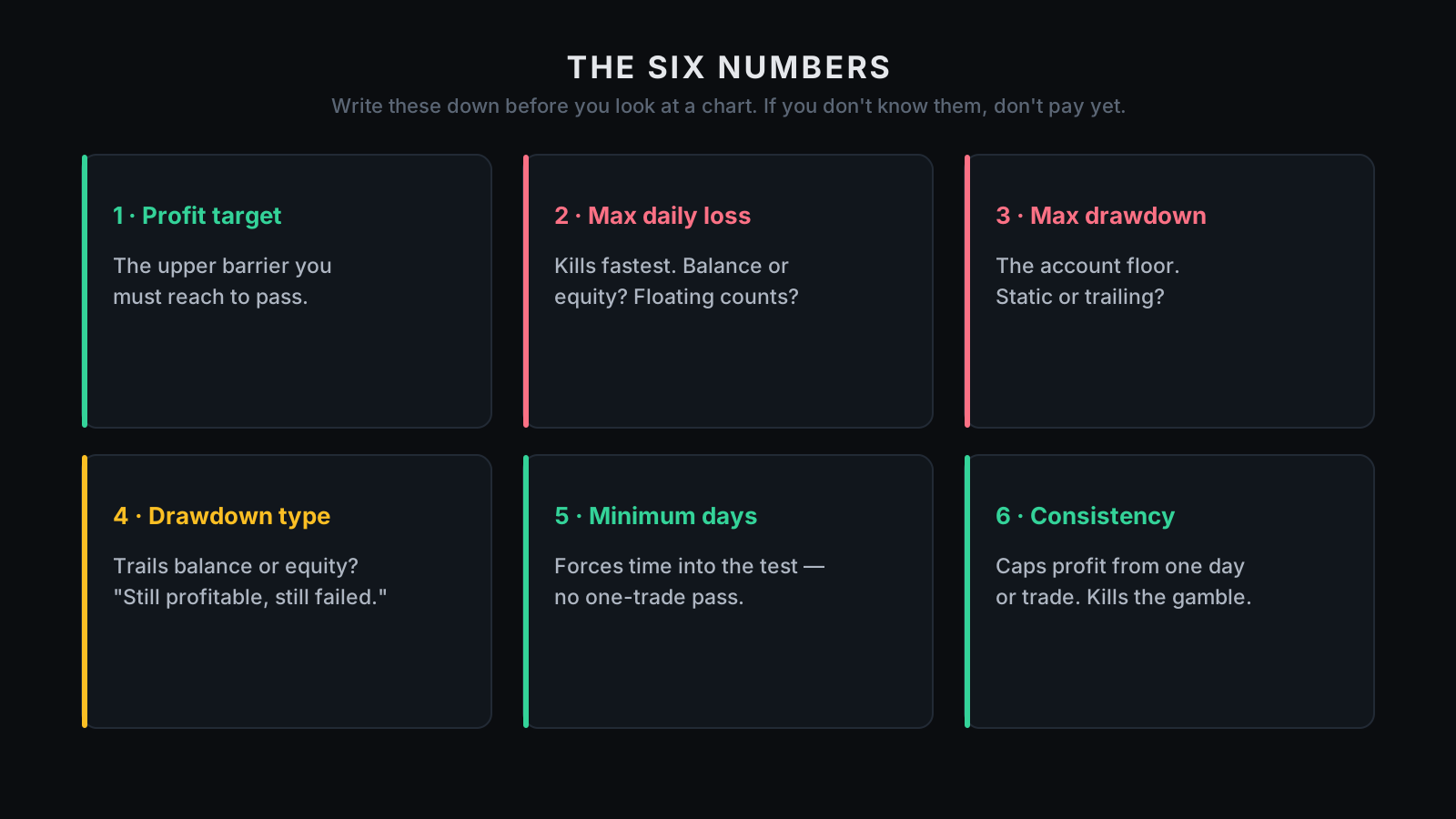
Before you look at a chart, write down six numbers. If you don't know them, don't pay yet.
- Profit target — the upper barrier; the return you must reach to pass (often higher in the challenge, lower in verification).
- Max daily loss — usually the rule that kills fastest. The detail that matters is how it's measured: balance or equity (including open, floating P&L), from start-of-day balance or equity, in which server timezone, hard breach or soft warning. If it's equity-based, an open position can breach you before you close anything.
- Max overall drawdown — the account's lower barrier, static or trailing, balance- or equity-based.
- Drawdown type — it earns its own line because it's the most misread of all: static or trailing? trails balance or equity? does it stop trailing, or lock at the initial balance? This is where "I was still profitable" becomes "I still failed."
- Minimum trading days — forces time into the test; you must reach the target and satisfy the day count, so a one-trade pass is off the table.
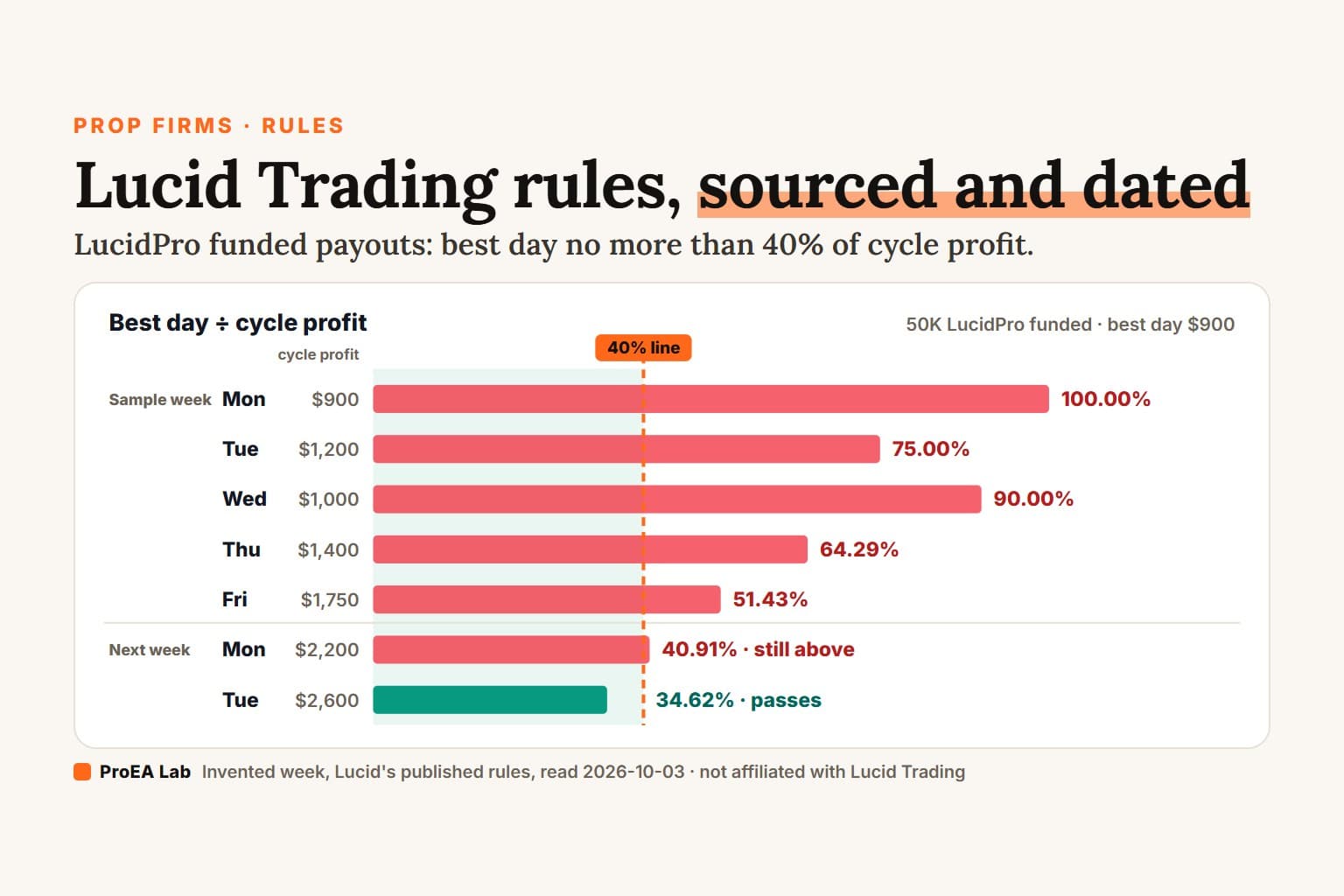
- Consistency rule — caps how much of your profit can come from one day or trade. A strategy that passes on a single oversized winner can still fail it — a rulebook failure, not a market one.
III — Daily loss is not a suggestion
Most traders treat the daily loss limit as a usable budget. It isn't a budget — it's a cliff. A sensible trader doesn't walk to the edge of a cliff and call it "using the full allowance."
If the daily loss is 5%, your own internal stop should sit well inside it, because the market doesn't close your trades at the number in your spreadsheet. Spread widens. Stops slip. Floating P&L moves before your platform updates. News gaps. Positions correlate. A hedge fails to offset perfectly. The server day resets later than you thought. The daily limit isn't where you manage risk — it's where the challenge ends. Your real risk limit has to be smaller than the firm's, because a trader who risks right up to the daily loss has outsourced their risk management to the firm's rulebook. That's backwards. Stop yourself before the rulebook has to.
IV — The trailing-drawdown trap
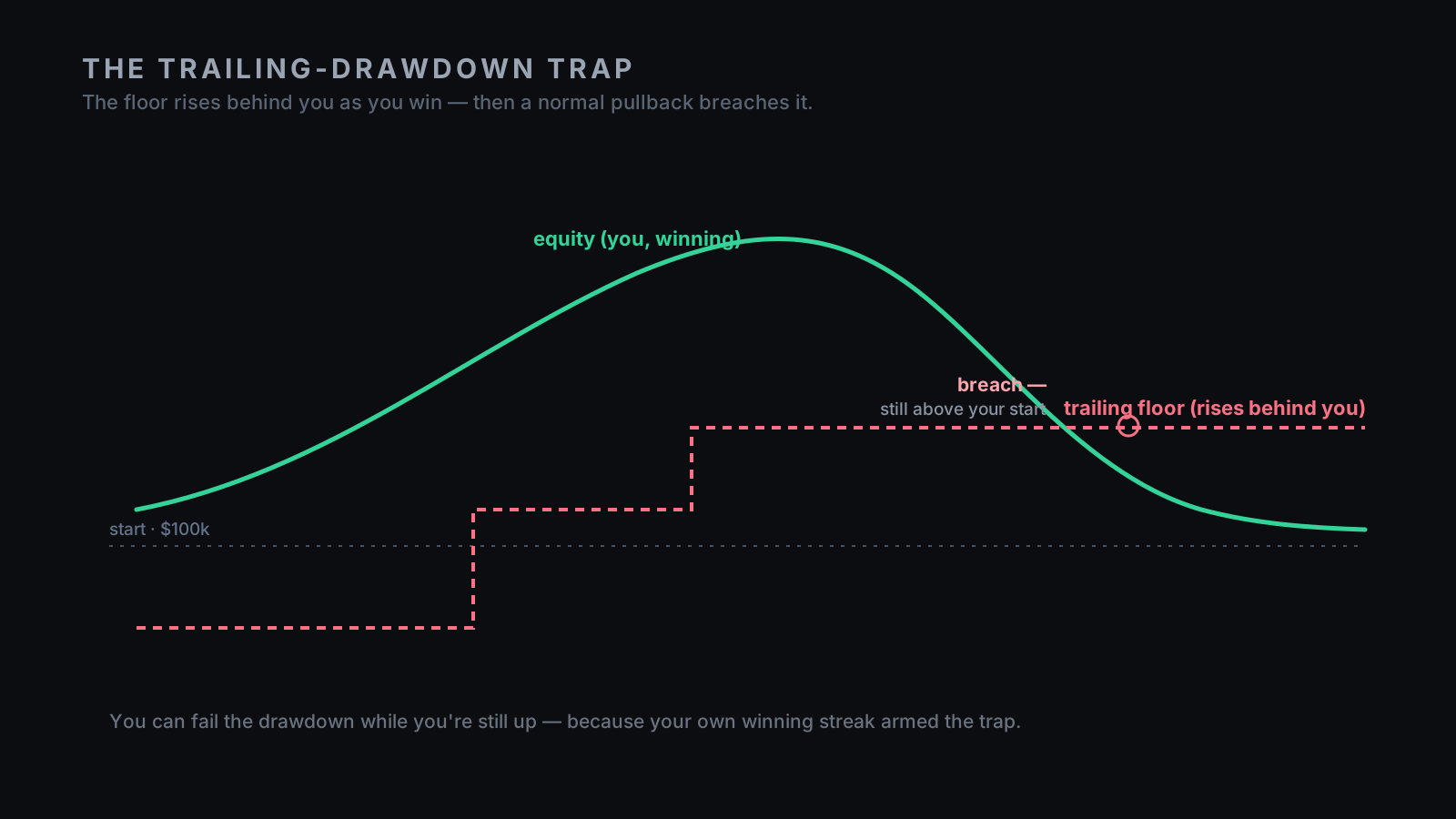
Static drawdown is simple: start at $100k, a $10k static floor sits at $90k, and it stays there. Trailing drawdown is different — it follows your high-water mark, so as you make money the floor rises behind you. That sounds friendly. It isn't always.
Walk it through. Start $100k, trailing drawdown $10k, floor at $90k. You trade well to $106k, and the trailing floor ratchets up to $96k. You're up $6k — but your room to breathe is no longer your starting room. Give back a perfectly ordinary $7k and you're near breach, even though you're barely above where you began. You can fail because you won first — the rope tightens as you climb.
So don't ask only "what's the max drawdown?" Ask "what happens to the floor after I make money?" — does it trail balance or equity, does it ever stop trailing, does it lock at the initial balance. Those clauses decide whether a green week is safe or fatal.
V — The barrier problem
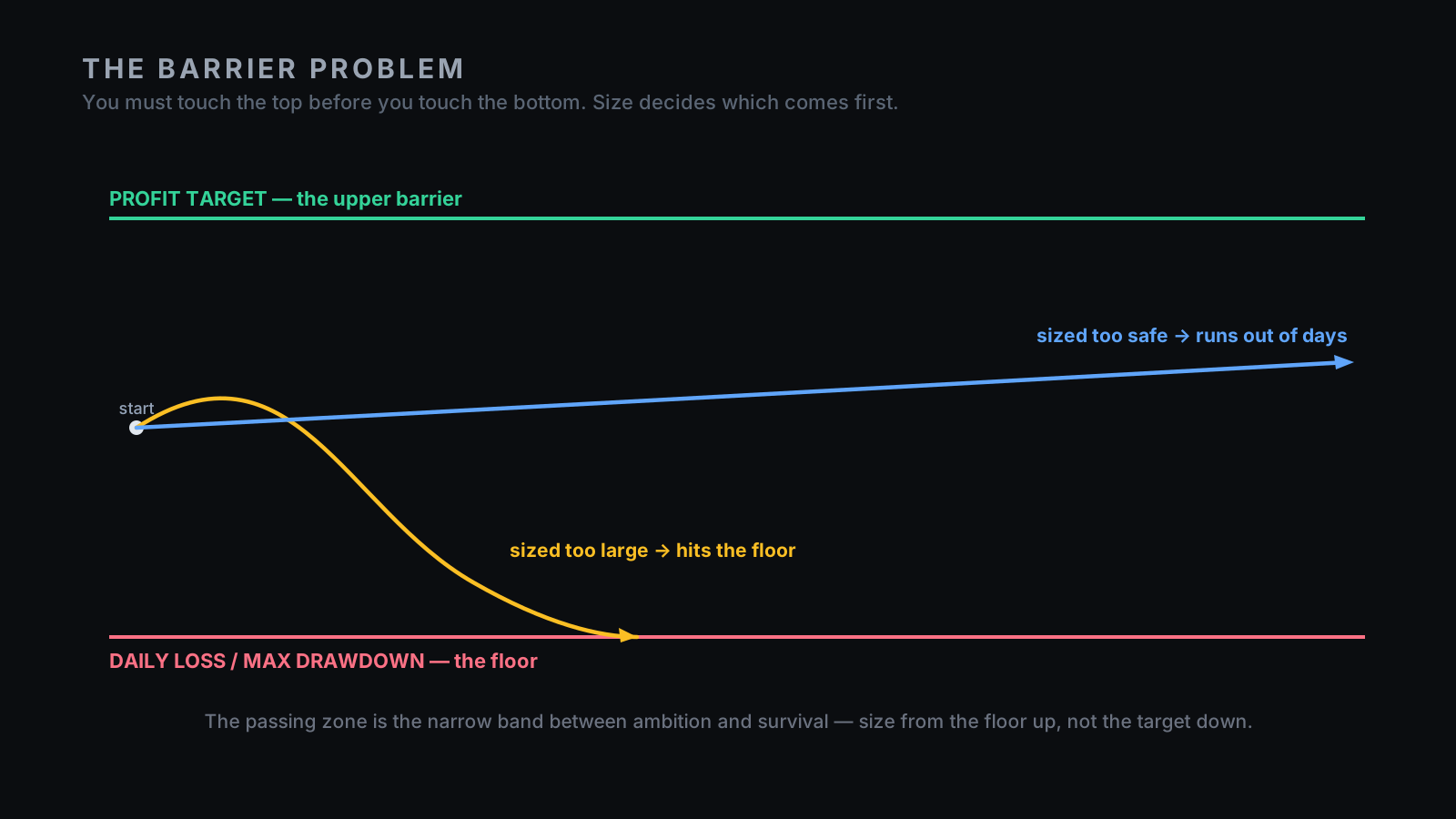
A prop challenge is a barrier problem: you must touch the upper barrier (the profit target) before touching a lower one (daily loss, max drawdown, a consistency or rule breach). Your position size sets how fast you approach all of them at once — and that's the trap.
Size up and you reach the target faster and the floor faster. Size down and you protect the floor but may run out of time or trading days, or simply fail economically because the path is too slow for the model you bought. Target pressure pulls toward more risk; drawdown pressure demands less. The passing zone is the narrow band where your strategy can plausibly reach the target without bringing a normal losing cluster too close to the floor — and most traders never calculate that band. They pick lot size from desire, and desire is expensive.
So size a challenge from the lower barrier up, not from the profit target down. First ask "what size survives my worst normal day?" Only then ask "at that size, can I still reach the target in time?" If the answer is no, the challenge doesn't fit your strategy — and that's information, not failure.
VI — Why most traders fail
Not every failure means the trader can't trade. Most come from a mismatch between strategy and rulebook:
- Oversizing to chase the target — sizing from the upside instead of the floor. If the size required to pass exceeds the size allowed to survive, the challenge is mathematically hostile to that strategy.
- Treating daily loss as available room — it's the kill line, not a budget.
- Ignoring equity-based rules — feeling safe because nothing's closed, while floating equity quietly breaches the limit.
- Trading news like the rulebook will be polite — spread, slippage and correlation spike together; the rulebook only sees the breach, not the reason.
- Misreading the reset time — a "fresh" day the server says hasn't started.
- Passing through one big day — and tripping the consistency rule.
- Revenge trading after a red day — the classic killer, except here it walks you straight into a hard breach.
Notice what's missing: "couldn't predict direction." Sometimes that's it. But far more often, the trader wasn't beaten by direction — they were beaten by sizing, timing, and rule geometry.
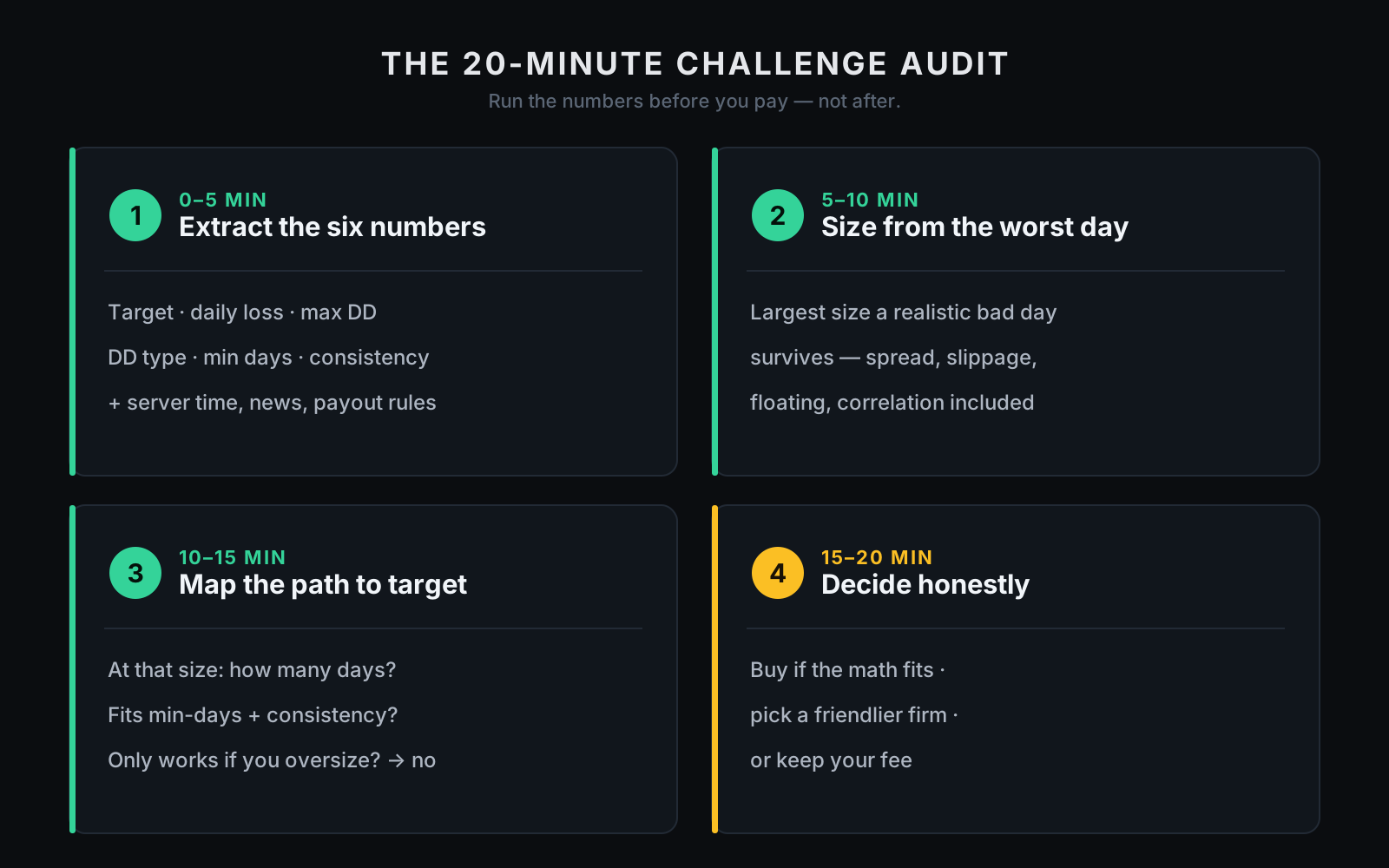
VII — The 20-minute challenge audit
Run this before you pay. Not after.
Minutes 0–5 · Extract the six numbers. From the firm's current rulebook: profit target, max daily loss, max overall drawdown, drawdown type, minimum trading days, consistency rule — plus server timezone, news rules, weekend-holding rules, payout, refund and reset rules. If you can't find a rule, assume you don't understand the product yet.
Minutes 5–10 · Size from the worst day. Compute the largest position size that survives a realistic bad day — not an average one. Include a normal losing trade, a second correlated loss if you run multiple positions, widened spread, slippage, floating-equity movement, and news or rollover if you trade through them. That result, not the profit target, is your maximum size.
Minutes 10–15 · Map the path to the target. At that survival size, how many winning days does the target need? Does it fit the minimum-days window? Does it violate consistency? Does it require sizing up after a loss, or taking lower-quality setups to beat the clock? If the only way to reach the target is to exceed your survival size, the challenge doesn't fit your strategy.
Minutes 15–20 · Decide honestly. Three good outcomes: buy the challenge because the math fits, choose a firm whose rules fit better, or don't buy because the box is hostile. The only bad outcome is paying before doing the math. The cheapest challenge is the one you correctly decided not to buy.
VIII — How to survive the rulebook
You can't change the firm's rules. You can stop pretending they're secondary. The traders who survive do boring things on purpose:
- Size for the floor, not the target. Daily loss first, max drawdown second, trailing floor third, target last. The target can wait; a breach can't be undone.
- Set your own daily stop, well inside the firm's. Stop yourself before the rulebook stops you.
- Respect the high-water mark. If the drawdown trails, a winning streak should often make you risk less, not more — the opposite of how confidence usually works.
- Avoid ugly execution windows. News, rollover and thin sessions turn a normal loss into a breach. On a challenge, execution risk is rule risk (it's the execution tax in its most expensive form).
- Aim for boring consistency. Small, repeatable, rule-aware profit beats one dramatic day that trips the consistency rule and leaves no room for error.
- Keep the wall visible. Your chart shouldn't only show entries; it should show distance to failure — daily-loss buffer, drawdown buffer, trailing floor, consistency status, allowed size. If you can't see the wall, you'll eventually walk into it.
The tool layer
This is where a tool earns its place — not by passing the challenge for you (nothing can honestly promise that), but by keeping the rulebook visible.
The Prop-Firm Challenge Toolkit is built for exactly the arithmetic in this article. You enter your firm's rules and it helps compute the daily-loss buffer, the max-drawdown and trailing-floor distance, a rule-aware position size, your worst-day survival size, the distance to target, and consistency pressure — on your chart, in full source you can read and change. It's a rulebook calculator, not a magic pass machine. And that distinction is the whole point: a tool that promises to pass prop challenges is selling fantasy; a tool that shows the limits clearly is selling visibility. Visibility is useful. Fantasy is expensive.
If you run a full system like MTR inside a prop account, the same principle applies one layer down: the system has to fit the rulebox, which means its risk logic, position sizing, exposure caps and session filters must be inspected and adjusted. A black box makes that impossible — you'd just be hoping a stranger's defaults match your firm's limits. Full source makes it doable. But for this topic, the Toolkit is the honest primary tool; MTR is the layer for people already running a system.
Disclosure: nobody's prop firm is paying us
We're not affiliated with any prop firm, none pays us a referral, and we don't care which one you use — or whether you use one at all. We care about one thing: read the rulebook and do the math before you pay the fee.
A profit target is not a plan. A funded balance is not your money. A challenge fee is not the full cost. And a strategy that's genuinely profitable on your own account can still fail an evaluation it was never sized to survive. Prop-firm rules vary by firm and change often — always read the firm's current rulebook yourself. Nothing here is a promise that any system, tool, or strategy will pass an evaluation. If someone promises you a pass, ask which rule they're pretending doesn't exist.
Your first 20 minutes with the Toolkit
The audit in Section VII is the manual version — free, and you should be able to do it by hand. The Toolkit just does the arithmetic faster and keeps it on your chart.
Minutes 0–5 · Enter your firm's six numbers (plus server time and news rules). The Toolkit turns them into concrete dollar buffers instead of percentages you have to keep converting mid-trade.
Minutes 5–10 · Read your worst-day size. Let it compute the largest size that keeps a realistic bad day — costs and floating equity included — inside your internal daily stop. That's your working maximum.
Minutes 10–15 · Stress it. Widen the spread, add slippage, simulate a news gap, add a correlated second position. Watch the buffers move. You're looking for the size at which a normal bad day stops being survivable.
Minutes 15–20 · Decide — fit your system to the box, pick a firm whose rules you can actually survive, or keep your fee. All three are wins. Paying to discover the rules later is the only loss.
One last thing
If this saved you one challenge fee you were about to hand over without reading the terms, it did its job. Send it to the trader about to buy another reset.
A prop firm sells you a fee and a rulebook. Read the rulebook like the contract it is, and do the math before you pay. The market was never the only hard part. The box was.