Somewhere in your feed this week, a familiar face looked into the camera and told you about an AI trading system quietly making ordinary people rich — a CEO, a famous investor, a TV host, a politician.
The video was crisp, the voice was right, and the comments were full of people saying they withdrew money yesterday.
And every pixel of it could be manufactured: the face, the voice, the happy customers, the screenshot, the climbing dashboard, the urgency, the "limited spots." The whole thing.
This is the new problem, and it's why this isn't just another "be careful online" article. The old scam looked cheap — bad English, an ugly landing page, a logo built in a gas station at 2 a.m. That one still exists, but the dangerous version got an upgrade: a familiar face, a convincing voice, a clean site, a fake app, generated testimonials, a polished explanation, and one magic word that makes people lower their guard — AI. The scam radar most people learned to trust just expired. You used to ask "does this look real?" — and a lot of fake things look real now.
So we're not going to teach you to spot bad grammar. We're going to give you the one test that still works when the face, the voice, the reviews, and the equity curve can all be generated on demand: can you inspect what this thing actually does before you send money? In the AI era, that's not one signal among many — it's the only one a fake can't easily fake its way past. Not the face. Not the comments. Not the withdrawal screenshot. Not the word AI. The box — can you open it?
Before we start, two requests:
- Save this before you click "Learn More" on a single AI trading ad.
- Send it to the family member most likely to trust a familiar face in a video. They are the target.
Is "AI trading" a scam?
Not always. There are legitimate AI-assisted trading tools, real researchers using machine learning, and real builders using AI to write code, test systems, explain modules, and speed up the boring parts of development — we use these models every day. So no, "AI trading" is not automatically fraud. But "it uses AI" tells you almost nothing: not whether there's a real strategy, not whether there's an edge, not whether costs are modelled, not whether the track record is real, not whether you can withdraw your money, and not whether the person in the video even exists.
That's the point. AI has stopped being a proof word and become a risk word. The useful question was never "does it use AI?" — everything claims to. It's "can I inspect what it does before I fund it?" — and a scam's entire business model depends on the answer being no. The rest of this is how to ask that question well.
I — The boom is real, and investment is the script
Start with the scale, because it should change how you behave. Generative-AI fraud didn't grow last year; it detonated — one widely-cited security analysis put the surge at roughly 1,210% in 2025. The FBI's 2025 IC3 report tracked large reported losses tied to AI-nexus complaints, with investment fraud a major slice — on the order of $632M. And regulators have said the quiet part plainly: the CFTC's customer advisory warns outright that AI doesn't turn trading bots into money machines, and that fraudsters are riding the AI wave to sell bots, signals, and crypto schemes that promise high or guaranteed returns. That warning exists for a reason.
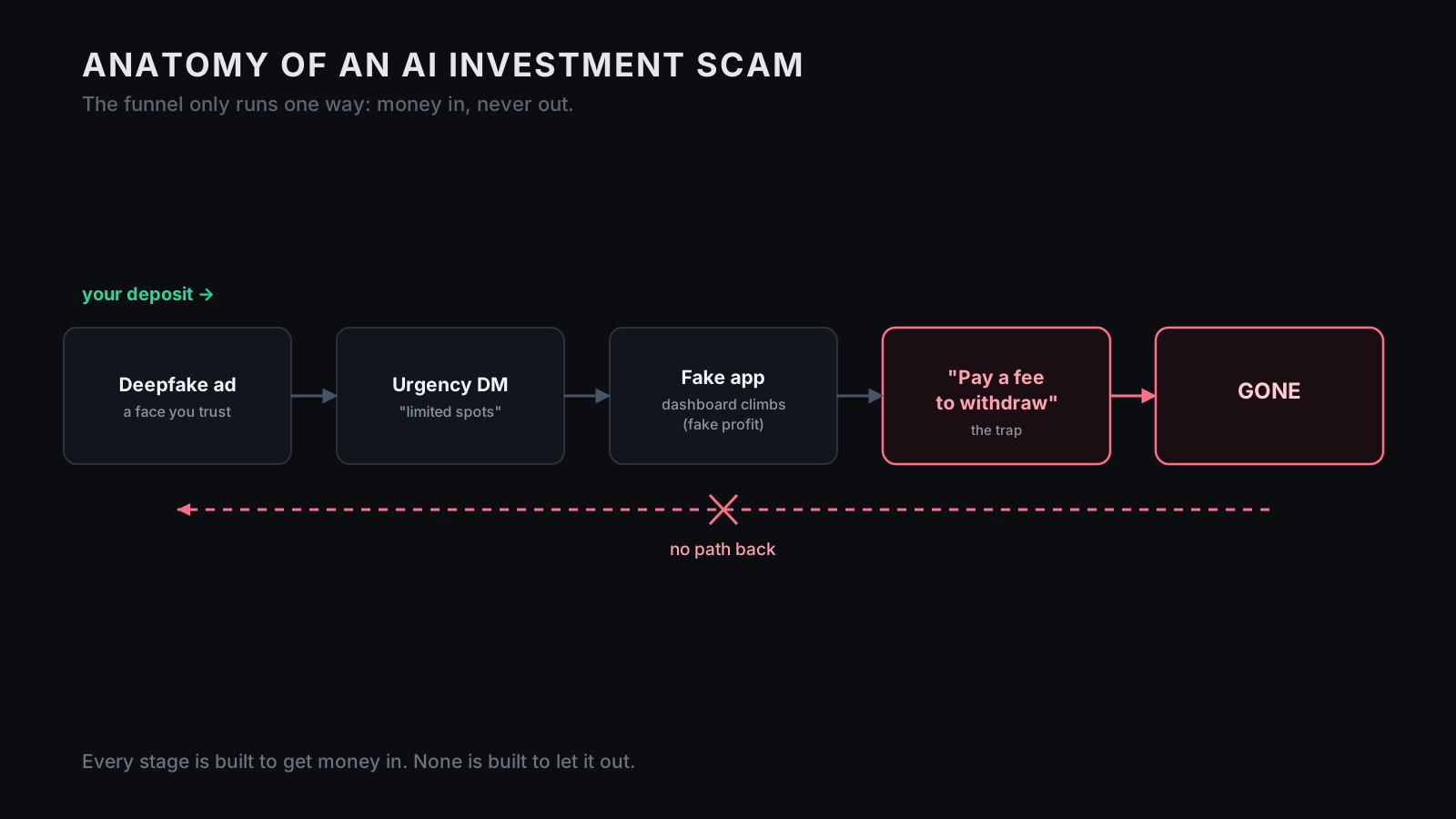
Investment fraud is a perfect place for generative AI to work, because the victim already wants to believe. The promise is emotional — more income, less effort, a smarter system, a secret model, a machine that sees what humans miss — and that story was already powerful before AI made it cheap to package. Now a scammer can generate a fake founder, a fake dashboard, a fake explainer, a fake community, a fake set of testimonials, and a fake celebrity endorsement, all pointing at a fake app that shows fake profit. The scam doesn't need to beat the market. It only needs to beat your skepticism — and AI is very good at manufacturing the one thing skepticism used to rely on: credibility.
II — Why "AI" is the perfect costume
Every era of fraud borrows the era's most trusted word — quant, algo, blockchain, crypto, and now AI. But AI is the best costume the con economy has ever had, for three reasons.
It sounds like magic. "Our manual trader makes 3% a day safely" gets a laugh; "our AI model finds hidden inefficiencies and compounds safely" earns a pause — and that pause is expensive. The technology is genuinely complex, the buyer doesn't fully understand it, so the impossible starts to feel maybe-possible. That's exactly what the scam needs. It's opaque by default. "It's proprietary AI" has become a socially acceptable way to refuse every reasonable question — how does it enter and exit, how is risk sized, what happens during news, what are the costs, what's the worst drawdown? The fake answer to all of it is "it's AI," which isn't an answer, it's a curtain. And it scales fake trust. A human con artist used to need time to write the copy, build the profile, record the pitch; now the factory generates names, faces, reviews, scripts, messages, dashboards, and video on demand. The scammer doesn't need a working strategy — only a convincing-looking one, and convincing-looking is precisely what generative AI does best. "AI-powered" should invite more scrutiny; instead it usually ends it — which is exactly backwards, and exactly what the fake is counting on.
III — The four faces of a fake
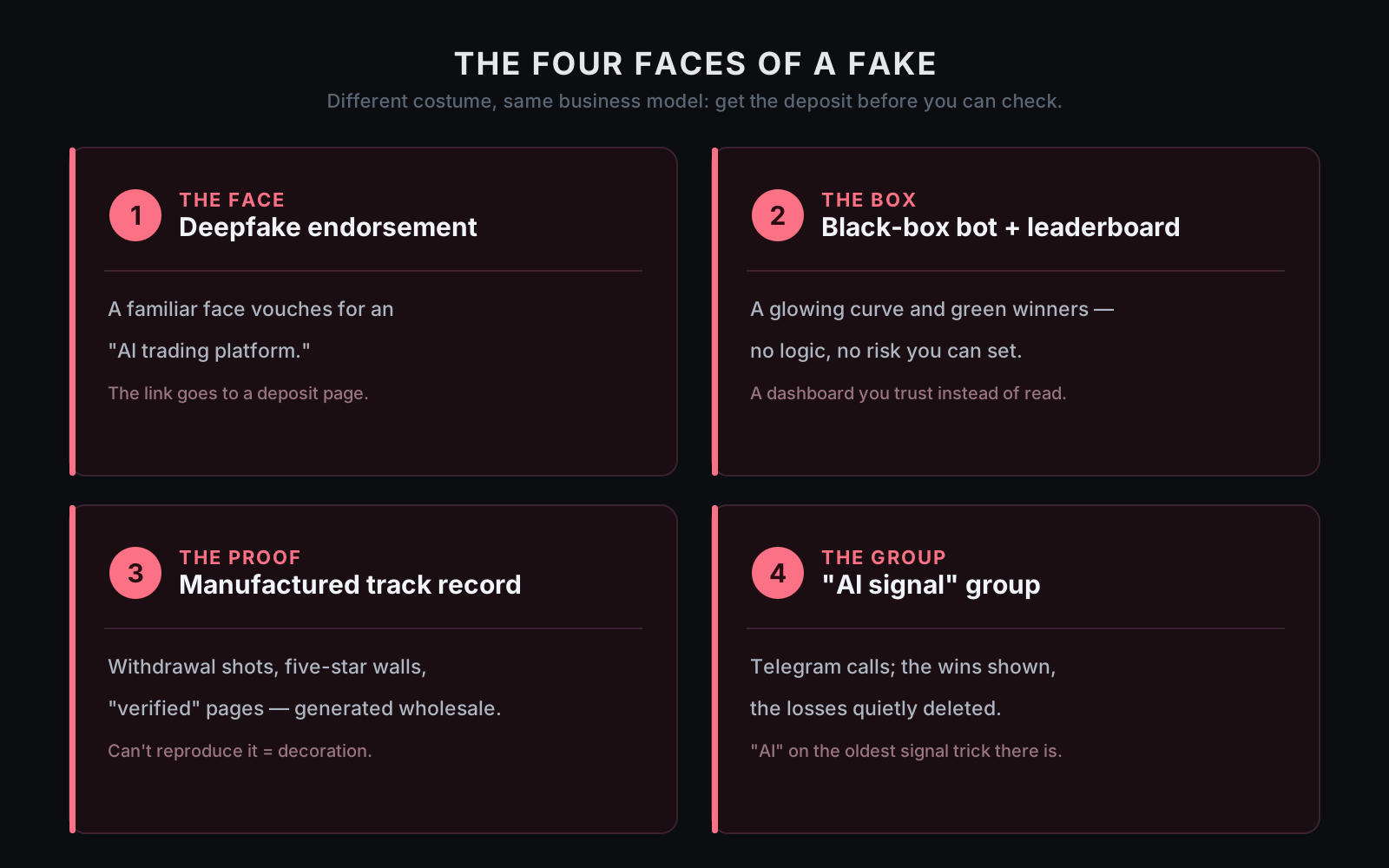
Almost every fake AI trading product wears one of four faces. Learn them and the feed gets easier to read.
1 · The deepfake endorsement. A familiar person — investor, CEO, politician, TV host — promotes an "AI trading platform." The video looks almost right, maybe completely right, but the giveaway isn't visual, it's structural: someone who'd never hawk a retail bot suddenly does, the message carries urgency, the link leads to a deposit page, the mechanism is hidden, and the comments are too convenient. By the time you're judging lip-sync, you're already playing the scammer's game. Ignore the face; inspect the offer.
2 · The black-box bot with a leaderboard. A slick app shows a curve that only climbs and a glowing "live" leaderboard of winners — but no logic, no risk controls you can set, no cost model, no failures, and no way to see what it actually trades before it trades it. It's the autonomous version of the con: trust the dashboard, wire the account, let the agent work. A system you can't read isn't a system you own — it's a stranger trading your money.
3 · The manufactured track record. Withdrawal screenshots, broker-statement images, a Myfxbook-looking page, a wall of five-star reviews, "verified" badges. Before AI, faking one testimonial took effort; now faking a thousand — complete with faces and names — is cheap. A track record you can't independently reproduce isn't evidence. It's decoration.
4 · The "AI signal" group. A Telegram or Discord selling "AI-generated signals," where the wins are celebrated and the losses are deleted, buried, or explained away. The model is never shown, the risk is never clear, and the word "AI" is just set dressing on the oldest signal-seller trick there is: take credit for the winners, memory-hole the rest.
IV — What a fake can never survive
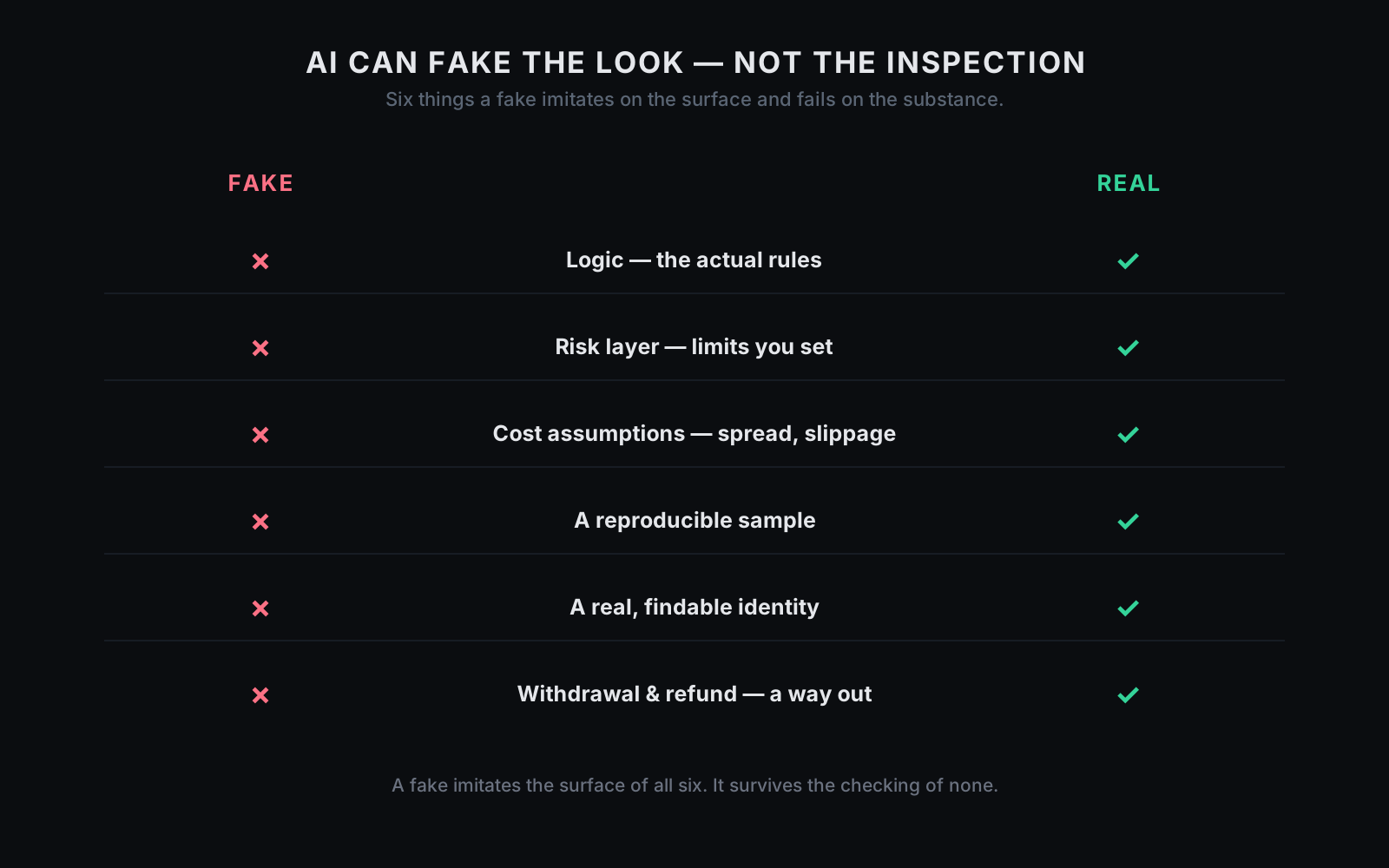
Here's the asymmetry that makes a test possible. AI made it trivial to fake the outputs of a real system — the face, the voice, the curve, the reviews, the confident explanation. It did almost nothing to make it easy to survive inspection. A scammer can even hand you a file and call it "the code," but surviving an independent, reproducible check is a different thing entirely — to fake that, they'd have to build something close to the real product.
So you stop judging polish and start demanding substance: the logic (the actual rules, in a form you can read), the risk layer (sizing, stops, max loss — and the ability for you to set them), the cost assumptions (spread, slippage, commission — modelled, not waved away), a reproducible sample (results you can recompute, not screenshots), a real identity (a named team you can find outside the funnel), and a way out (how withdrawal or refund actually works). A fake can imitate the surface of all six and survive the checking of none. Ask for the logic and it says "proprietary AI"; ask for costs and it says "our model handles that"; ask for results you can reproduce and it sends screenshots; ask who the team is and it sends a brand story; ask how withdrawals work and it sends urgency. The pivot is the answer. The polish was the product.
V — The face is not evidence anymore
This is the hardest habit to break. For your whole life, a clear video of a real person saying a real sentence was evidence — and that era is over. Celebrity-deepfake investment scams are now documented across the major social platforms, so a familiar face endorsing an "AI trading system" isn't a reason to believe; in 2026 it's slightly more reason to slow down, because faked endorsement is one of the dominant forms of the scam.
So invert the instinct. Don't ask "is that really them?" — that's the question the deepfake is engineered to win. Ask "would this claim survive if I ignored the face completely?" Strip away the celebrity, the comments, and the testimonials, and look at what's left: a promised return, a deposit page, and a refusal to show the mechanism. If the only evidence is a person — famous or not — there is no evidence. The mechanism is the evidence, or there isn't any.
VI — Even real AI products aren't automatically an edge
This is the subtler trap, and it's why "is it a scam?" isn't even the most important question. Suppose the product is genuinely not fraudulent — real company, real model, real team. That still doesn't mean it has an edge. A legitimate AI tool may help you analyse markets, summarise data, build code, generate reports, and automate workflow — all useful — but useful isn't the same as an edge, and the most hyped claim is the hardest one: reliably predicting which price goes up, enough to beat costs. A real product can fail that bar honestly; a fake pretends the bar doesn't exist.
So your test has two layers: first, is this real? Second, even if real, is there evidence of an edge after costs? Most people stop after the first, and that's not enough. The honest version of an AI trading tool helps you do the work — analyse, test, document, understand, inspect — rather than skip it (we made that case in full in AI Won't Give You an Edge and how to actually use AI to build a system). "Not a scam" and "has an edge" are two different bars — and most "AI trading" products clear neither. If the pitch is "don't think, just deposit," run.
VII — The one test that survives the AI era
Everything above collapses into a single, deepfake-proof question: can you open the box? Can you read the logic, set the risk, see the costs, reproduce the sample, identify the real people, and understand how money gets in and out — before you pay? A real system can say yes, because it was built to be inspected. A fake can't, because inspection is the one thing that kills it. Faces can be generated, voices cloned, dashboards fabricated, reviews mass-produced, screenshots forged, track records staged — but transparency that survives independent inspection is far harder to counterfeit, because faking it convincingly means more or less building the real thing.
And that's oddly freeing: you no longer have to be an expert at detecting deepfakes or judging character. You just have to get strict about refusing opacity. Stop asking "do I trust them?" Start asking "can I check?" — and treat "you can't, it's proprietary AI" as the complete answer it is.
VIII — The 20-minute real-or-scam audit
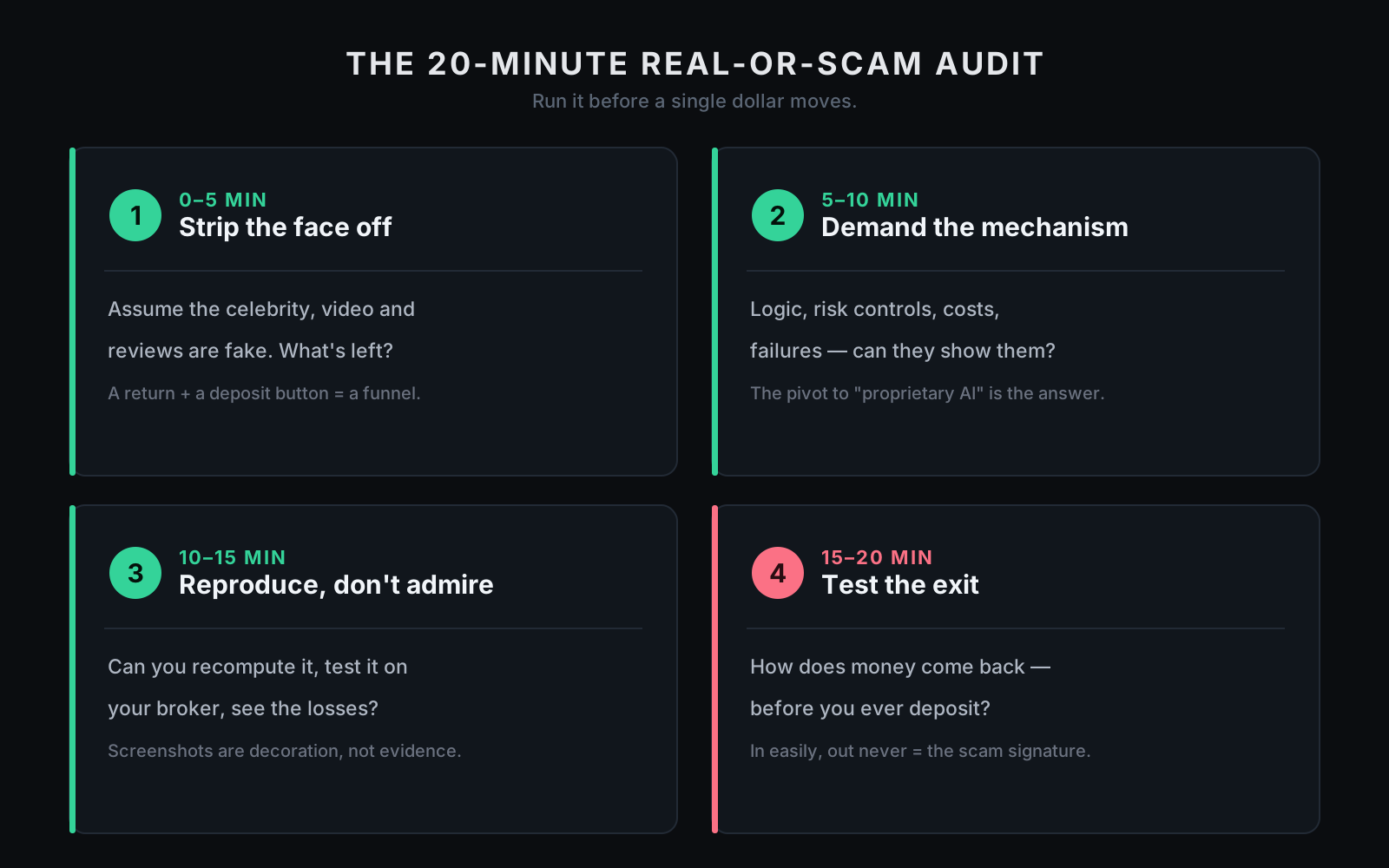
Run this before a single dollar moves — on any AI trading ad, app, bot, signal group, or "private opportunity."
Minutes 0–5 · Strip the face off. Ignore the celebrity, the video, and the testimonials entirely; assume every one of them can be fabricated, because it can. What concrete, checkable claim is left? If it's "a big return and a deposit button," you're done — that's a funnel, not a product.
Minutes 5–10 · Demand the mechanism. Ask for the logic, the risk controls you can set, the costs, and the failure modes. A real seller can explain the mechanism; a fake pivots to "proprietary AI," urgency, or more testimonials. The pivot is the answer.
Minutes 10–15 · Reproduce, don't admire. Don't accept screenshots or a "verified" badge — ask whether you can reproduce the results, test it on your own broker, and see the losses, and search the named people to confirm they exist outside this funnel. Evidence you can reproduce is evidence; evidence you can only look at is decoration.
Minutes 15–20 · Test the exit. Before depositing, find out exactly how money comes back — refund, withdrawal, timeframe, fees, conditions. The signature of an investment scam is that money flows in easily and out never, often gated behind a surprise "fee," "tax," or "verification deposit." If the exit isn't clear before you enter, assume it will be worse after.
Where this meets ProEA
Here's the uncomfortable, honest part: we advertise in the same kinds of feeds where these scams run. So we don't get to just complain about the fakes — we have to be the thing this article tells you to demand, in public. That means MTR ships as full MT5 source you can read before you trust it; a risk layer you set; cost assumptions you can review; a published 28-month backtest you can recompute instead of a screenshot to admire; a named team and a public changelog instead of a stock-photo founder; and a clear, documented way to get your money back rather than a deposit you have to fight to withdraw.
We're telling you this not as a flex but as the only honest position available: if we ask you to demand inspectability from everyone else and don't offer it ourselves, we're just one more face in the feed. The difference between real and fake was never the word "AI" — it's whether the seller can open the box, and whether what's inside survives your inspection. And the caveat, stated plainly because honesty is the brand: inspectable is not the same as profitable. A readable system can still lose, a real 28-month sample doesn't bind the future, and your broker can differ from our test. Inspectability is proof of method, not proof of profit — but in a feed full of deepfakes, proof of method is the first thing worth trusting at all.
Disclosure: the one question for any "AI" seller
We sell source and evidence you can inspect — not outcomes, not an "AI edge," not a guarantee. No model, tool, or backtest can promise future results; trading carries real risk of loss, and past performance is not future performance.
So before you fund anything sold as "AI-powered," ignore the face and ask the only question a fake can't pass: "Can I read the logic, set the risk, see the costs, reproduce the sample, and find the real people — before I pay?" If the answer is "no, it's proprietary AI," you already have your answer.
Your first 20 minutes
Don't take our word for it. Practice the test on something real — ours.
Minutes 0–5 · Open the box. Go to the source and read a module — the risk layer, the cost handling, the actual rules. Notice that there is a box to open.
Minutes 5–10 · Point your AI at it. Paste a module into your own model and ask it to explain the logic, list the assumptions, and find what breaks it. A fake can't survive this; a real system invites it.
Minutes 10–15 · Reproduce, don't admire. Take the published 28-month sample and check it against your own broker's costs. The goal isn't to be impressed — it's to verify.
Minutes 15–20 · Check the exit. Read the terms before you'd ever pay — what happens before download, and after. Know how you'd get your money back before you spend it. That's what a real product lets you do.
One last thing
The scammers got a once-in-a-generation upgrade — the power to fake a face, a voice, a review, a dashboard, a track record, a whole community, on demand and at scale — and they aimed it straight at "AI trading," because that's where the money and the belief meet.
But they didn't get the one thing that matters, and they can't buy it. They can fake the look of the box. They can't fake it surviving being opened — so refuse to fund anything you can't inspect, and the whole deepfake economy loses its favourite weapon: your willingness to believe what you were never allowed to check.