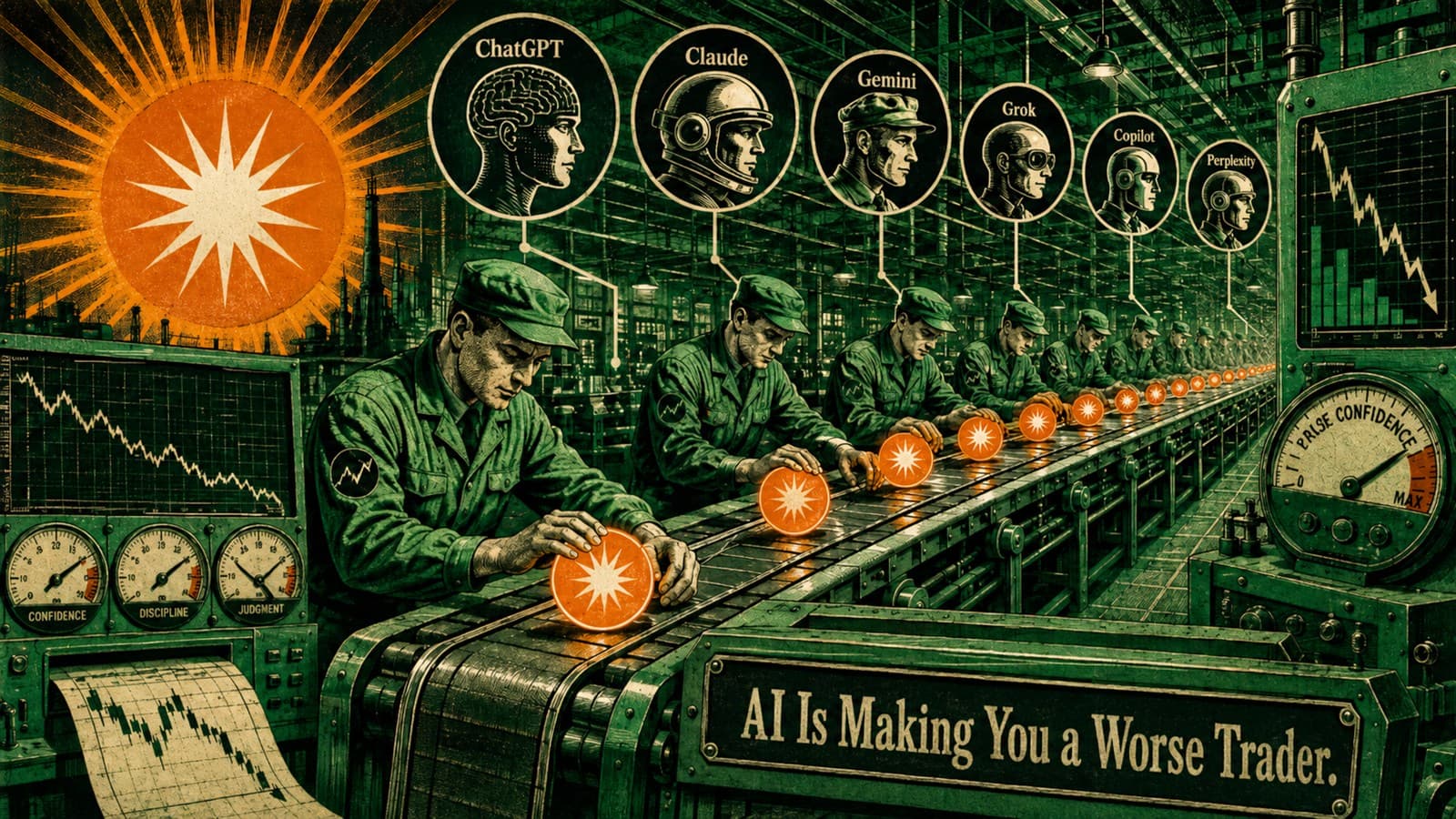
You can build a complete trading system in an afternoon now.
Ask an AI for "a mean-reversion EA on gold with a risk filter," and minutes later you may have clean code, inputs, comments, a backtest, and a dashboard that looks like something a fund would run.
It feels like a superpower.
It feels like the gap between you and the professionals just closed.
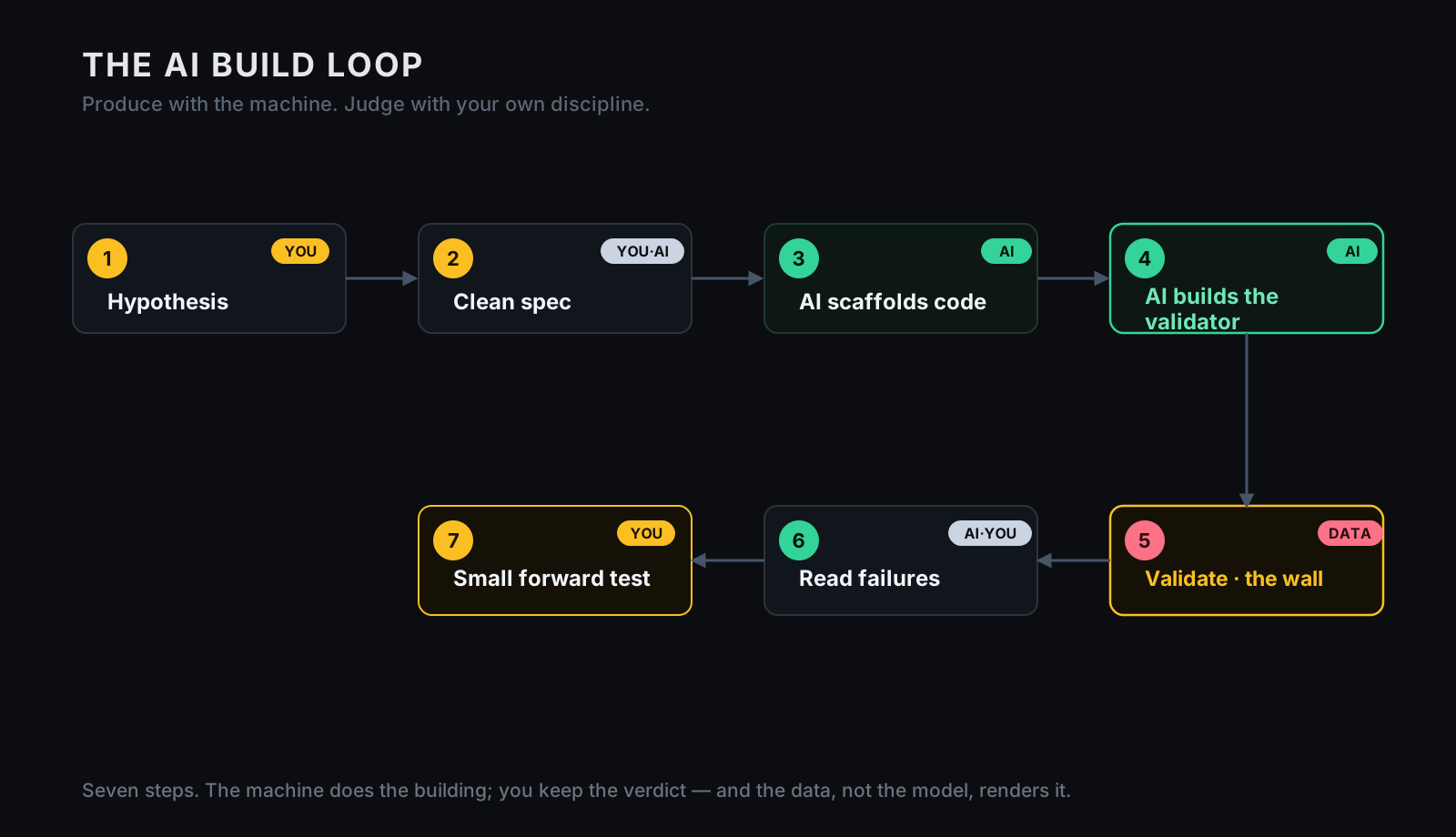
That feeling is the dangerous part — because most people pointing AI at their trading aren't building better systems, they're generating untested ones faster. Same tool, opposite result: one trader uses AI to build a research process, the next uses it to build a beautiful disaster, and the difference isn't the model. It's the workflow. There is a wrong way to use AI to build a trading system — it feels incredible, hands you code and confidence in minutes, and usually ends with a backtest you should never have trusted. And there is a right way, which feels more like work: it makes you write the hypothesis, separate generation from validation, point AI at the tests that try to kill your idea, and read the failures. It ends with something more valuable than confidence — evidence.
This is that second workflow, step by step: the prompts, the build order, the wall between AI and your out-of-sample data, a worked example you can copy, and a 20-minute session you can run today. We covered the principles in Use AI Like a Quant, Not a Gambler; this is the playbook on the bench.
Two requests before we start:
- Bookmark this before your next AI build session — you'll want it open.
- Send it to the person who just shipped an "AI strategy" and is about to fund it. The workflow below may be the difference between their next test and their next blown account.
Can AI build a profitable trading system?
Not on its own, and not from a prompt — but it can make you dramatically faster at building and testing one, which is a different and far more valuable thing. AI is excellent at the labor around a system — writing code, scaffolding, refactoring, porting, explaining modules, building test harnesses, summarizing failures, documenting the work — and dangerous the instant you let it decide whether that system has an edge. The regulators have noticed the gap: the CFTC has published a customer advisory titled, almost word for word, that AI won't turn trading bots into money machines, warning that AI can't predict the future or react to sudden market changes the way the marketing implies. Industry teardowns keep finding the same thing — that much of what's sold as "AI-powered" is marketing wrapped around simple rules, and that curve-fitting is the single most common way AI-built strategies die. (We made the longer case that the code was never the part that loses money.)
So "can AI build a profitable system" is the wrong question. AI can help you produce faster; it should not make you believe faster. The right question is whether you can run AI through a workflow that produces evidence instead of confidence — because AI manufactures confidence for free. The rest of this is that workflow.
The base rates make the case better than any pitch can:
I — The shift: you are the supervisor now
AI didn't remove the work of building a trading system; it moved your job up a level. You used to be the one hand-coding the backtester, wiring the indicators, formatting the report, debugging the plumbing. Now a machine does much of that in minutes — which doesn't make the hard part disappear, it exposes it. Your job is now to supervise: what gets built, what hypothesis is being tested, what assumptions are allowed, what data is protected, what costs are included, what counts as failure, and what earns a forward test.
That promotion only pays off if you actually do the supervisor's job. Hand the whole process to AI and you didn't become ten times faster — you left the part of the loop where the value lived and called it automation. The model's job is to produce; your job is to judge — and the entire skill is never letting those two jobs blur.
II — Make AI do the labor
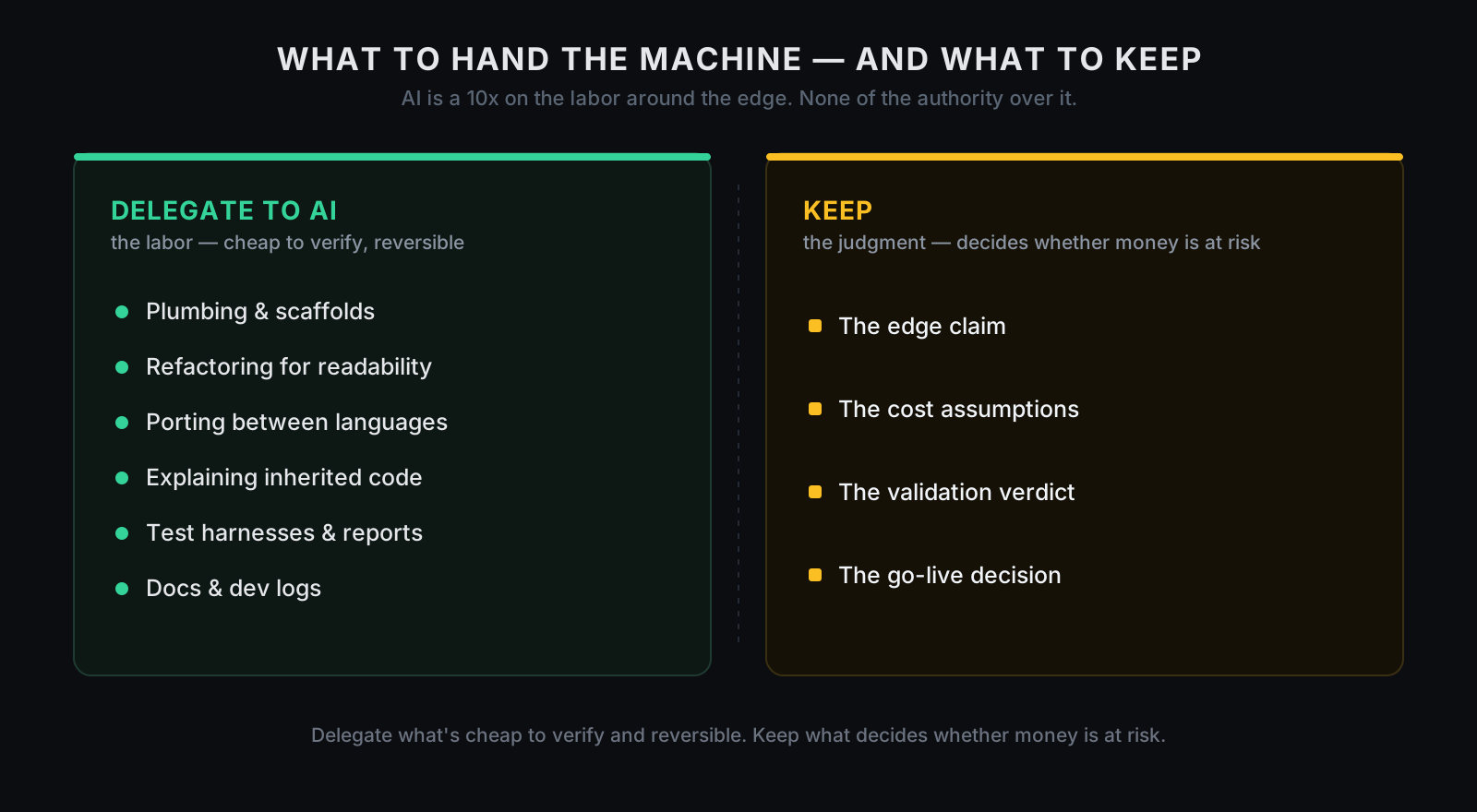
Start by pointing AI at everything that is not the edge, because that's where the speed is real and the risk is low. The best AI tasks share four traits: they're easy to inspect, cheap to verify, downstream of a decision you already made, and reversible if they're wrong — which describes most of the work of making a system real.
Delegate freely: the plumbing (data loaders, indicator functions, the EA skeleton, order-send wrappers, structured logging, a dashboard); refactoring a tangled script into readable modules with the risk layer pulled out where you can see it; porting a tested idea between MQL5, Pine, and Python to confirm it survives a second environment; explaining code you inherited; and writing the dev logs, parameter guides, and failure summaries that keep the work inspectable for future-you. A week of plumbing becomes an afternoon. What you don't delegate is judgment: the edge claim, the cost assumptions, the validation verdict, and the go-live decision — those are the next sections, and they stay in your hand.
The prompts that do labor without doing judgment look like this:
Notice the pattern — every prompt asks AI to build, explain, or inspect, never to conclude "this is good." The moment a prompt asks AI whether your strategy is good, you've handed it the one job it should never own.
III — Point AI at the validator, not the strategy
Here is the highest-leverage move in the whole workflow, and almost nobody makes it: don't aim AI first at building your strategy — aim it at building the thing that tries to kill your strategy. The validator. The out-of-sample splitter, the walk-forward harness, the cost-stress report, the regime split, the Monte Carlo wrapper, the parameter-neighbourhood test, the failure dashboard that lays the corpse on the table.
This inverts the gambler's instinct. The gambler asks AI to "build me a profitable bot"; the operator asks AI to "build the machine that rejects this idea unless it survives cost, regime, sample, and parameter stress." And it's a perfect job for AI, because a rigorous validator is tedious and finicky to hand-code — which is exactly why most retail traders skip it, run one backtest, eyeball the curve, tune until it improves, and call that research. AI removes the excuse: a harness that used to be a weekend of fiddly work becomes a one-afternoon prompt. The cheaper it is to try to falsify an idea, the more ideas you can put through the grinder, and the more seriously you can treat the few that survive. Most ideas should die — that's not failure, that's the filter working. AI doesn't find your edge — it builds the machine that proves whether you have one.
IV — Keep the wall
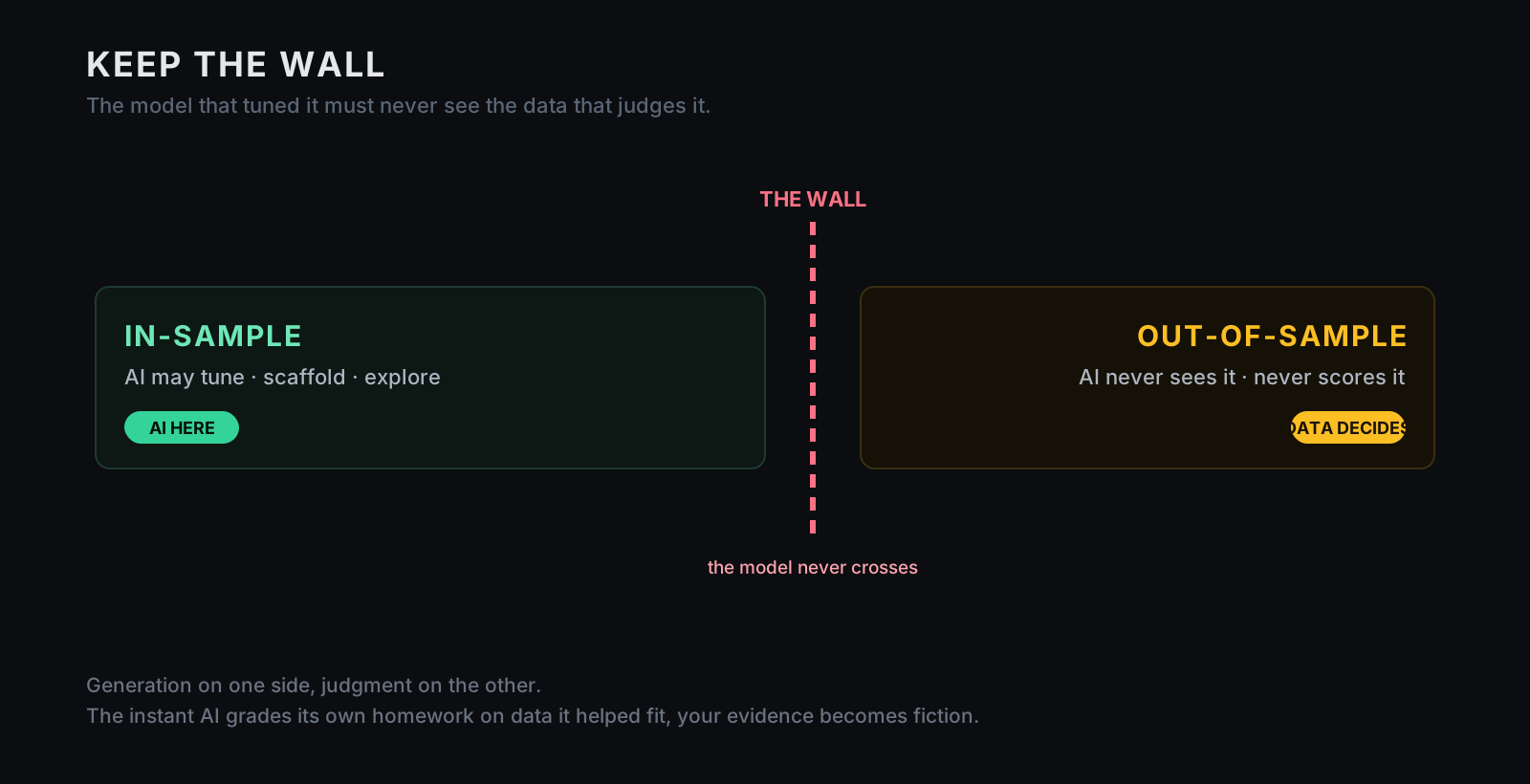
Now the one rule that keeps a confident, agreeable machine from talking you into a fantasy: the model that generated or tuned the strategy must never see the out-of-sample data used for the verdict, and it must never render that verdict. That's the wall. AI lives on the generation side — brainstorming hypotheses, writing code, scaffolding harnesses, refactoring, building reports, reading failures. The validation side stays protected: the out-of-sample data, the walk-forward result, the cost-stressed verdict, the forward-test decision.
Why so strict? Because a language model is agreeable and good at satisfying the prompt. Tell it "make the backtest better" and it will help you add a filter, tune a period, avoid a bad month, smooth a drawdown — and explain why the new version is superior. Now you have a curve that looks smarter and a system that's probably weaker: curve-fitting with a co-pilot. The defense is separation. AI may help build the test and summarize results after it, but the data renders the verdict — not the model. This is the same discipline behind why a backtest isn't reality, except AI lets you violate it at the speed of typing, so the wall has to be deliberate. The wall isn't decoration — the wall is the method.
V — Read failures with AI; don't fit the curve with it
When a strategy dies in validation — and most will — AI becomes useful again, not to erase the failure but to understand it. Ask it where the strategy lost, which regime hurt it, which assumption broke, whether costs were the killer, whether the edge existed only in one volatility state, whether slippage flipped the sign, whether the parameter neighbourhood was fragile. That's a post-mortem, and post-mortems create better hypotheses. The dangerous prompt is "make the backtest better"; the useful one is "explain why this failed and what hypothesis, if any, is still worth testing." Those are not the same — the first asks AI to polish the corpse, the second to identify the cause of death. "Make the backtest better" is curve-fitting with a co-pilot who never says no — the failures were the information, and you just paid AI to hide them.
VI — A worked example: idea to validated-or-dead before dinner
Here's a single afternoon. You start with a hypothesis you can defend — say, "on major FX pairs, an oversold bounce into the prior day's value area may have a short-term mean-reversion edge after costs." That's still vague, so you spend ten minutes with AI turning it into an exact spec: entry, exit, stop, sizing, regime filter, instrument list, session, cost model, invalidation, review point — precise enough that a stranger could implement it identically.
Then AI scaffolds the implementation and, separately, the validator — and you read both, because unread code is a black box you prompted into existence. You split the data, lock the out-of-sample years away from the model, and run the strategy through the harness with realistic spread and slippage baked in. Maybe it dies on cost; most do. You ask AI for the post-mortem and learn the bounce only worked in low-volatility conditions, failed during trend expansion, and lost its edge after spread — now you have information, and you either sharpen the hypothesis or bin it. If it survives out-of-sample, walk-forward, and a pessimistic cost stress, it earns exactly one thing: a small forward test on your own broker, at a size you can survive, with abort rules written before it begins. You didn't ask AI for a winner — you used it to fail twelve ideas honestly before dinner, so the one that survived meant something. That throughput — failing ideas faster and more rigorously — is the real superpower. Not the code.
VII — The four keys you never hand over
Supervising AI means knowing which decisions never get delegated, no matter how confident the output. The edge claim stays yours: AI can suggest a hypothesis, implement a rule, and explain why it sounds plausible, but "this has edge" is a conclusion you draw from validation, not a sentence in a chat. The cost assumptions stay yours: spread, slippage, commission, swap, delay, and broker quirks get simplified away by default, so you set them — pessimistically — before you believe a number (the whole spread is a tax you can't see problem). The validation verdict stays yours: AI can build the gate, but the protected test decides and the operator interprets; the model does not certify itself. And the go-live decision stays yours: size, stop, kill-switch, and whether real money is exposed at all are consequences AI doesn't bear. Hand AI any of those four and you don't have an AI-assisted system — you have an unsupervised intern with your account password. (If you're tempted to let it run live too, read why an autonomous agent hands away the last key first.)
VIII — Why publishing the workflow is the proof
Everything is "AI-powered" now, and the phrase has gone cheap — real systems use AI, fake systems say they use AI, and the label no longer separates them. The workflow does. A real builder can show the logic, the risk layer, the cost assumptions, the validation method, a reproducible sample, the failures, and the changelog. A fake shows a curve, a sticker, and a confident story. The public advisories around AI trading bots exist precisely because "AI" on the label tells a buyer almost nothing about whether there's edge, controls, or evidence underneath it. The question was never whether AI was involved — it's whether the builder can open the box and walk you through what's inside. The ones who can, do. The ones who can't say "AI" again, louder.
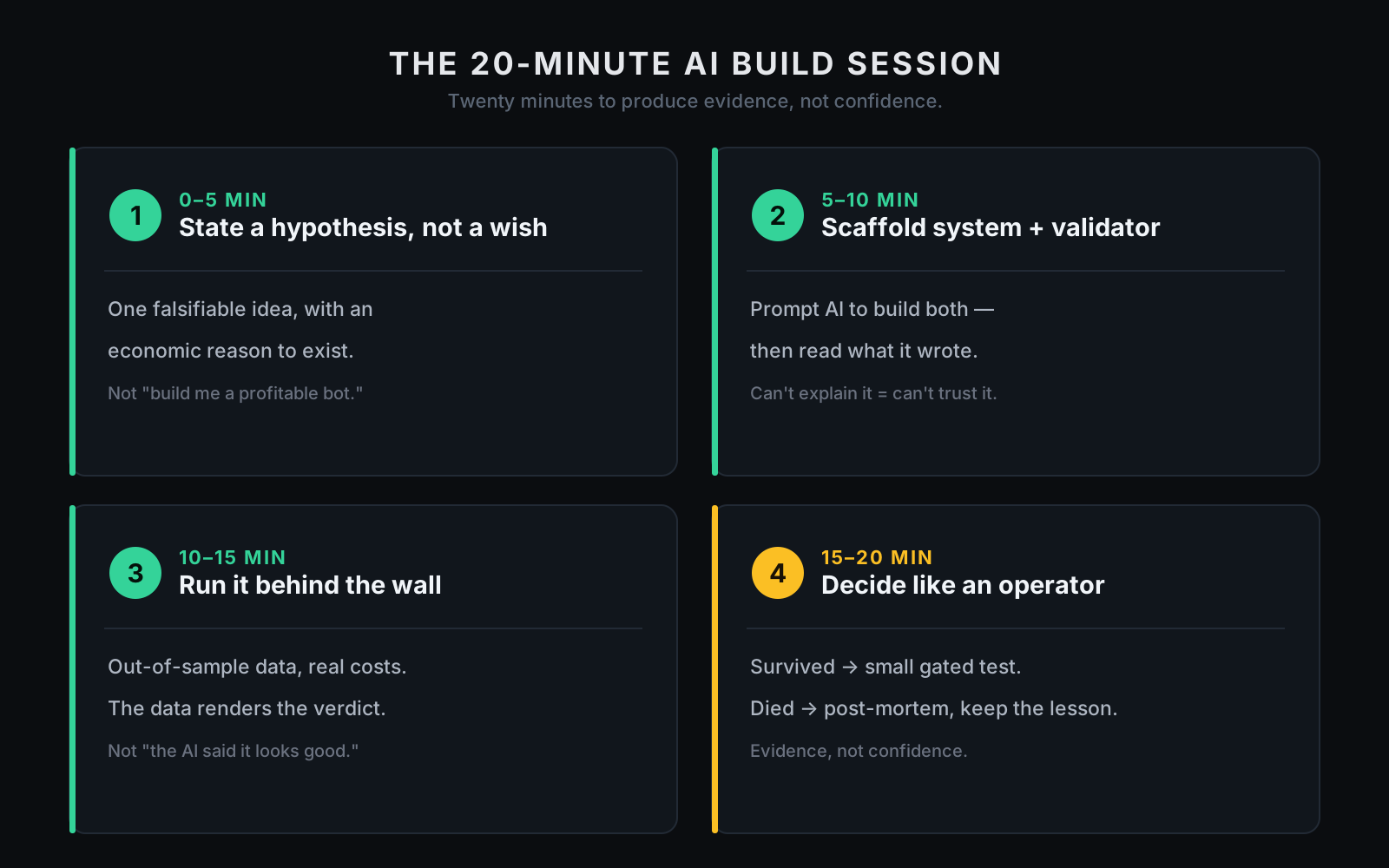
The 20-minute AI build session
Run this the next time you sit down — it's the whole workflow, compressed.
Minutes 0–5 · State a hypothesis, not a wish. Don't type "build me a profitable bot." Write one specific, falsifiable idea with an economic reason to exist. Let AI brainstorm candidates if you're stuck, but you pick and sharpen the one sentence until it's precise enough to be proven wrong.
Minutes 5–10 · Scaffold the system and the validator. Prompt AI to build the implementation and a cost-aware out-of-sample harness — then read what it writes. The code and the validator both need inspection; if you can't explain it, you can't trust it.
Minutes 10–15 · Run it behind the wall. Test on data the model never tuned on, with explicit costs — spread, slippage, commission, swap. Let the data render the verdict, and notice how different that feels from "the AI said it looks good."
Minutes 15–20 · Decide like an operator. Survived honestly → a small, gated forward test. Died → ask AI for the post-mortem, keep the lesson, bin the strategy. Either way you spent twenty minutes producing evidence instead of confidence.
Where this meets ProEA
This isn't theory for us — it's how MTR was built. We use AI heavily and exactly where this article says to: scaffolding the plumbing, refactoring for inspectability, building the harnesses that try to break our own ideas, writing the dev logs, exploring variations of logic we already trust. What AI did not do is invent the edge from a prompt, certify it, wave away broker costs, or decide that real money should go live — the edge came from research and brutal, AI-blind validation a human supervised, and it ships as full MT5 source plus a published 28-month sample you can recompute.
That's the proof, and it's why we publish the method instead of a slogan: you don't have to take our word that the workflow is rigorous, because the source is inspectable, the risk layer is readable, and the sample is reproducible — and a fake can't hand you those. And the caveat, stated plainly because honesty is the brand: building faster doesn't make an edge real, a published sample doesn't bind the future, and a source-code system can lose money like any other — ours included — because the edge can decay and your broker can differ from our test. Inspectability is proof of method, not proof of profit — but in a feed full of AI stickers, proof of method is the first thing worth trusting.
If you build in Pine, the same discipline ships as Pine Builder Lite: rules, skeletons and a build report your own AI follows. We compare it with a hosted AI generator in Pineify vs Pine Builder Lite.
Disclosure: the one question for any AI trading seller
We sell source and evidence you can inspect — not outcomes, not an "AI edge," not a guarantee. No model, system, or backtest can promise future results; AI-built or hand-built, trading carries real risk of loss, and past performance is not future performance.
So the next time something is sold to you as "AI-powered," ignore the label and ask the only question that separates real from fake: "Can you show me the logic, the costs, the risk layer, and a sample I can verify — or is 'AI' the whole answer?" If "AI" is the answer, AI is the marketing. If they can open the box, the AI was just a tool — the way it's supposed to be.
Your first 20 minutes
Don't take our word for it. Run the workflow on a real, readable system — ours.
Minutes 0–5 · Point your AI at the source, to explain. Paste a module from MTR's source into your model and ask it to explain the logic, list the assumptions, tell you what breaks it, and show where costs and risk are handled. This is AI as a comprehension accelerator — the good use — on a real system.
Minutes 5–10 · Have AI build a validator against the grid. Ask it to scaffold a cost-stress or regime-split check against the published 28-month evidence — not to declare victory, but to help you test.
Minutes 10–15 · Keep the wall. Run that validator yourself, on your broker's costs, with the AI nowhere near the verdict. The data decides.
Minutes 15–20 · Decide like an operator. A readable system, costs you can stress, a risk layer you can see, a sample you reproduced → a small forward test, on your terms. Not because an AI sounded sure — because you built evidence.
One last thing
AI didn't make building a trading system easy. It made the labor cheap and the judgment priceless — and quietly split everyone into two camps. Anyone can generate a system now. Almost no one can run the workflow that tells them whether it's real.
Produce with the machine, judge with your own discipline, and keep the wall between them. Learn that once, and you'll never mistake a confident paragraph for an edge again.