You started a trading journal in January.
A real one this time. A template. Columns for setup, risk, emotion, lesson.
It lasted eleven days.
Not because the market got boring. Because Thursday went badly, and the last thing you wanted to do after losing money was write about it.
So the journal died. They all die the same way.
Your journal didn't fail because you lack discipline. It failed because it lived somewhere you had to remember to go — and required honesty on exactly the days honesty hurts.Here's the argument this piece makes: the journal that survives is the one that comes to you, in a channel you already can't stop checking, filled by software instead of willpower. For most traders in 2026 that channel is Telegram. The results for "trading journal telegram bot" are a pile of GitHub repos and automation templates — real, useful, and worth an honest look — but nobody has written down the actual decision: build one, buy one, or understand why your spreadsheet keeps dying first.
Two requests before we start:
- Save this for the Sunday you're about to design journal template #4.
- Send it to one trader whose journal you know is three weeks dead.
Skip this if your journal is already dead
Sixty-second version: journals fail for three structural reasons, none of which is laziness. Friction — manual entry costs the most on losing days, which are precisely the days worth recording. Location — a journal in another app is a place you must remember to visit; visits stop when motivation dips, and motivation dips exactly when drawdowns start. The omission lie — a self-reported journal is edited by the person with the strongest incentive to skip the ugly entries. Fix all three at once and the journal survives: capture trades automatically, deliver the summary into a channel you already open compulsively, and keep the summary short enough to read in one coffee sip. That's the whole thesis. The rest is mechanics and an honest look at your options.
| What traders think | What's actually true |
|---|---|
| "I stopped journaling because I'm undisciplined" | You stopped because the system taxed you hardest on your worst days |
| "I need a better journal template" | You need fewer decisions, not more columns |
| "I'll review my dashboard weekly" | Pull-based review dies in drawdowns; push-based review doesn't ask permission |
| "My journal is accurate" | A self-reported journal is a diary of the trades you felt like admitting |
| "A Telegram bot is a toy" | Delivery location is the single biggest survival factor a journal has |
I — Why every journal dies
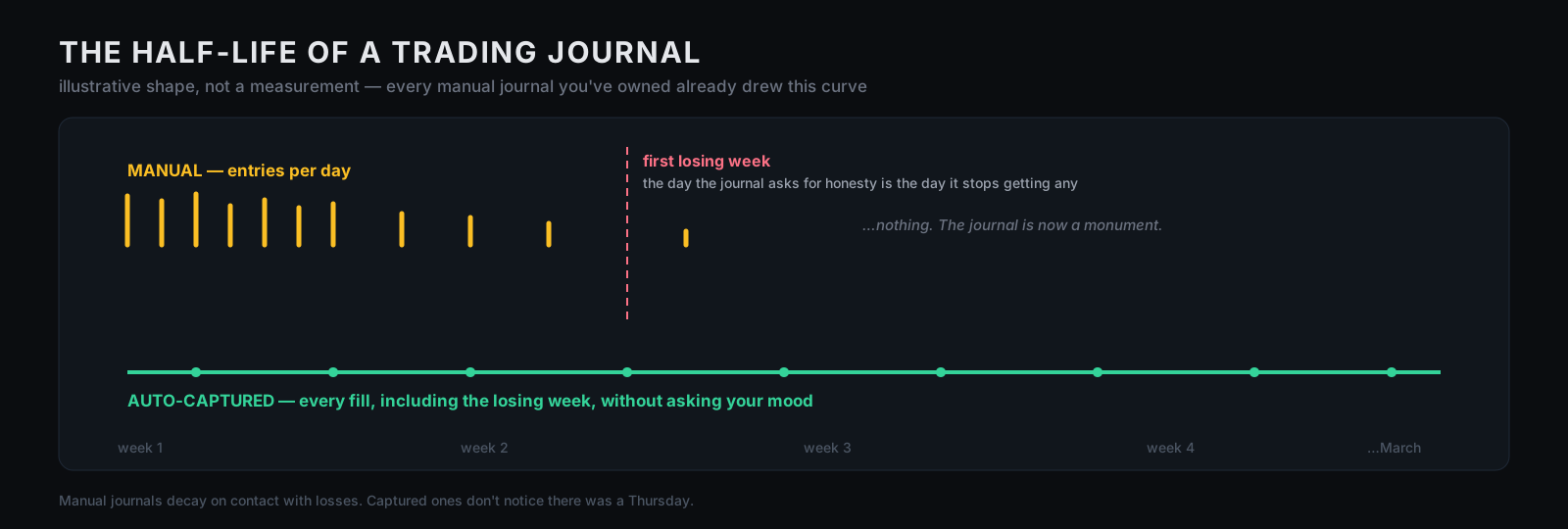
Watch the failure sequence in slow motion. Week one: every trade logged, emotions annotated, lessons extracted. Week two: entries shrink to a line. Then Thursday happens — three stops in a row, or one oversized loser — and the journal asks you to sit down and transcribe the damage by hand. You don't. Skipping one day makes the second skip cheaper. By week four the journal is a monument.
The standard diagnosis is discipline. We've already argued that's the wrong frame — discipline problems are usually design problems wearing a costume. The journal's design flaw is specific: it charges its highest price at your lowest moment. Writing up a winner is free; writing up a disaster is an emotional invoice. Any system whose running cost spikes exactly when your capacity dips is a system designed — accidentally, but precisely — to be abandoned.
The trades most worth journaling are the ones you least want to type.II — Push beats pull
Every journal you've abandoned had one thing in common: you had to go to it. The spreadsheet, the notebook, the web dashboard — all pull-based. Pull-based systems run on motivation, and motivation is exactly the resource a losing streak drains.
Now count how many times you opened Telegram today. You didn't decide to; your thumb did. That's not a character flaw — it's the most reliable attention loop you own, and it's sitting there unused while your journal starves in a tab you haven't opened since Tuesday.
The argument for a trading journal Telegram bot is not that Telegram is special technology. It's that delivery beats storage. A three-line summary that arrives as a DM gets read on the worst morning of your month, because reading a message costs nothing. A dashboard that would tell you the same thing goes unvisited, because visiting is a decision, and after a red week every decision about your trading feels like touching a bruise. A journal you have to visit is a journal you'll abandon. A journal that arrives gets read even in drawdown — especially in drawdown.
III — Self-report vs auto-capture: the editorial hand is the bug
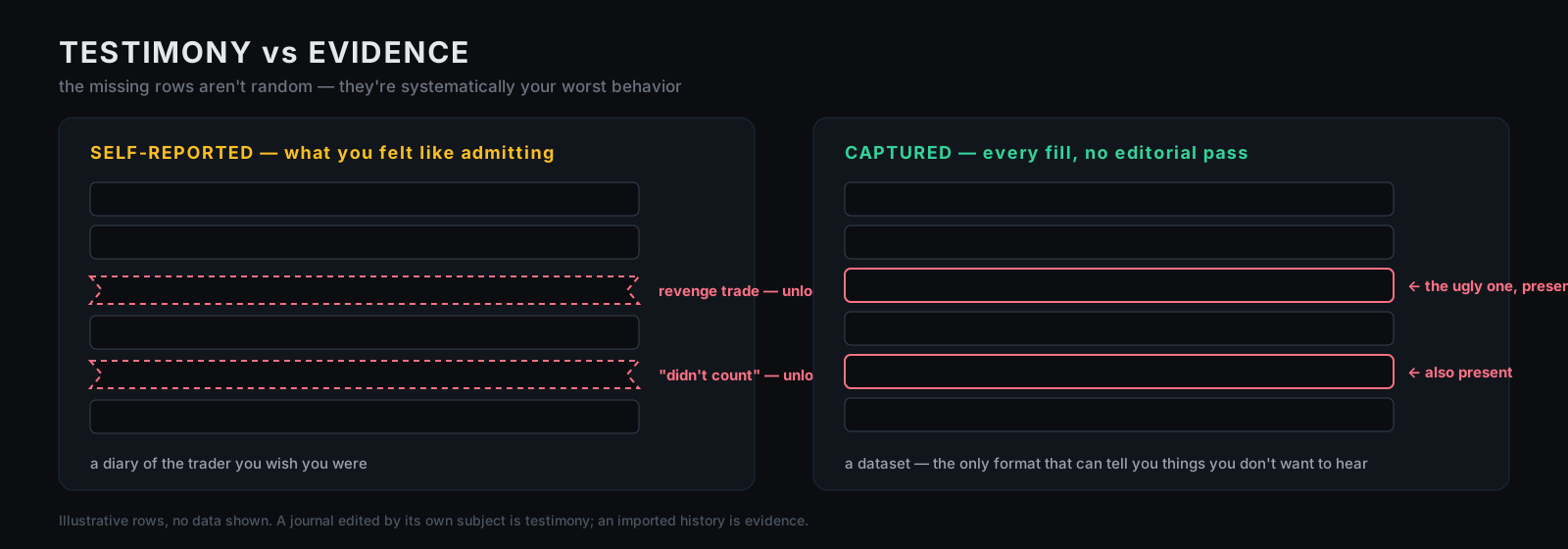
There's a second failure mode nobody puts on the template: the journal that survives but lies. Not big lies — omissions. The revenge trade that somehow never got a row. The "this doesn't count, I wasn't following the system" entry. The week that's just… blank.
A self-reported journal is edited by the person with the strongest possible incentive to make the record look acceptable. That's not a moral accusation; it's a conflict of interest baked into the format. And it matters because the deleted trades aren't random — they're systematically your worst behavior, which means the journal's picture of your edge is biased in exactly the direction that costs money. You end up reviewing the trader you wish you were.
Auto-capture removes the editorial hand. When every fill imports from the account history — including the ugly ones, including the "didn't count" ones — the journal stops being testimony and becomes evidence. A journal you write is a diary. A journal that captures every fill is a dataset — and only datasets can tell you things you don't want to hear.
IV — What a daily digest must show
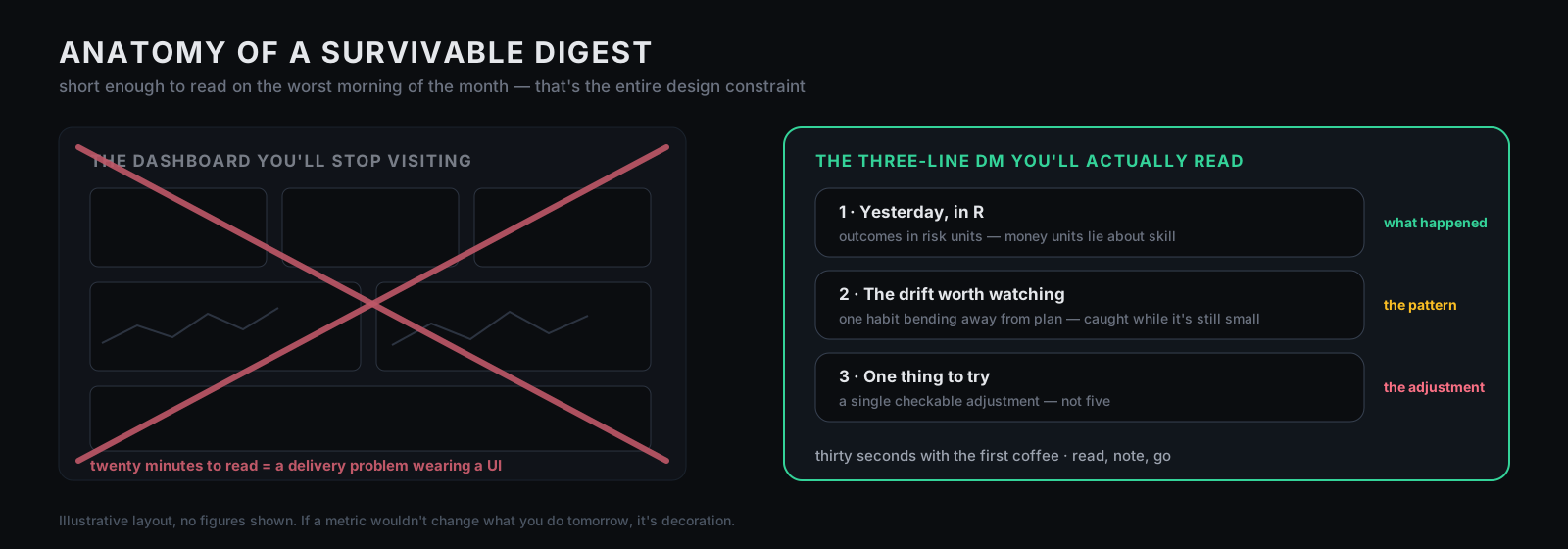
More journal is not better journal. A digest that takes twenty minutes to read is a dashboard with a delivery problem, and it will die the same death. The survivable format is short enough to read standing up:
What happened, in R. Yesterday's trades in R-multiples, not currency — money units lie to you about skill, R doesn't. The pattern worth watching. One line: the thing that's drifting — average loser creeping past plan, a session you keep donating to, size wobbling after wins. One thing to try. A single, checkable adjustment. Not five. One.
That's it. Notice what's absent: no equity-curve porn, no streak celebration, no win-rate theater. A digest exists to surface the uncomfortable trend early, while it's still one bad habit instead of one bad month.
V — The DIY route, honestly
Search "trading journal telegram bot" and you'll find working open-source projects — and they deserve a fair reading, because for some traders they're the right answer. The pattern across the GitHub repos (mohammadreza-mohammadi94's Trading-Journal-Telegram-Bot, PhilGoodInc1's telegraf/TypeScript/SQL build, and others like them): log trades by bot command, search by ticker or side, export CSV. The n8n crowd goes further — a template wires Telegram messages through an AI model into Google Sheets, so you journal in one plain-language message and the AI extracts the fields into columns for you.
When DIY wins: you want ownership and zero subscription; your fields are unusual; the tinkering is the point (genuinely — a trader who builds their own tooling learns their own workflow); or you just want to test the delivery-location thesis this weekend for free. BotFather, a token, an evening — it works.
The honest costs. First: almost every DIY journal bot is still self-report — you type /log, which means the editorial hand from §III survives, just with better ergonomics. The friction moved from "open the spreadsheet" to "remember the command"; the omission lie is untouched. Second: you're now running infrastructure — hosting, token security, the database, the thing silently crashing in week three. Third: the bot stores; it rarely analyzes. You get recall, not a verdict. A DIY bot solves delivery. It usually doesn't solve honesty or synthesis. Those need a pipe into your actual account history and something that reads the data back to you.
VI — When paying wins
You're not paying for a Telegram bot. Bots are free. You're paying for what the bot delivers. The two things the DIY route leaves open: capture without your hands (imports straight from the platform's history — every fill, no editorial pass) and synthesis without your effort (something that reads the dataset and sends back the three lines, instead of storing rows until you someday feel strong enough to look). Plus the boring one: it's still running in March, because keeping it running is someone's job instead of your hobby.
That's the whole honest pitch for any paid journal with delivery — ours included, and the ledger on ours is below, caveats first.
VII — The 20-minute journal resurrection
Minutes 0–5 — Choose capture, not template. Decide how trades enter the journal without your mood voting: platform import, account sync, or — if you go DIY — accept that you're choosing self-report and name that tradeoff out loud.
Minutes 5–10 — Define the three lines. Write down what your digest must contain (R yesterday · the drift · one adjustment). If a metric wouldn't change what you do tomorrow, it's decoration — cut it.
Minutes 10–15 — Wire the delivery. Whatever the tool, the summary must arrive as a push message in the app you already check compulsively. If the plan involves "I'll log in and review," you've rebuilt the thing that died in January.
Minutes 15–20 — Install the ritual. Digest arrives, you read it with the first coffee, you touch nothing. No re-litigating trades in the DM thread at 7 a.m. Read, note the one adjustment, go. The ritual is thirty seconds; the compounding is the point.
Where TradeLens sits
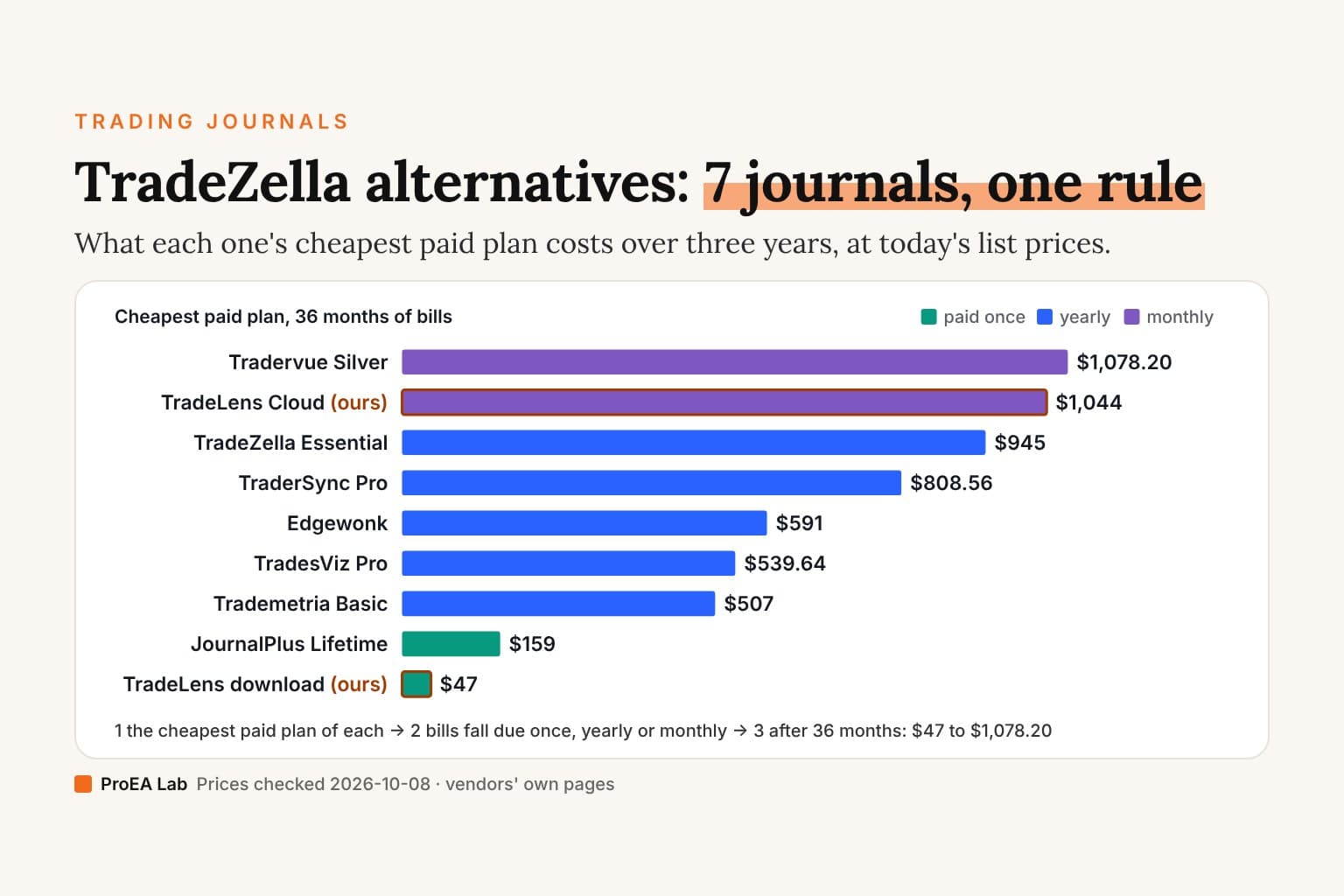
The honest ledger, caveats first. TradeLens is our trade journal — $47 one-time download or a $29/mo Cloud subscription ($19 your first month) — and the Telegram delivery this article argues for is a Cloud feature only. It is not part of the $47 download. The download edition runs fully offline on your machine by design; there's no server, so there's nothing for a Telegram chat to link to. If you buy the $47 edition expecting Telegram DMs, you bought the wrong thing — that page says so, and now this article has too.
What the Cloud + Telegram pairing actually does, per the setup page: a daily three-line digest as a DM (what happened yesterday, the pattern worth watching, one thing to try — the same digest email gets); trade autopsies DM'd after each import; and Coach chat in the same thread, sharing the exact same daily question quota as the web app — asking in Telegram is not a second allowance. Linking is a one-time deep link that expires in ten minutes; unlink lives in Settings; it works with any Telegram account, no separate bot fee. Trade capture comes from MT4/MT5/cTrader/CSV import, or MT4/MT5 read-only auto-sync through Cloud's Connect using an investor password that cannot place trades. Evidence, not prophecy: none of this claims the digest makes you profitable — it claims your worst trades stop escaping the record, and the record gets read.
Disclosure
This is education about journal mechanics, not a promise about outcomes. A journal — ours or a GitHub bot or a paper notebook — measures; it doesn't fix. The one question worth asking any journal vendor, including us: "How do trades I'm ashamed of end up in the record?" If the answer is "you type them in," you now know exactly what the record will be missing.
Your first 20 minutes
If you own TradeLens Cloud: link Telegram (Settings → Telegram, tap the link before it expires), import your last month, and read the first autopsy against your own memory of those trades — the gap between what you remembered and what imported is the omission lie, measured. If you're going DIY: pick one of the GitHub bots, get it logging tonight, and calendar a check for week three — the week DIY journals traditionally go quiet.
Your January journal didn't die of laziness.
It died of architecture.
Fix the architecture — capture without hands, delivery without visits, three lines without mercy.
The best journal isn't the smartest one. It's the one still running in March.